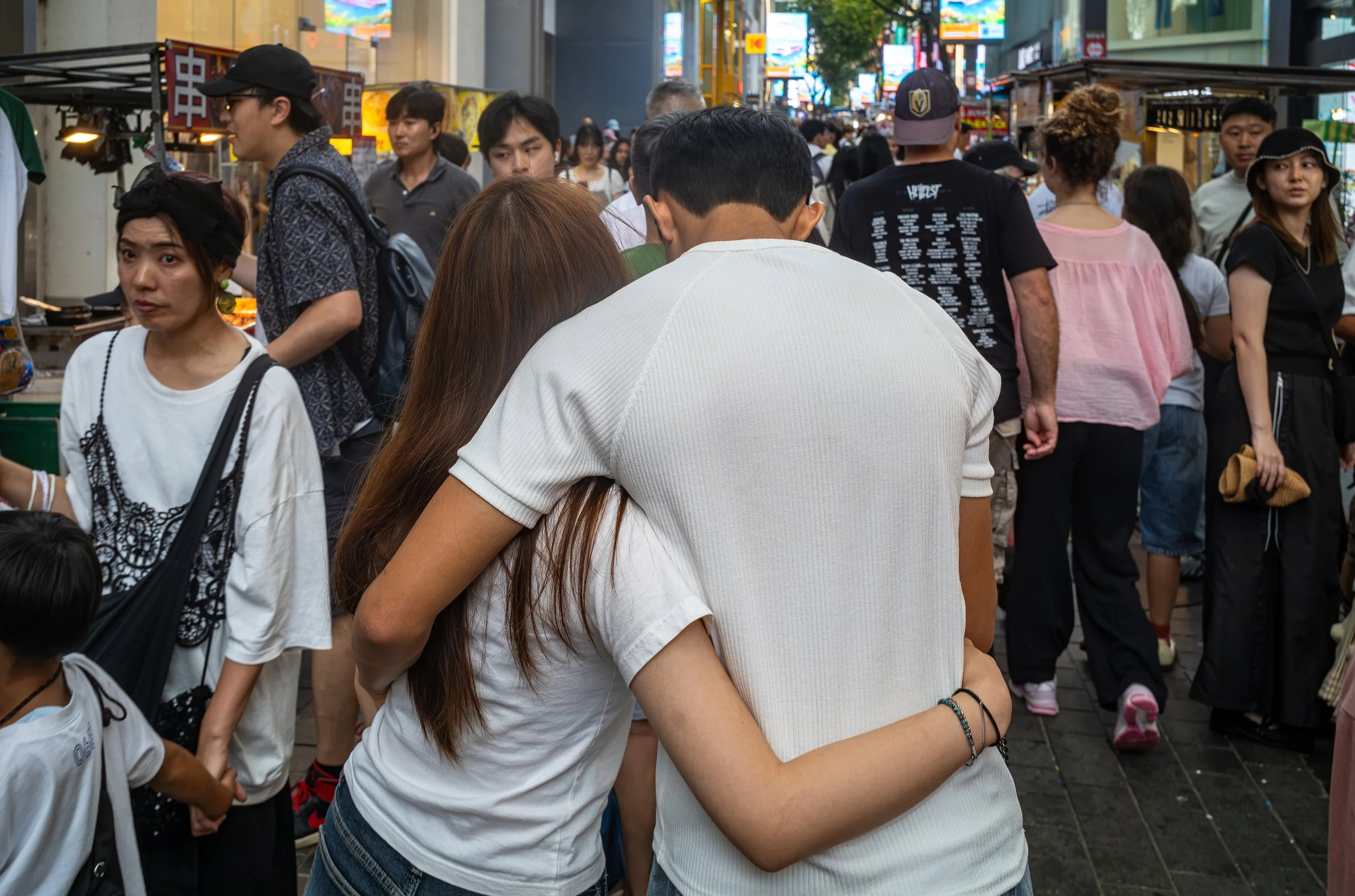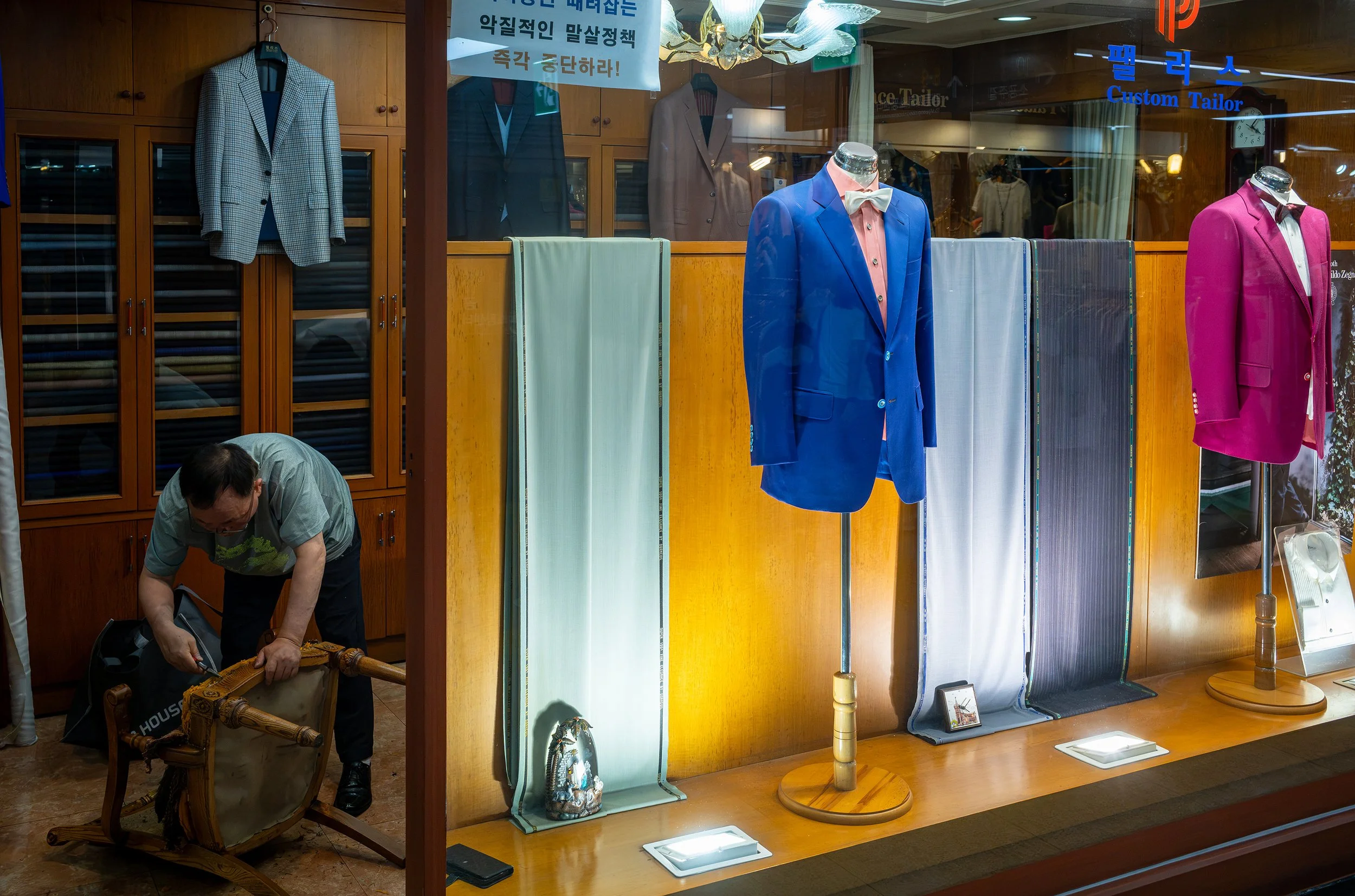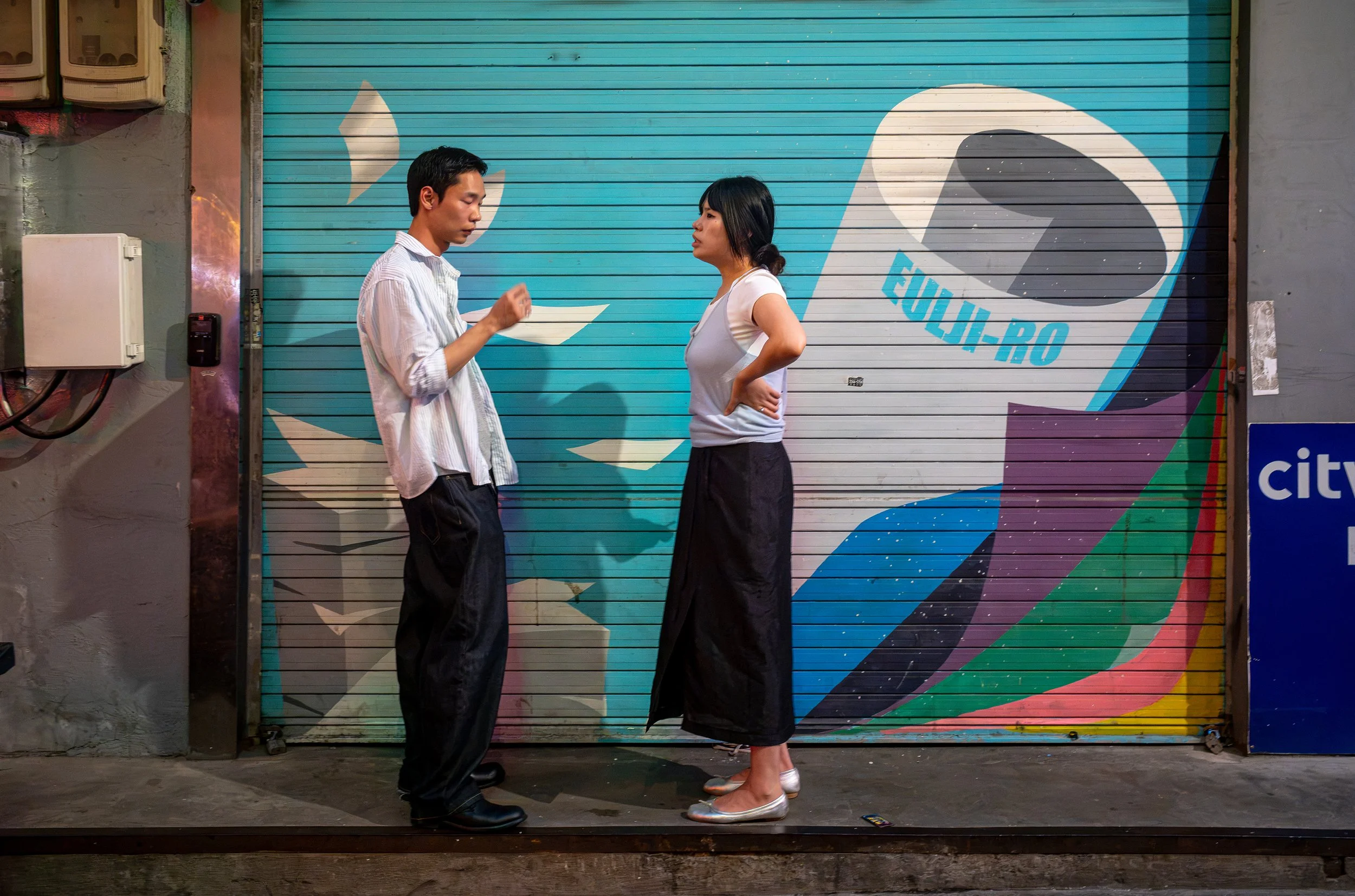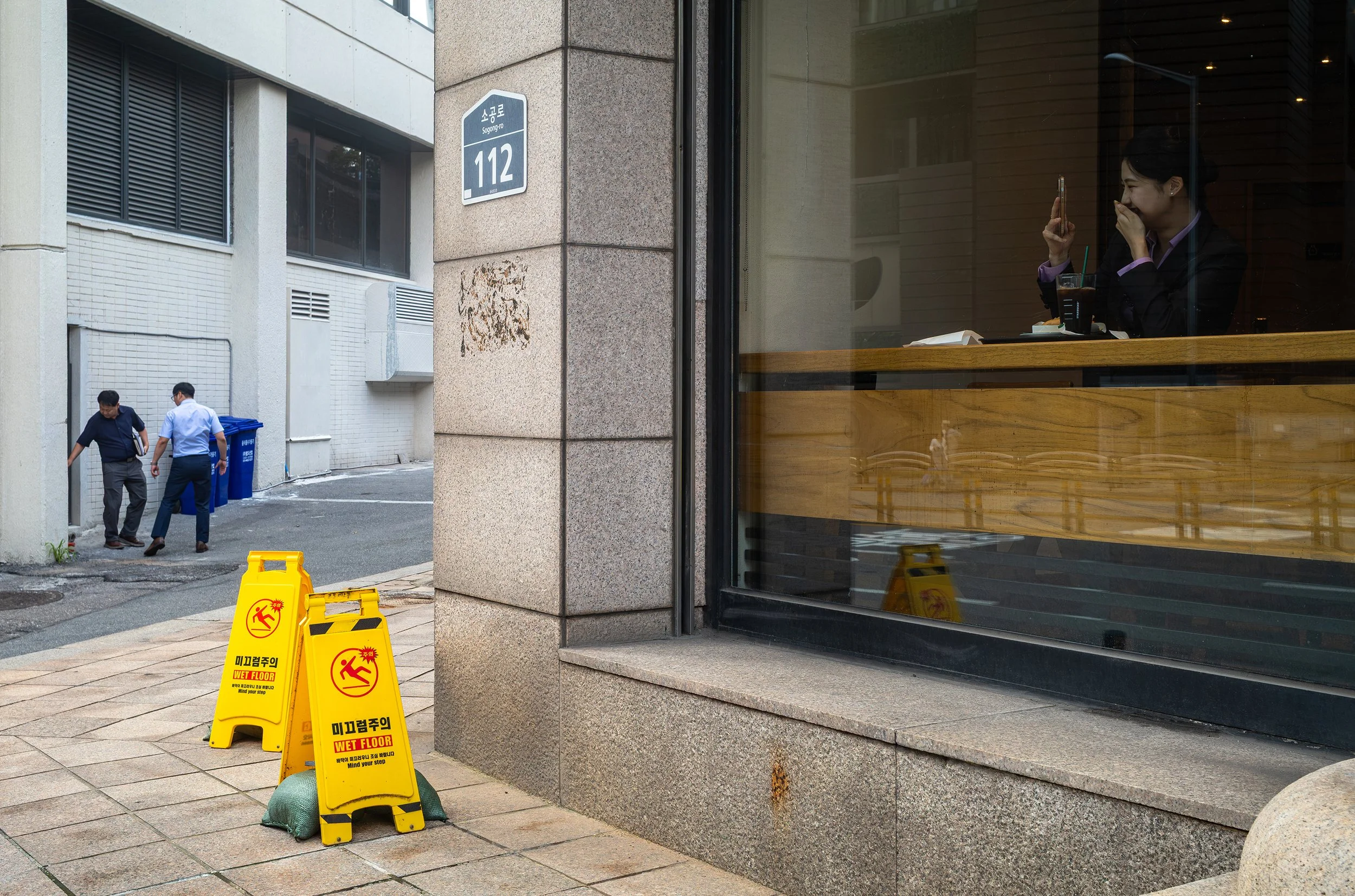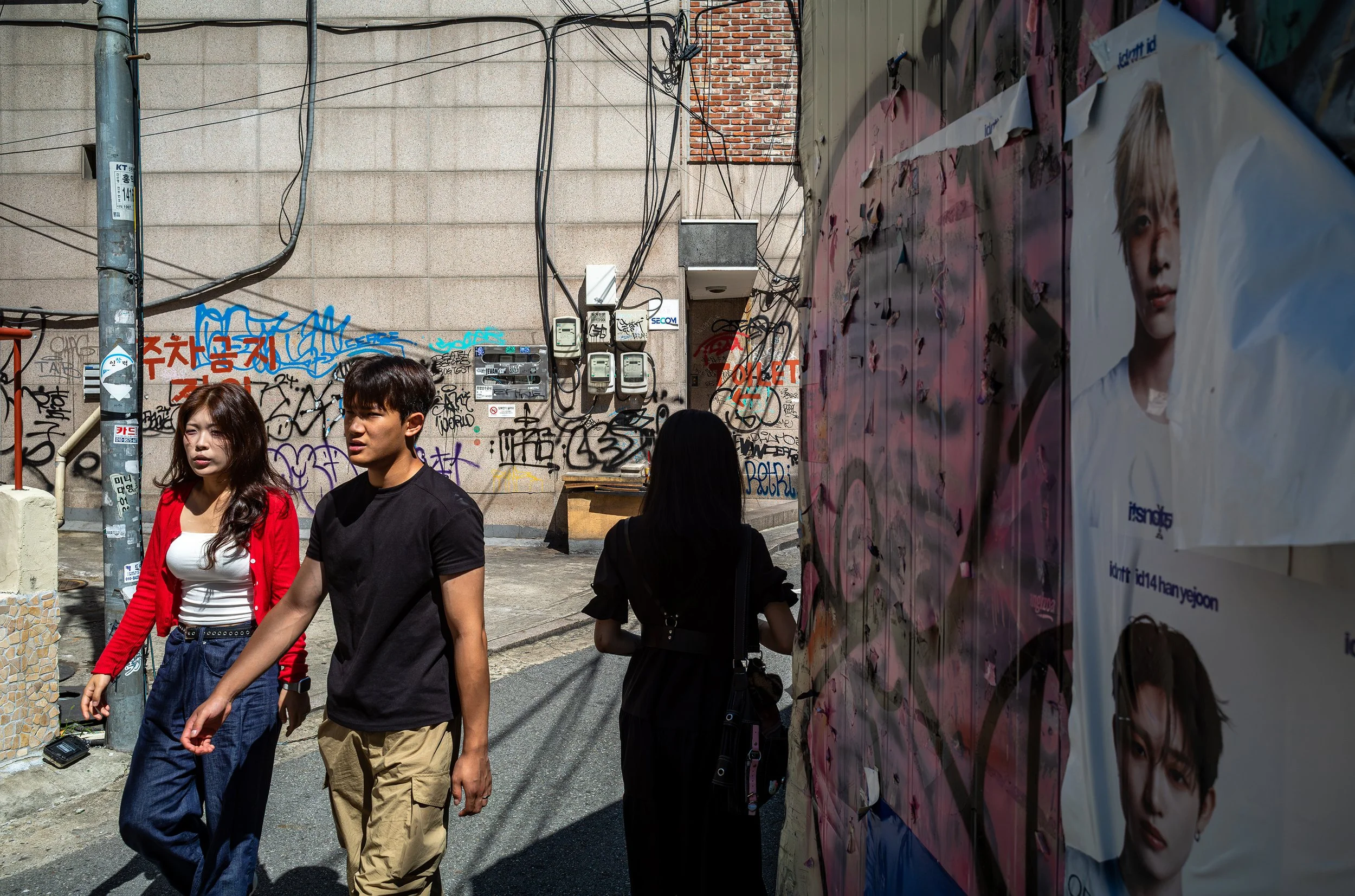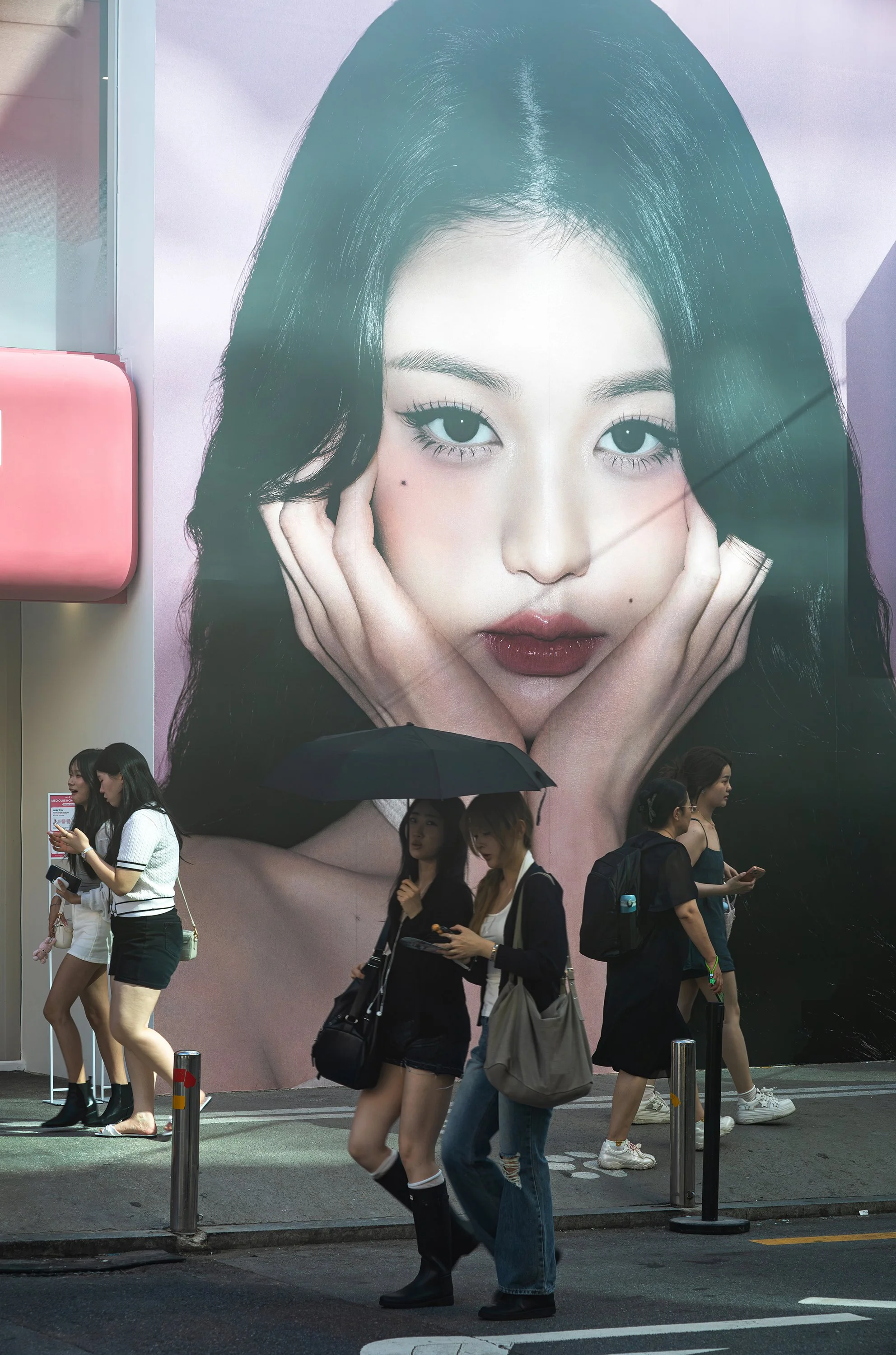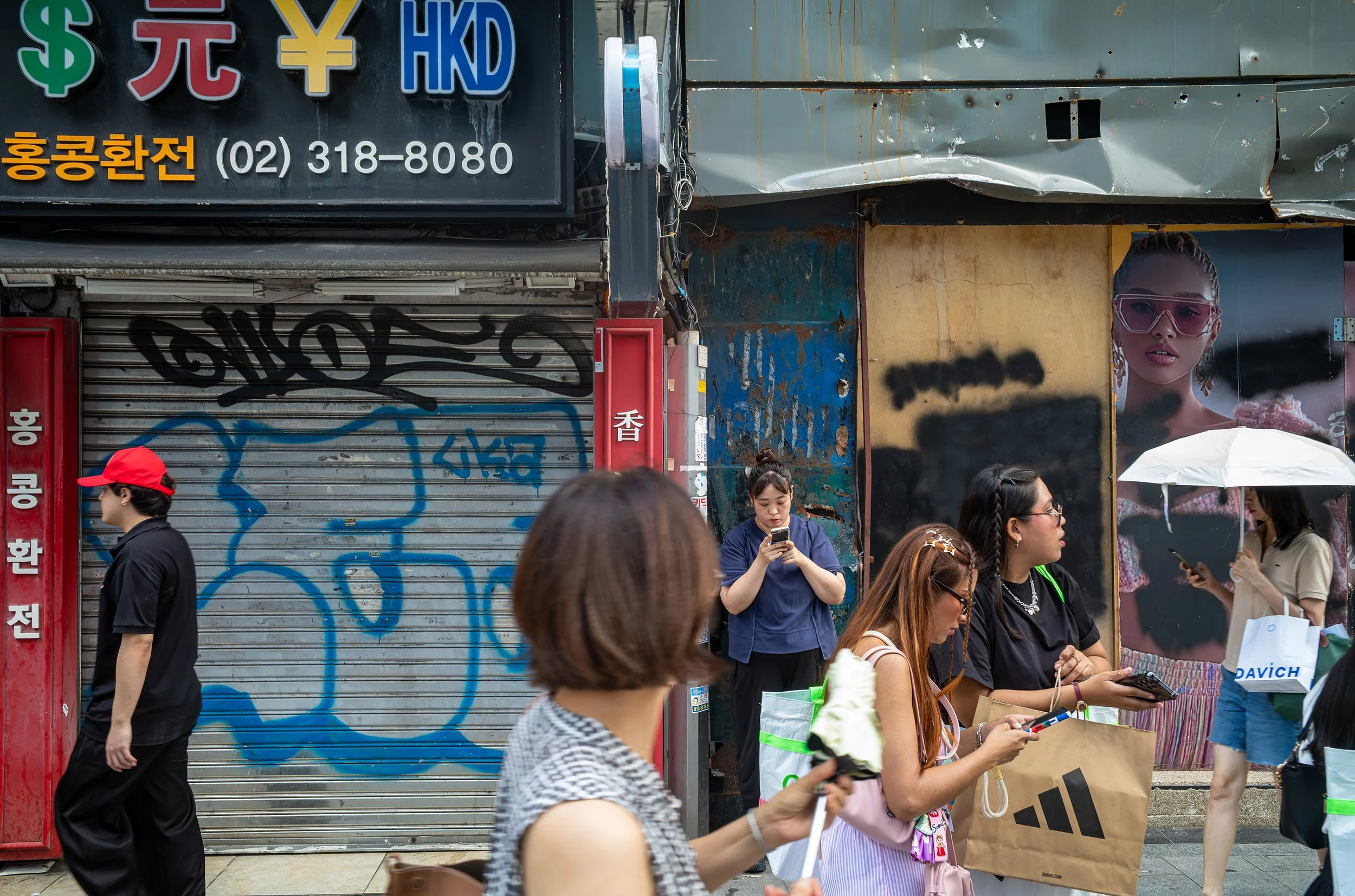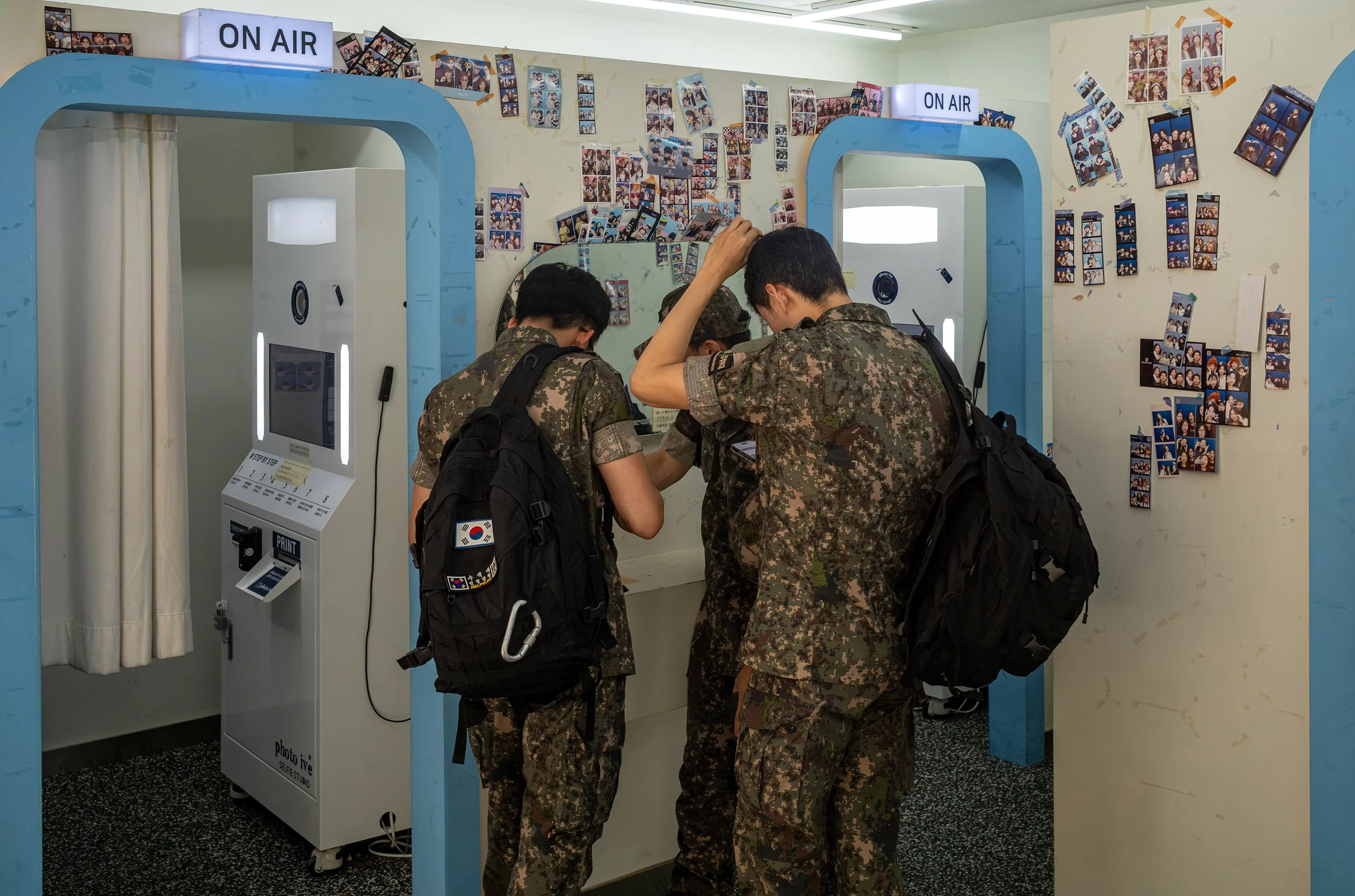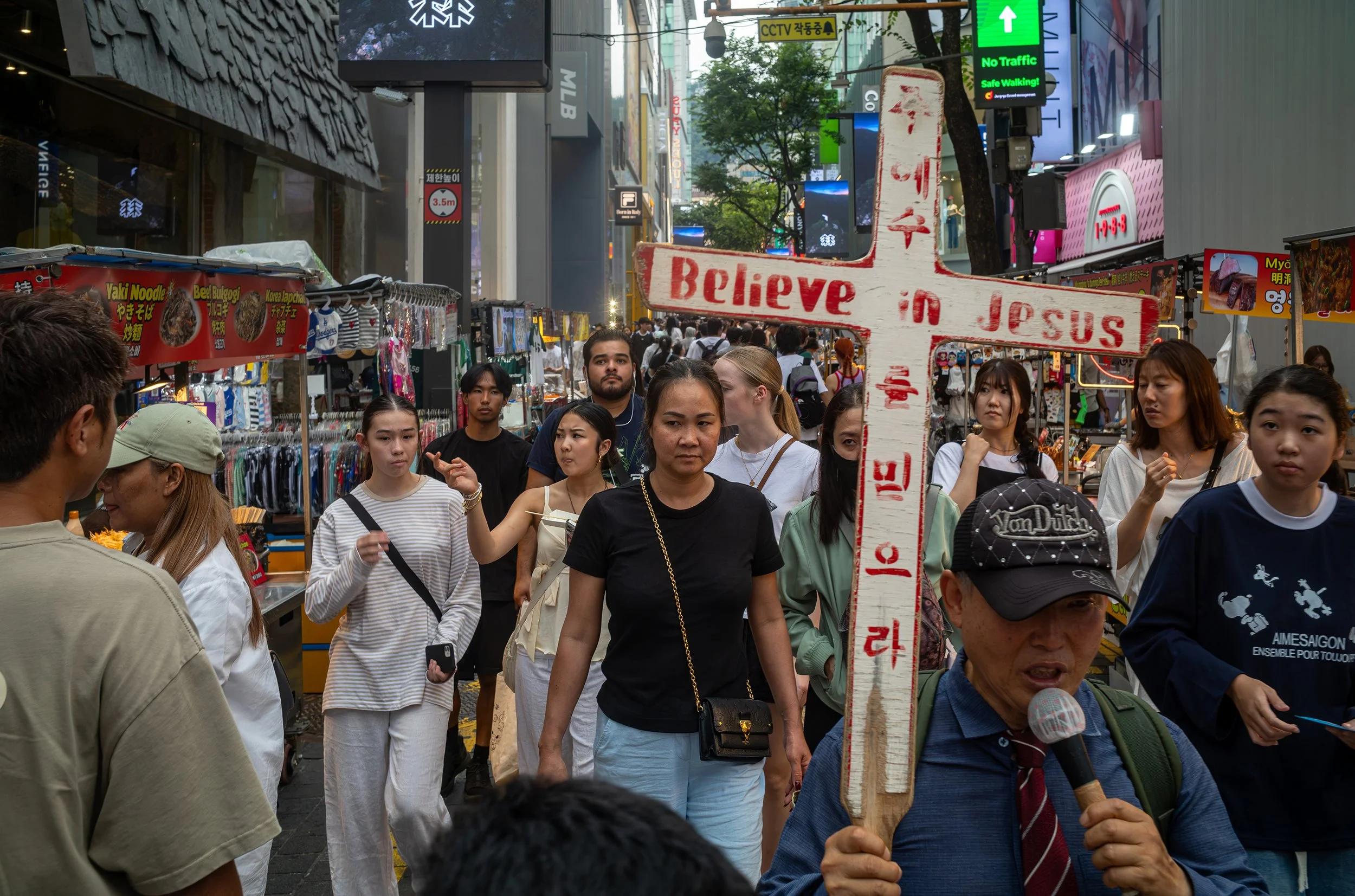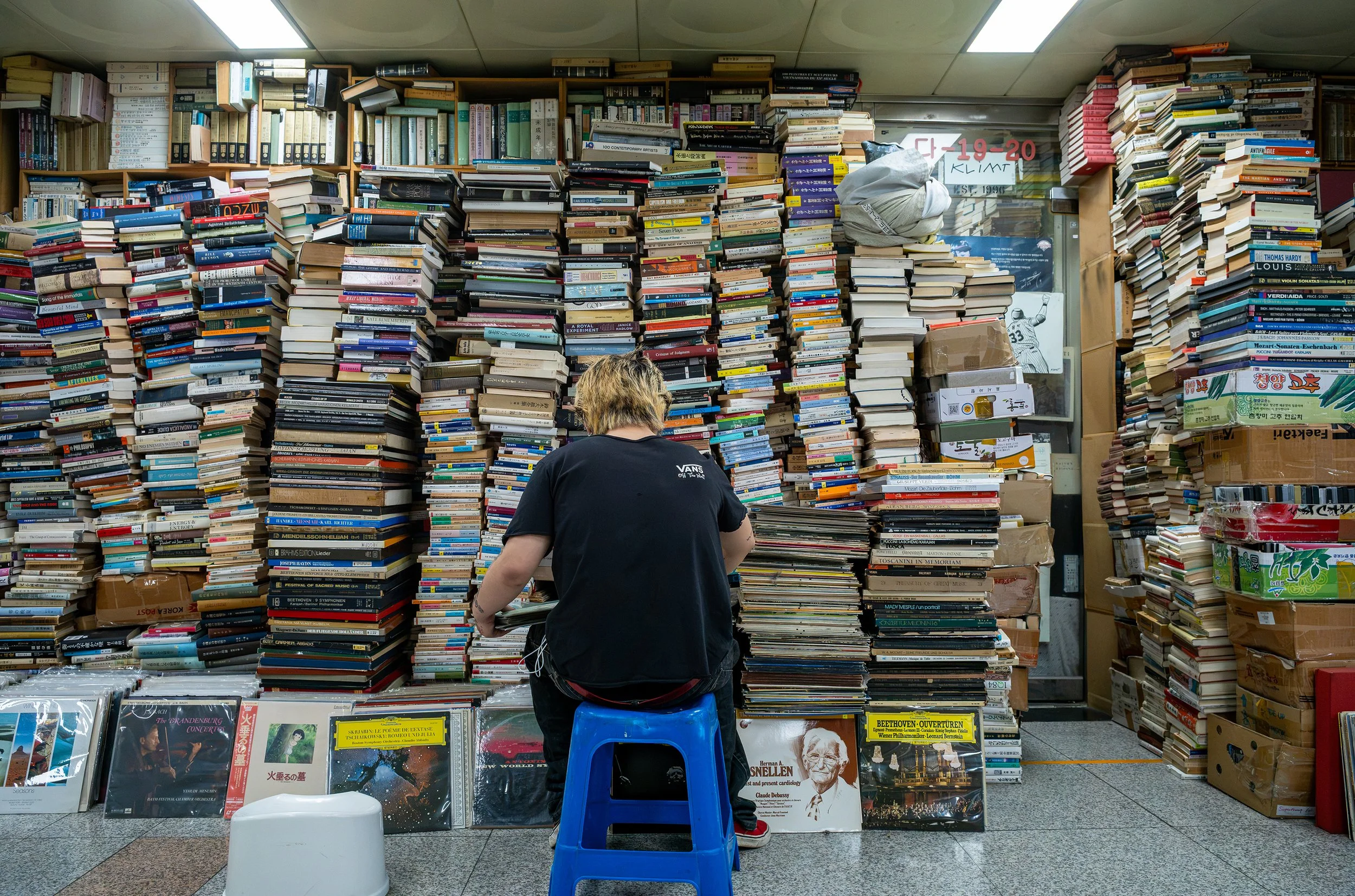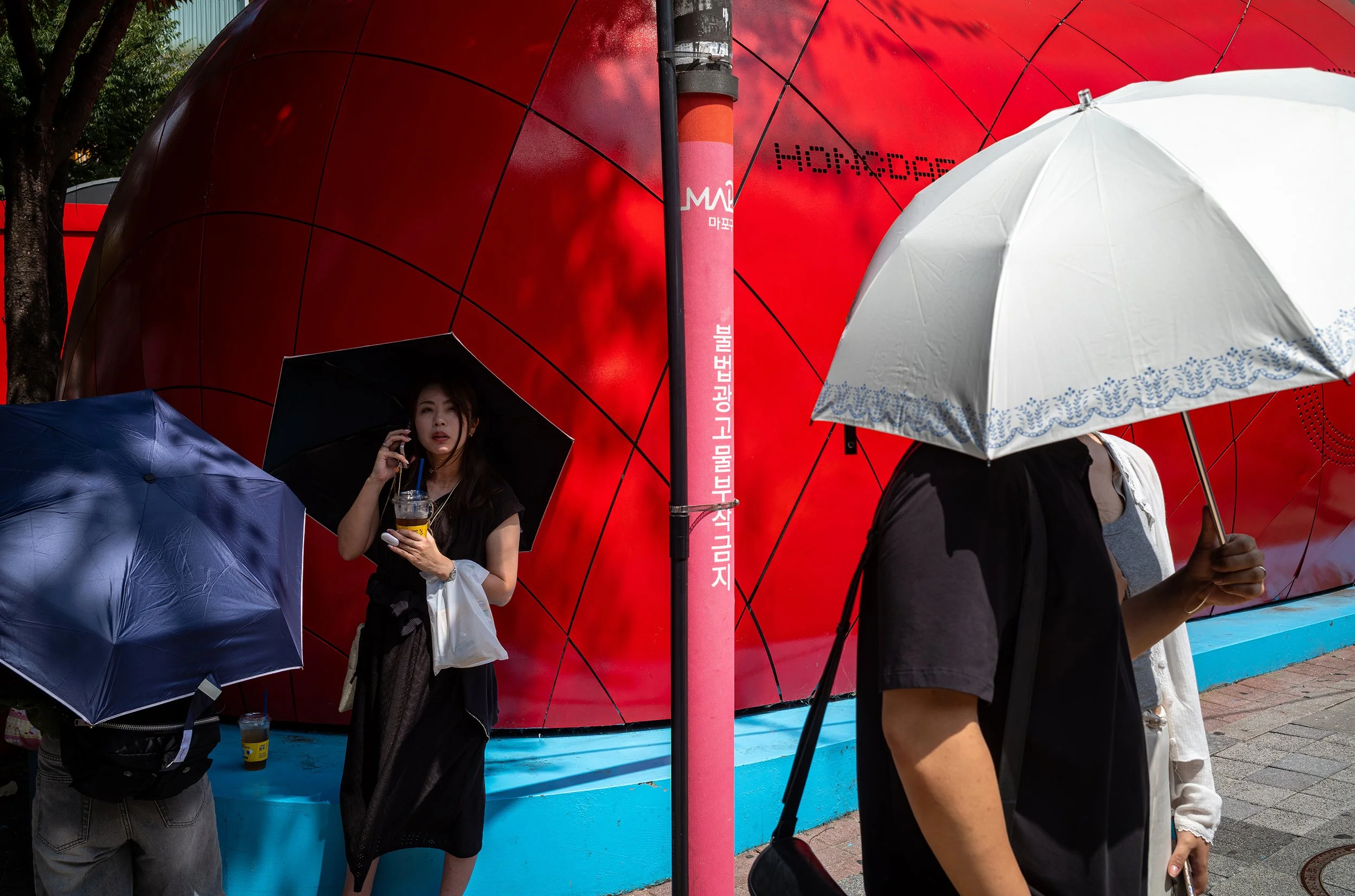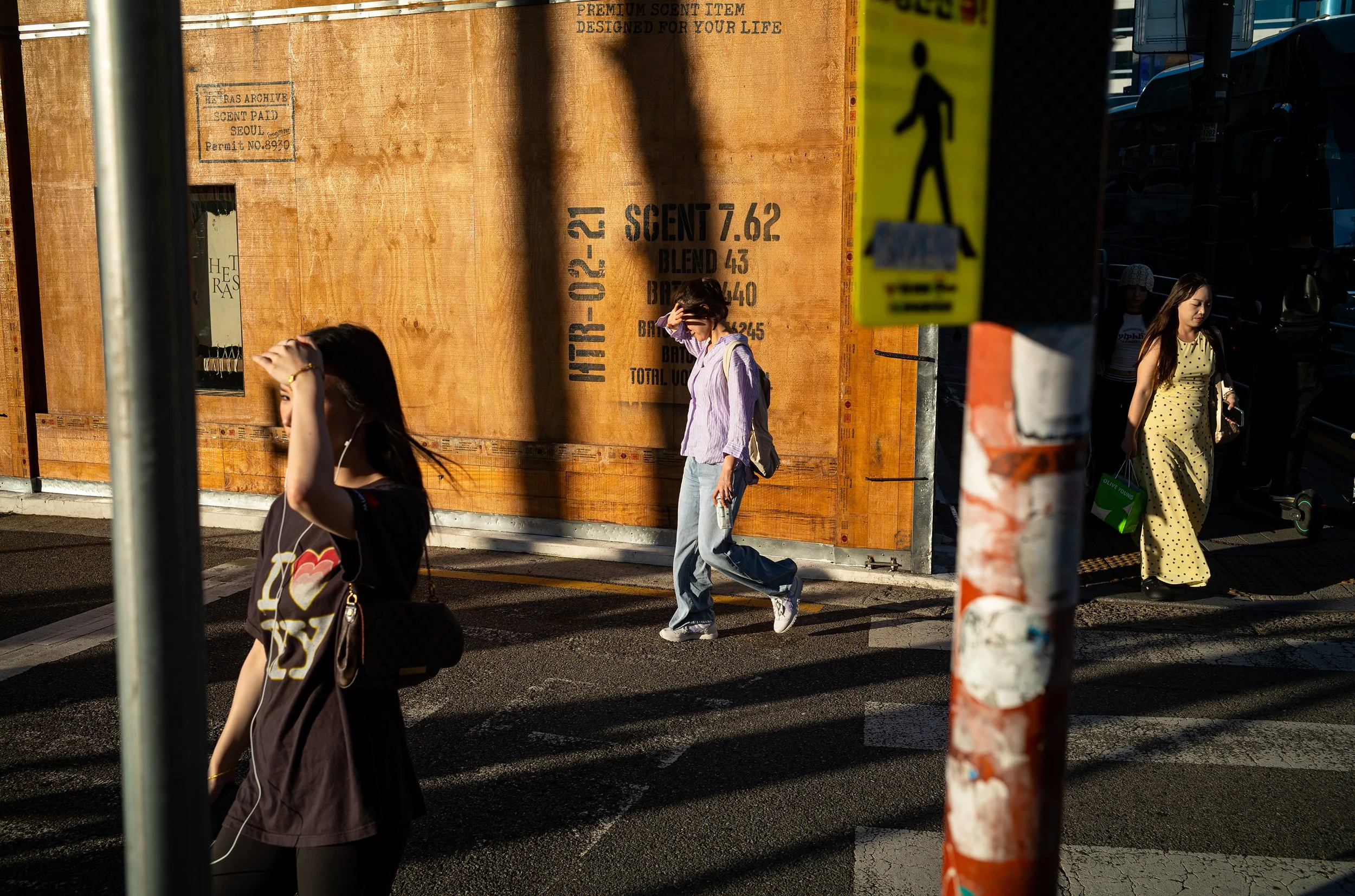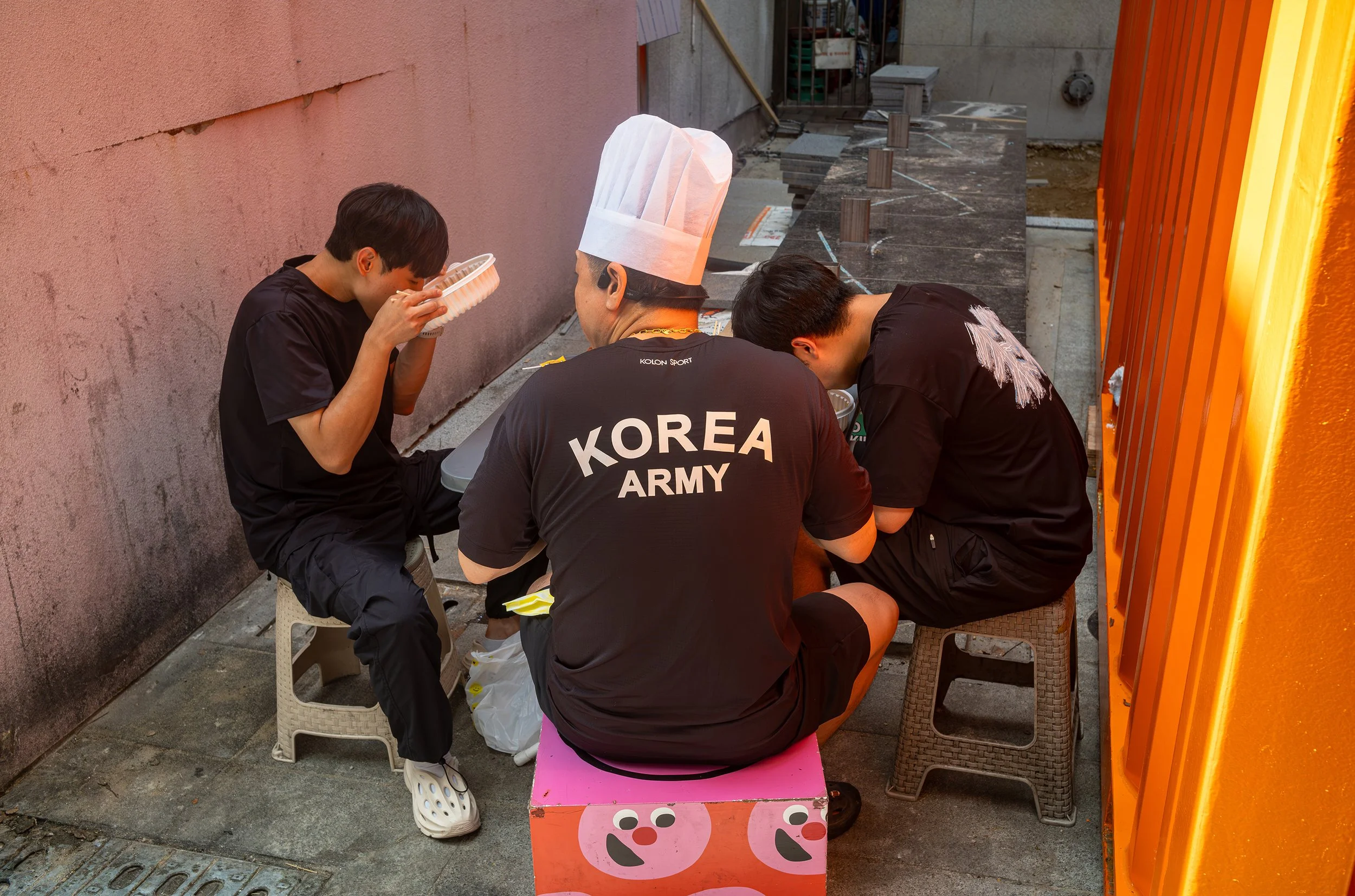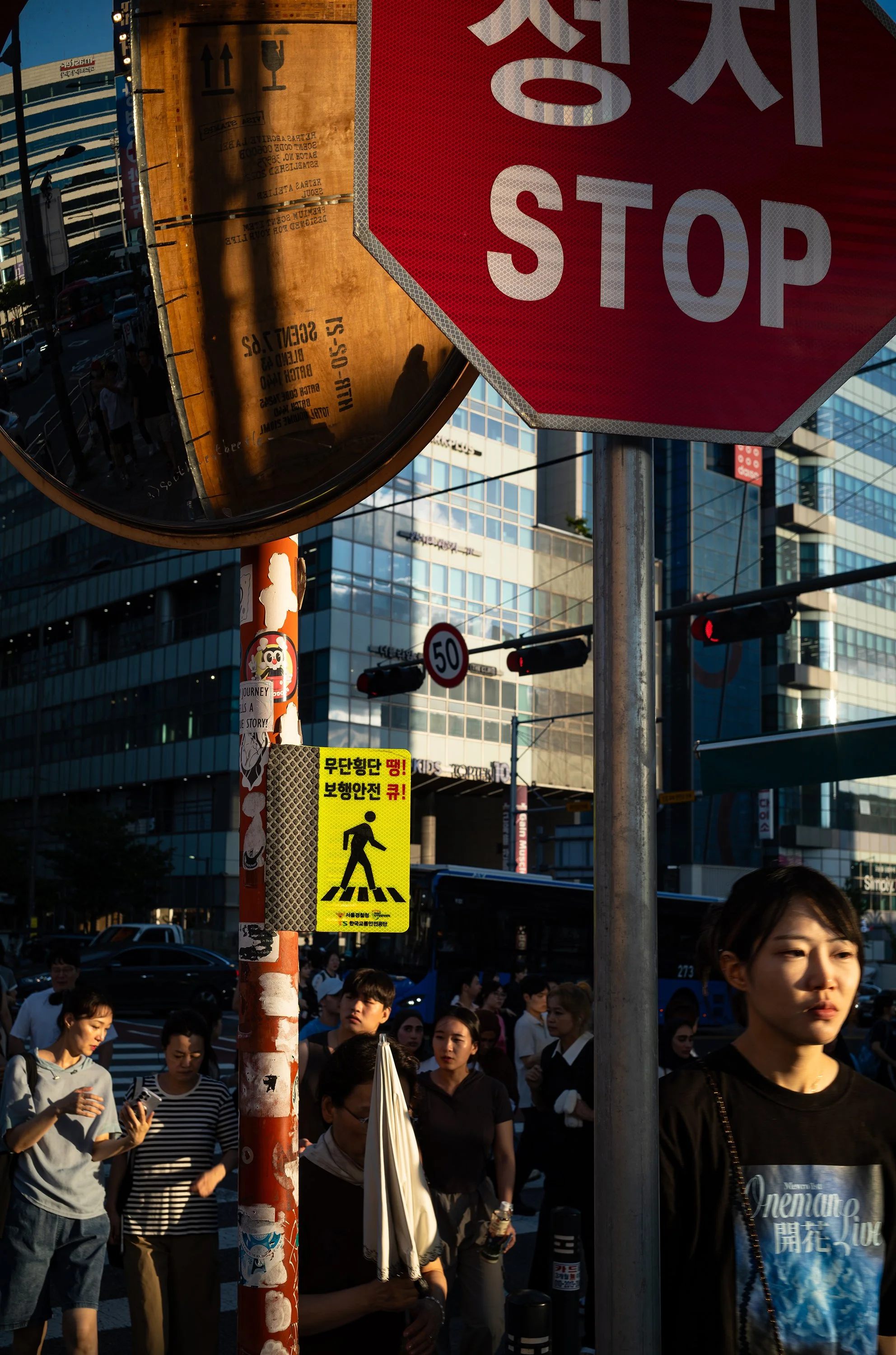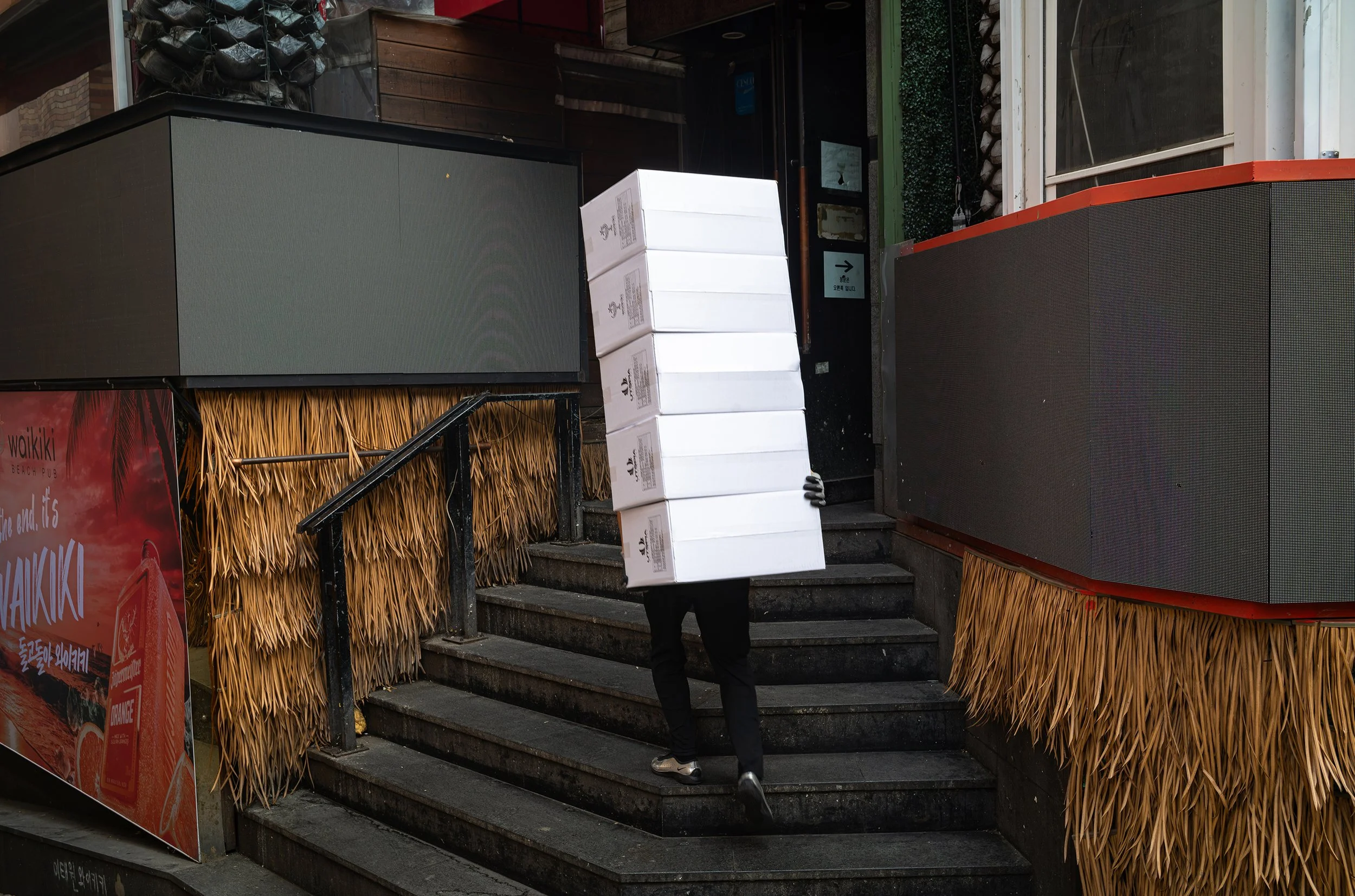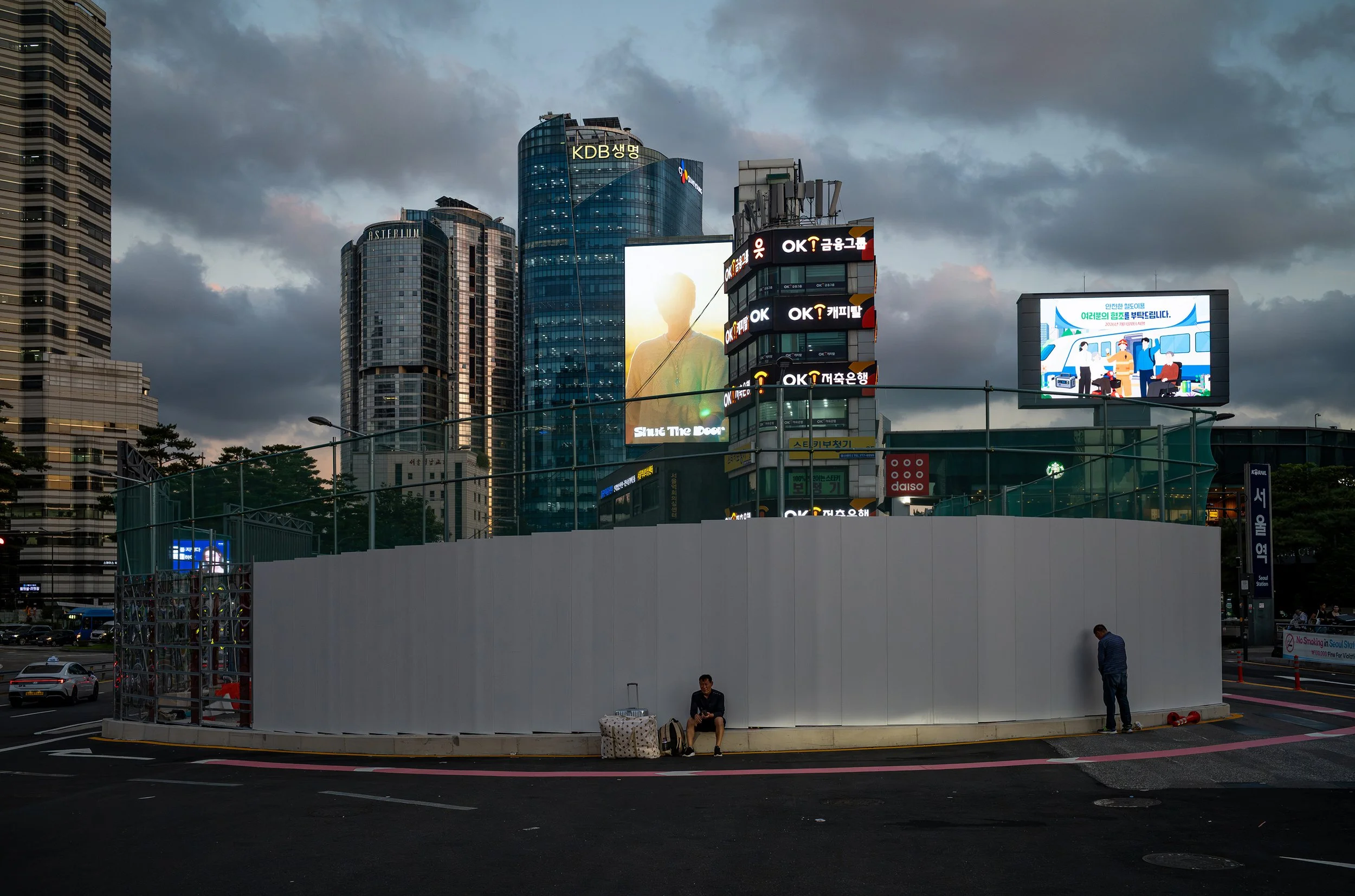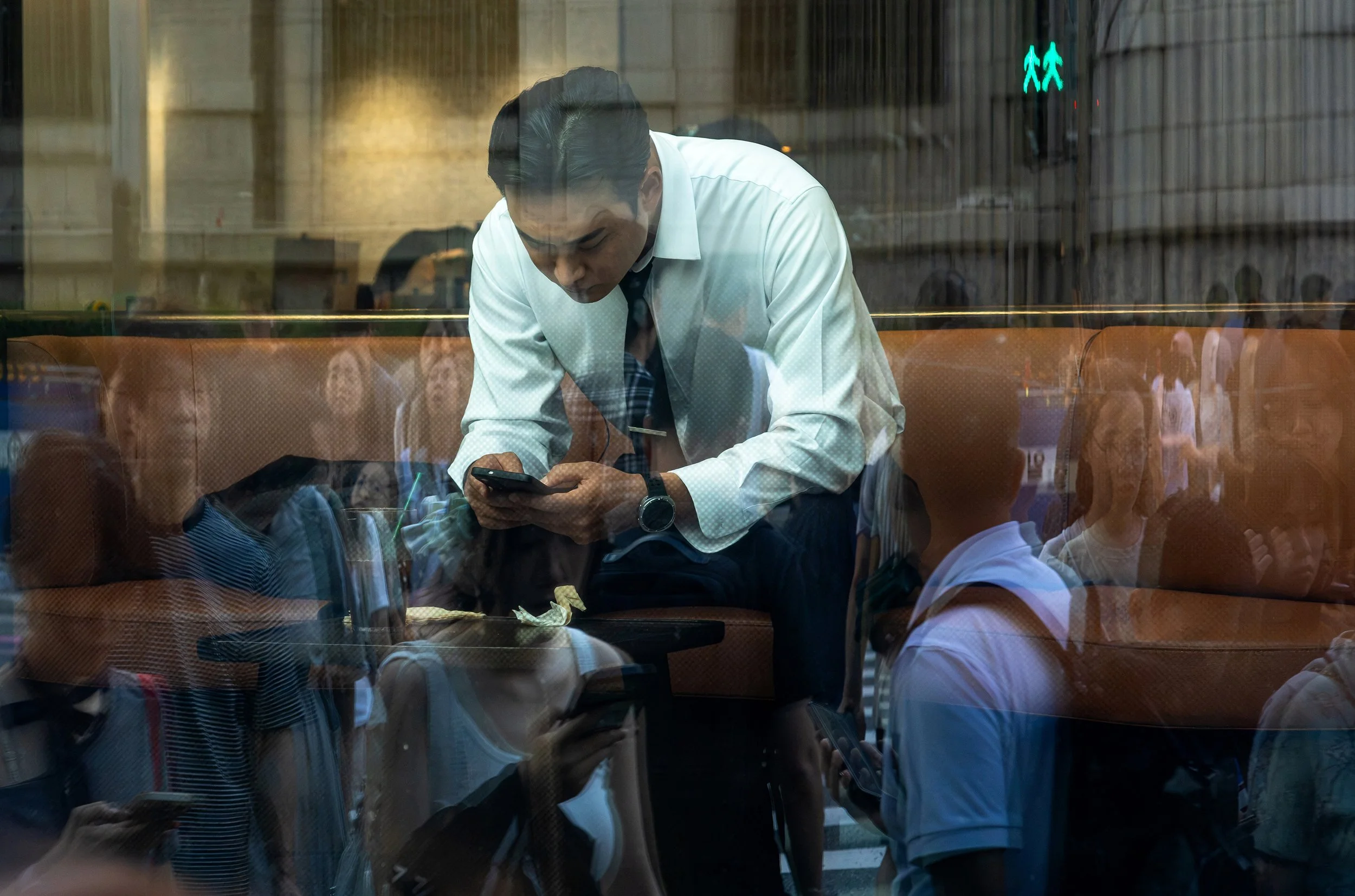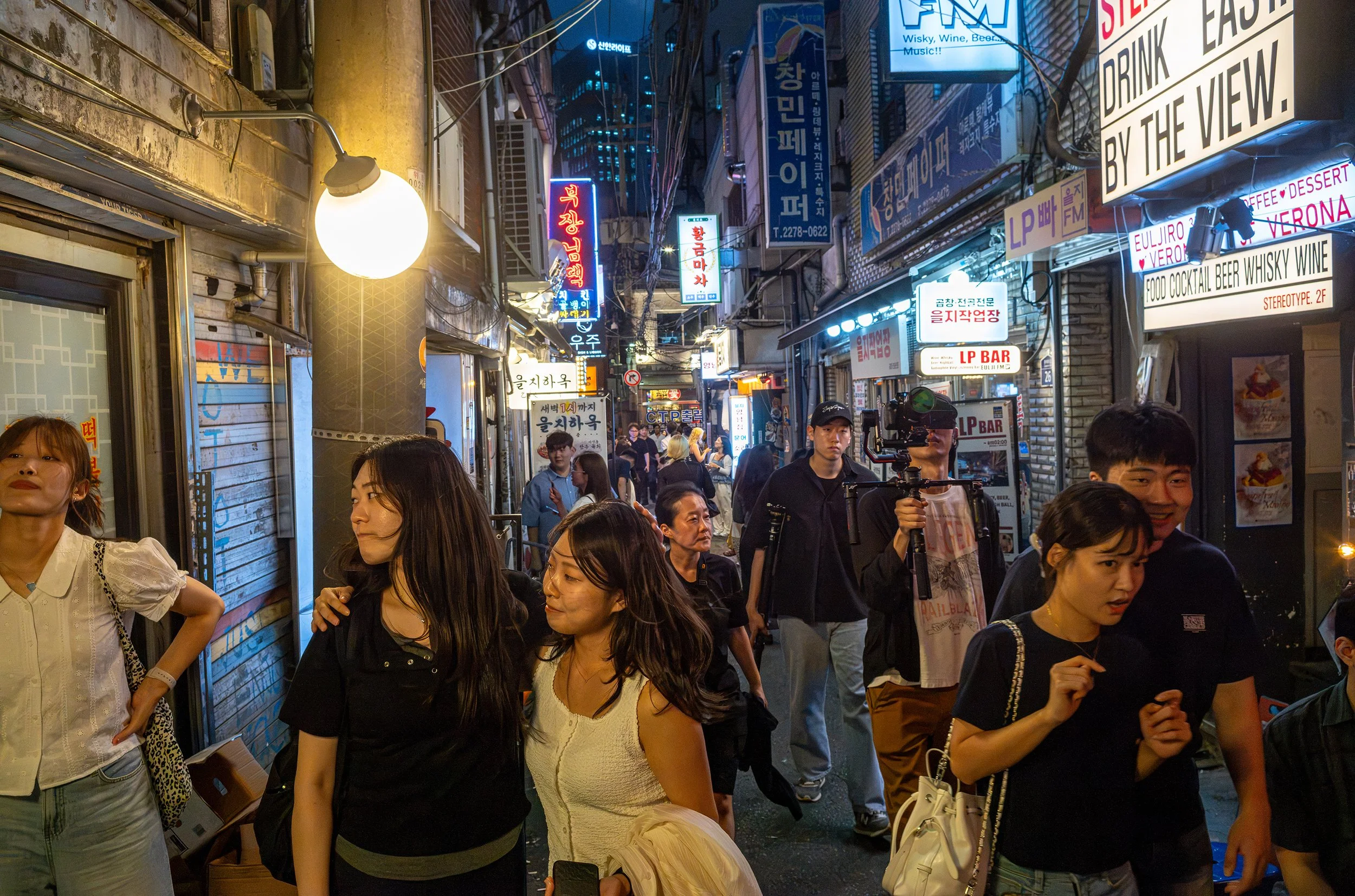
This project's thesis grows out of 感光都市/Exposed City, the photographic project I conducted in Kyoto during the first three years after the COVID-19 pandemic (2023-2025; please refer to the project under WORKS on the website). In it, I explored the streets of Kyoto with particular curiosity toward people from elsewhere and are broadly called “tourists”, the term that, in practice, carries a wide range of nuance.
Among the international visitors I witnessed and encountered, a large proportion were fellow East Asians: Chinese, Taiwanese, Hong Kongese, and Koreans. The phrase “mass tourism” has become increasingly ubiquitous in news and social media, often accompanied by disdain. In Japan, that disdain is entangled with a more complicated historical and economic context: the rapid rise of neighboring East Asian economies and their emerging middle classes occurring alongside Japan’s own prolonged stagnation, the so-called “Lost Decades,” now stretching into their fourth decade since the bursting of the economic bubble in the early 1990s.
As a resident of Kyoto, one of the world’s most recognizable tourist destinations, I began to wonder about this dynamic from the other side. If people from these places were coming to Kyoto to experience what, for them, are its iconic destinations, what would it mean for us Japanese to do the reverse?
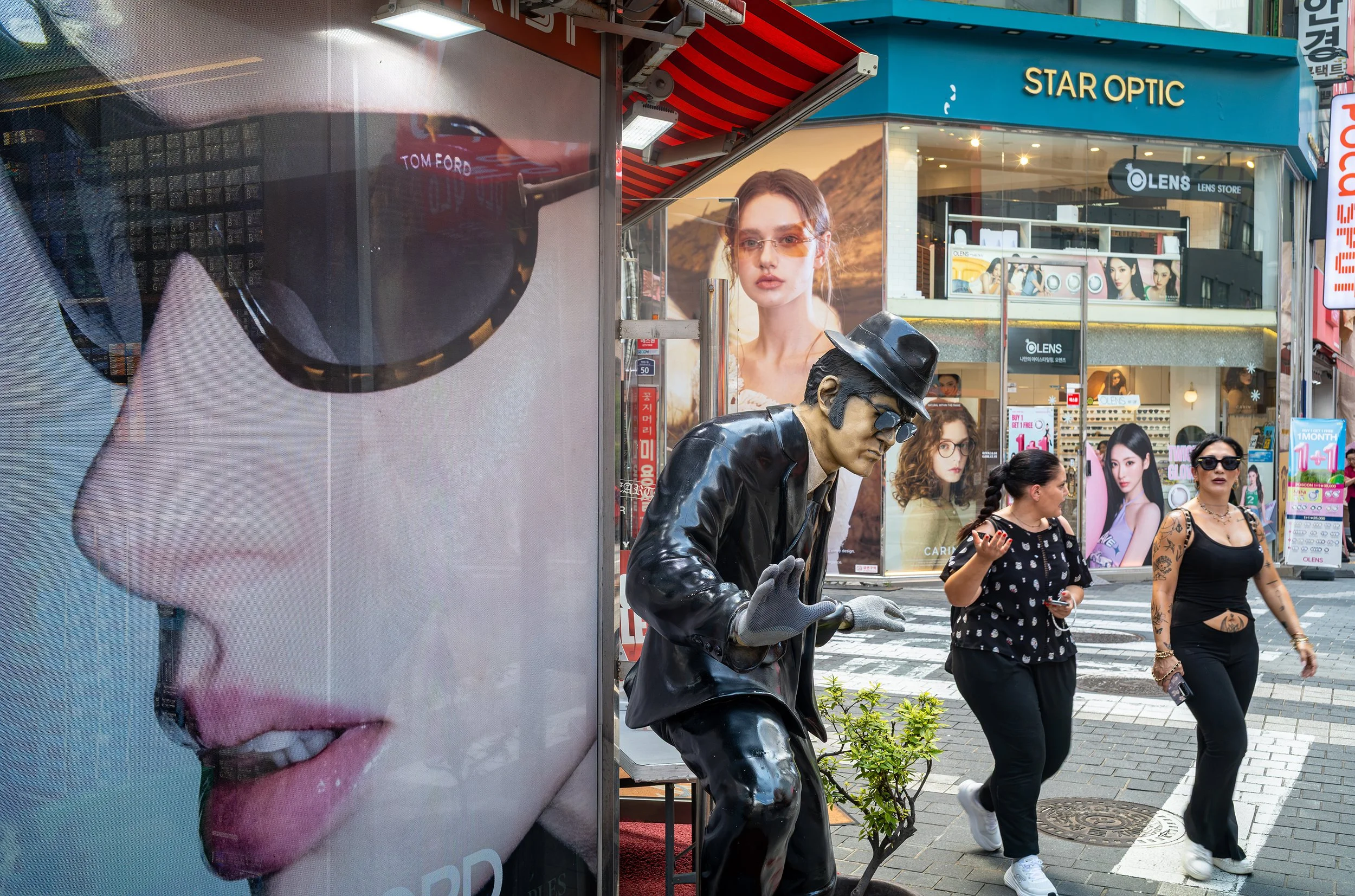
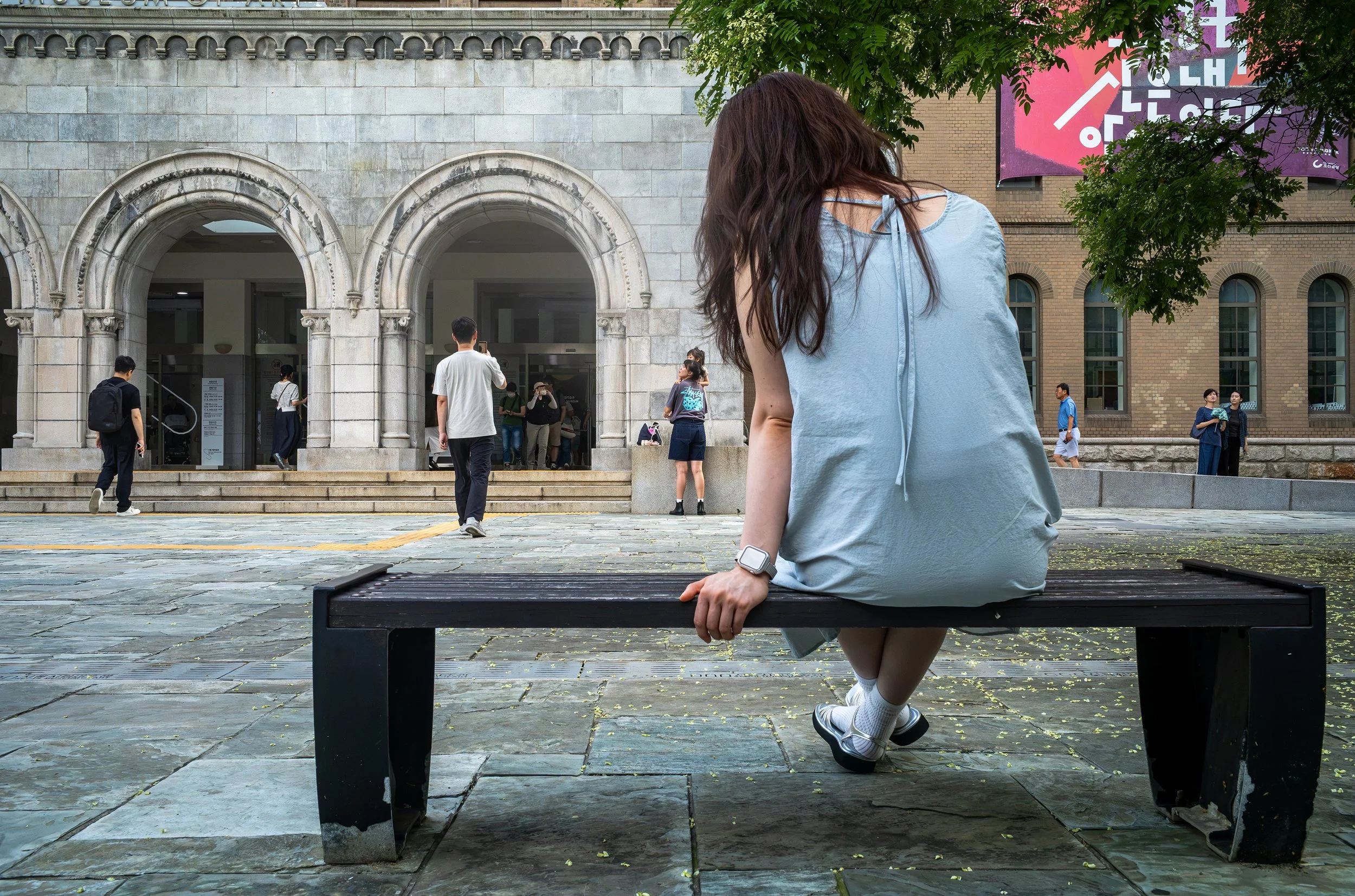
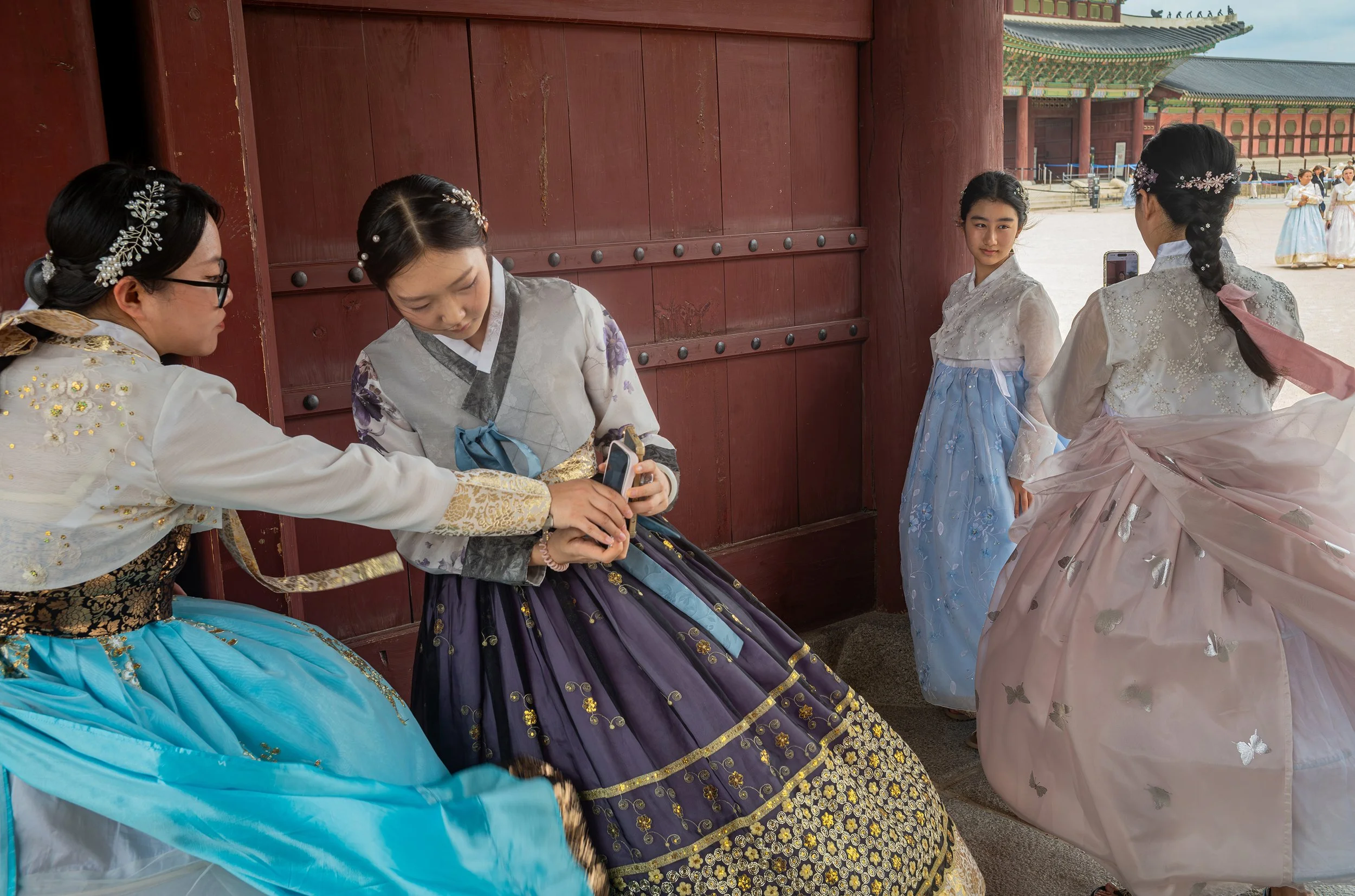
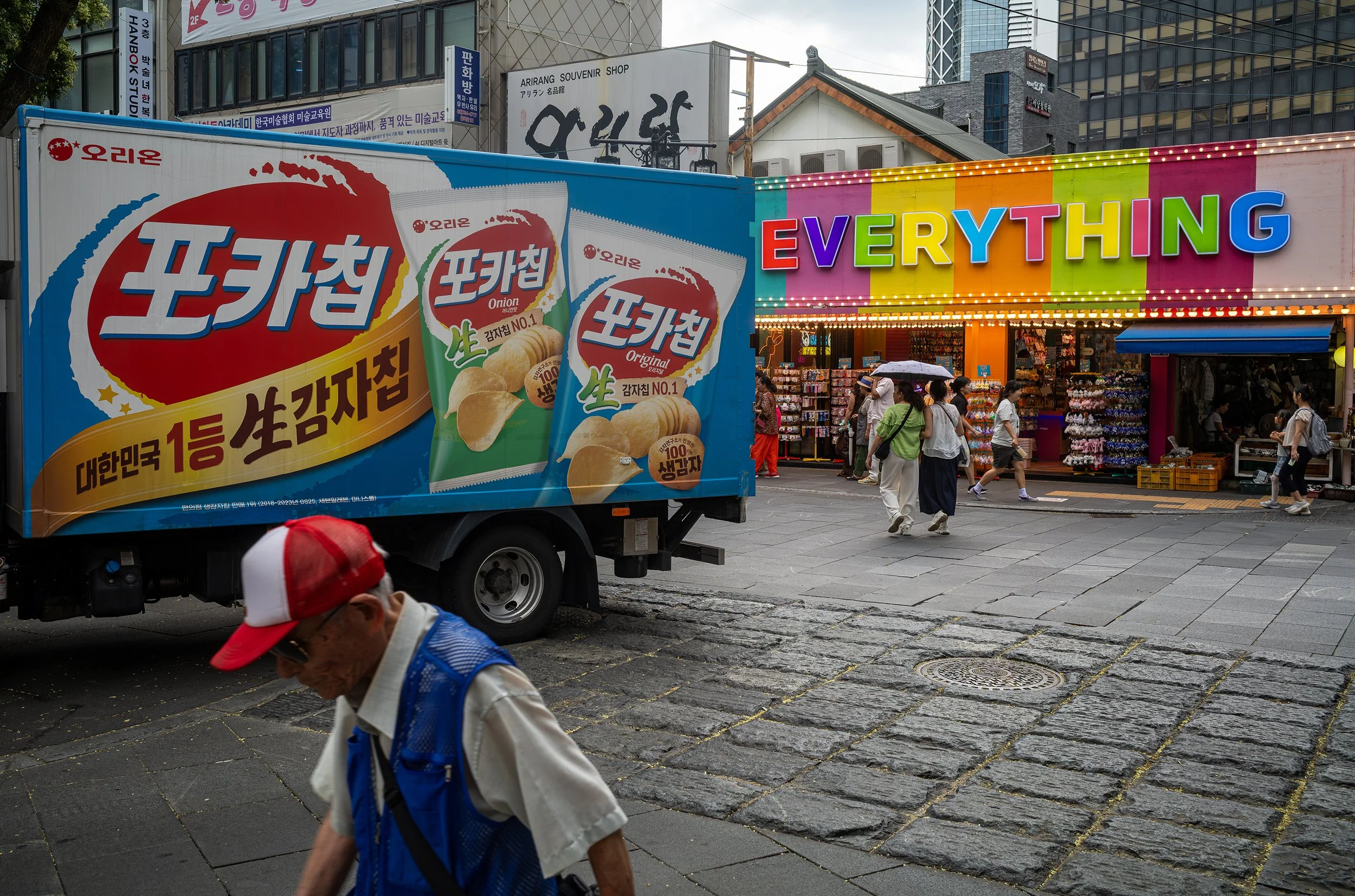
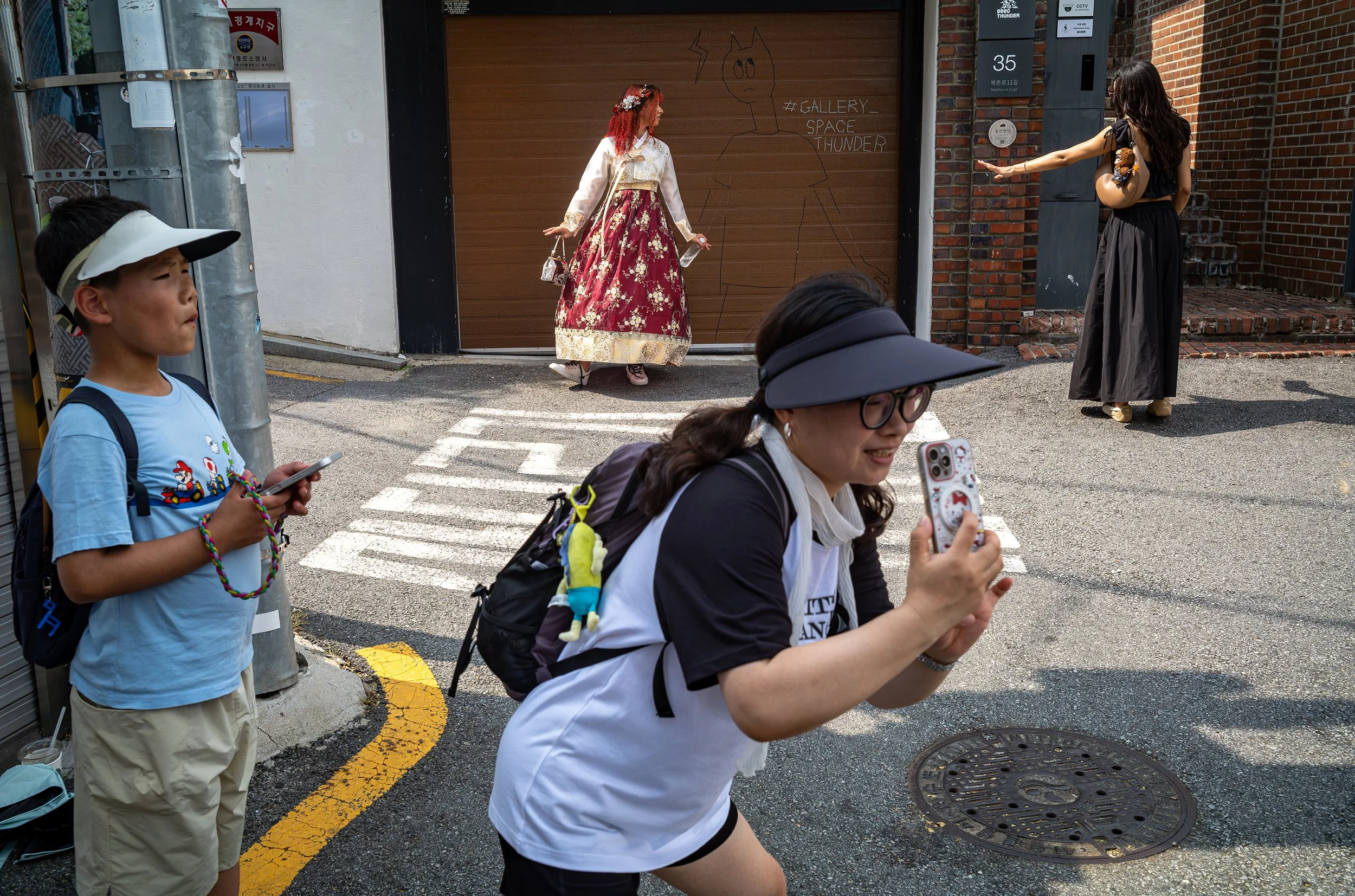
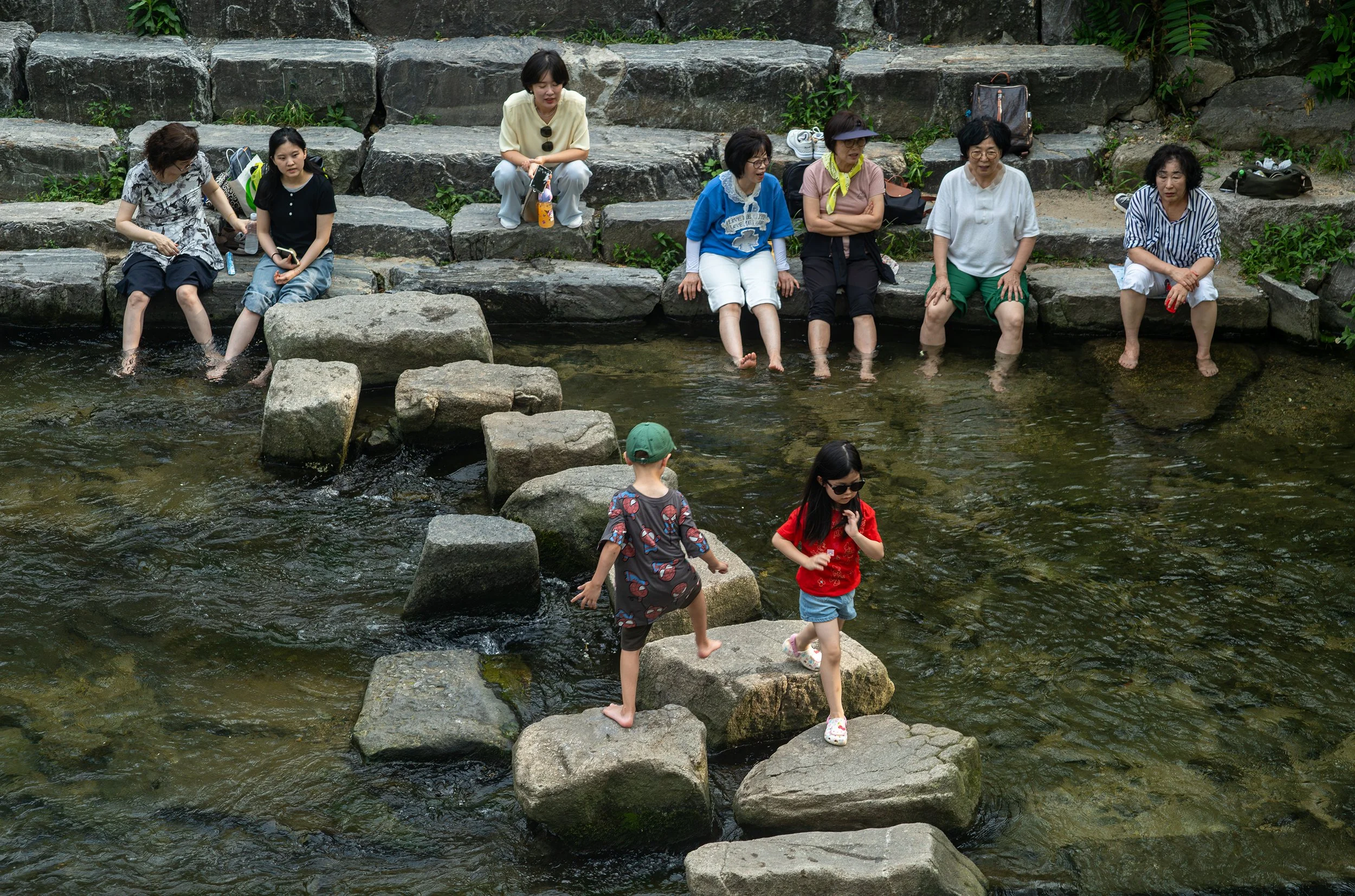
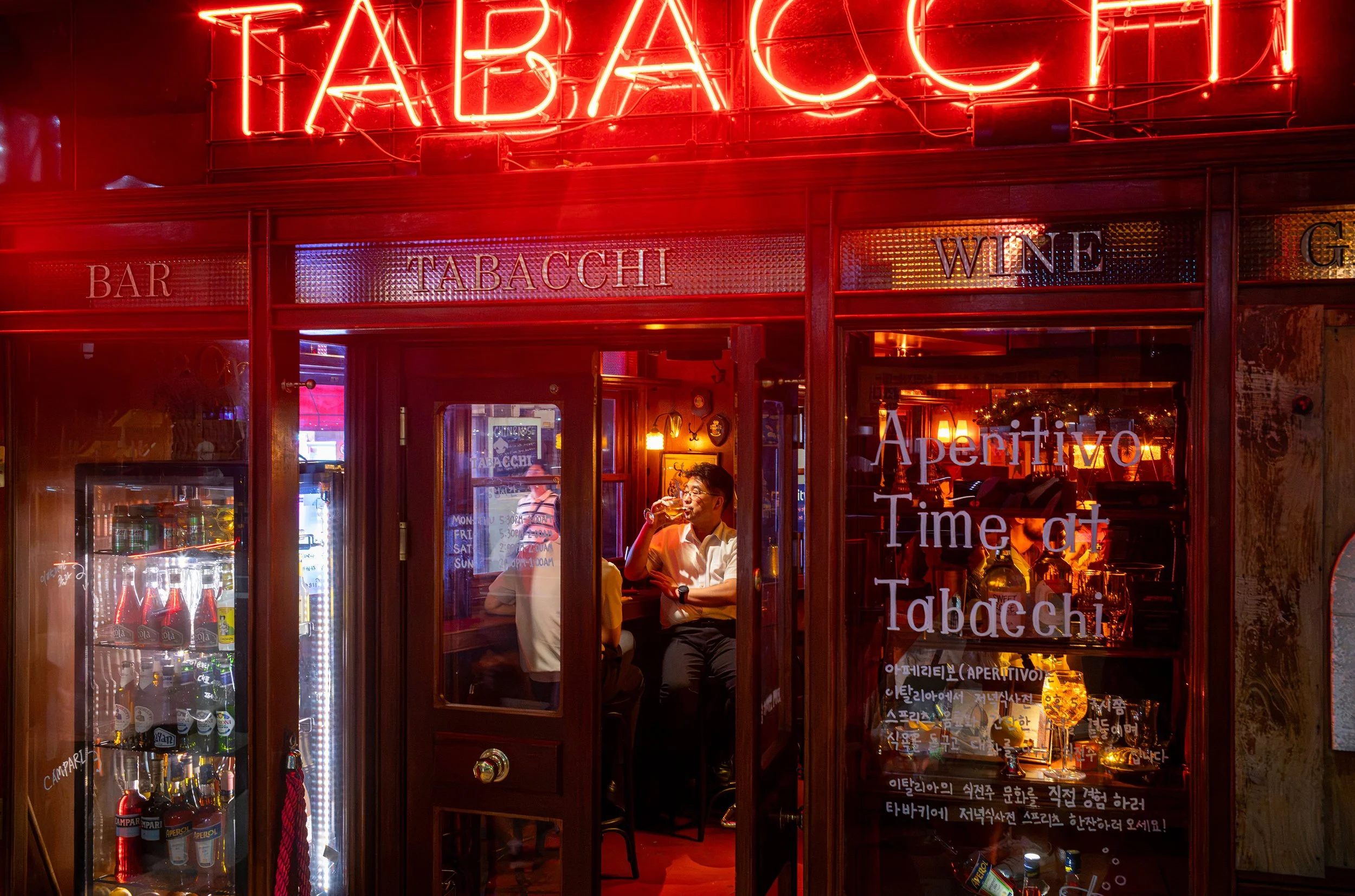
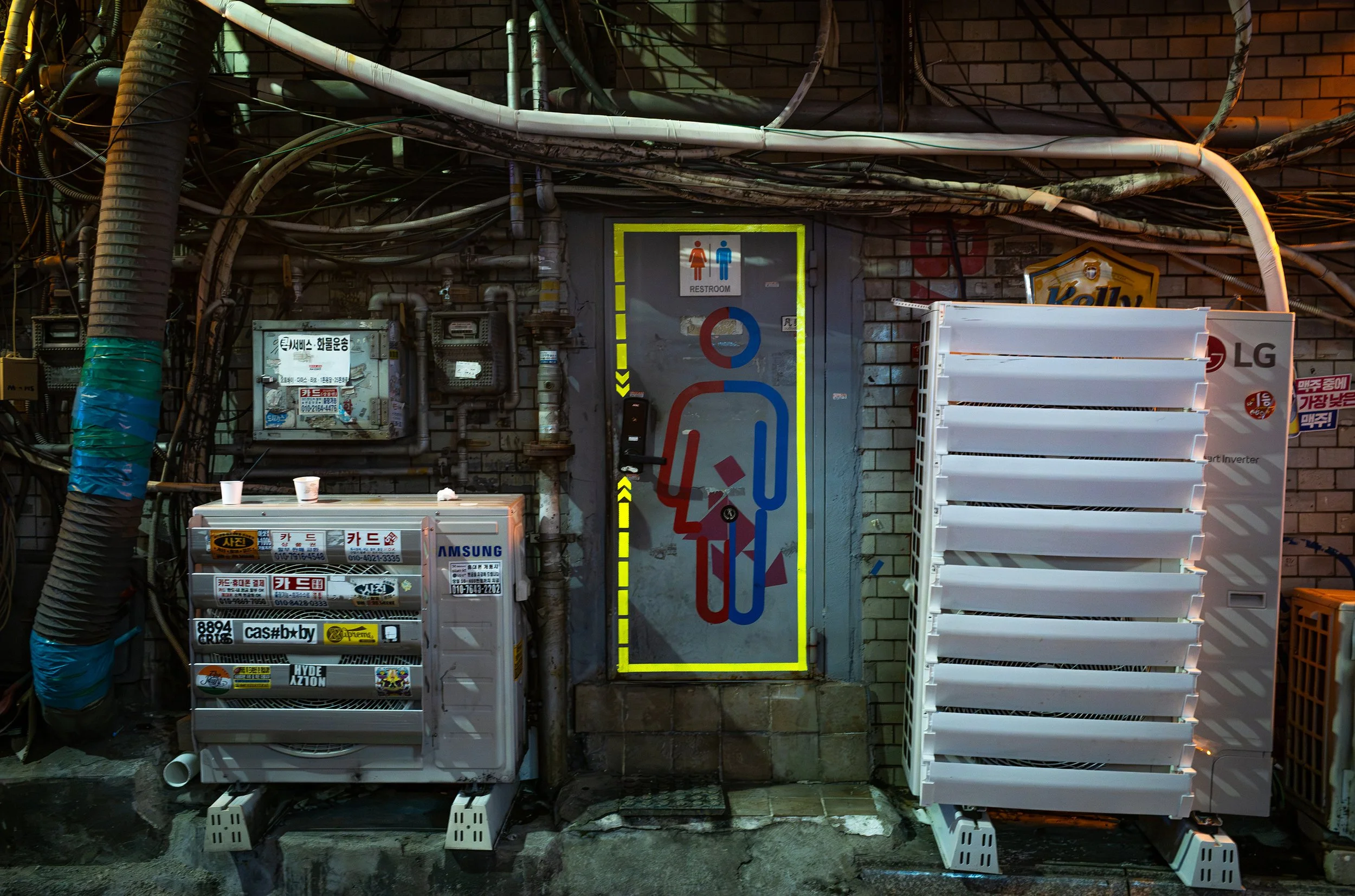
I therefore decided to visit four of the major cities from which many of Kyoto’s visitors come: Taipei, Hong Kong, Shanghai, and Seoul. Rather than approaching them as conventional tourist destinations, I wanted to encounter them through the perspective I had developed while photographing Kyoto. I spent one week in each city, deliberately long enough to experience both weekdays and weekends, not necessarily to see more, but to let the cities’ different rhythms, atmospheres, and vibes of everyday life reveal themselves. By traveling directly to the home cities of the visitors, I intend to turn the project into a multi-directional exchange. The "near-but-far" reciprocal approach, I believe, elevates the work from voyeuristic street shooting into an intentional anthropological study of shared East Asian urban realities mixed with the ethics and execution of candid portraiture of the cities, with a methodology containing the "great paradox" of street photography: maintaining a consistent conceptual style and approach while relying entirely on volatile, fleeting chance encounters on the street.
This project is, in that sense, a continuation of Exposed City: an attempt to turn the camera around, to move from the city being visited to the city of the visitors, and to reconsider who is looking at whom, while capturing moments in which those photographed seem spontaneous while simultaneously appearing highly composed.
このプロジェクトの出発点は、COVID-19パンデミック後の最初の3年間、2023年から2025年にかけて京都で撮影した写真プロジェクト『感光都市 / Exposed City』(WORKS内プロジェクトページを参照)にある。
『感光都市 / Exposed City』では、京都の街を歩きながら、外からやって来る人々、そしてひとまとめに「観光客」と呼ばれる人々への好奇心を軸に、都市の風景とそこに生まれる人々同士の関係性を捉えようとした。しかし、「観光客」という言葉が指し示すものは決して一様ではなく、その内側にはさまざまな背景やニュアンスが存在していることがはっきりした。
京都で目にし、出会った外国人観光客の中でも、とりわけ多くを占めていたのが中国、台湾、香港、韓国など、東アジアから訪れる人々だった。一方で「マスツーリズム」という言葉はニュースやソーシャルメディアを通じてますます頻繁に語られるようになり、そこにはしばしば観光客に対する嫌悪や蔑視が伴っている。
日本におけるその感情の背景にはより複雑な歴史的・経済的状況がある。近隣の東アジア諸国で経済が急速に成長し、新たな中間層が形成されていった一方で、日本は長期的な経済停滞を経験してきた。1990年代初頭のバブル経済崩壊以降、「失われた10年」と呼ばれた時代は、途切れることなく、いまや「失われた30年」を超えてなお続いている。
世界でもっとも知られた観光都市のひとつである京都に暮らす者として、私はこの関係を別の角度から見てみたいと思うようになった。
彼らが京都にやってきて、彼らにとっての象徴的な場所を訪れるのであれば、私たち日本人が反対方向に同じことを行うとき、そこには何が見えてくるのだろうか。
そこで私は、京都を訪れる観光客の多くが暮らす東アジアの主要都市、台北、香港、上海、ソウルを訪れることにした。
それらを一般的な観光地として見るのではなく、京都を撮影する中で培ってきた自分自身の視点を通して、それらの都市と向き合うことを試みた。各都市には一週間ずつ滞在した。平日と週末の双方を経験できるだけの時間を意識的に確保したのは、より多くの場所を見るためではなくそれぞれの都市に固有のリズムや空気、そして日常の営みが、一週間という時間軸の中から立ち現れてくることを期待したからである。
日本では「観光客」と呼ばれた人々が暮らす都市へ自ら赴くことで、このプロジェクトを一方向的な関係性のみで完結するのではなく、双方向的な写真ベクトルを持った検証へと転換したいと考えている。
「近いけれど遠い」という相互的な視点は、このプロジェクトを単なる覗き見的なストリートスナップから、東アジアに共有される都市の現実を探る、意図的な人類学的考察へと導くものだと考えている。同時にそこには、都市そのものを被写体とした率直な空間的肖像の倫理と実践が交差している。
この方法論には、ストリート写真が抱える「大きな逆説」がある。すなわち、一貫したコンセプトと写真表現のスタイルやアプローチを維持しながら、その実現を、街角で偶然に遭遇する予測不可能で一瞬の出来事に全面的に委ねざるをえないという矛盾である。
その意味で、このプロジェクトは『感光都市 / Exposed City』の延長線上にある。
カメラを反転させ、訪れられる側から、訪れる側へと視点を移すこと。そして、「誰が誰を見ているのか」という関係性そのものを問い直すこと。
街の中で偶然出会った人々を撮影しながら、そこに生まれる瞬間が、自然発生的であるにもかかわらず強く構図的に意識されたイメージとして立ち現れる瞬間を捉えようとしている。
このプロジェクトは、観光する者と観光される都市という一方向的なロールプレイを入れ替えることで、私たちが互いをどのように見ているのか、そして同じ東アジアという地理的・文化的空間の中で、私たちはどれほど近く、またどれほど遠い存在なのかを考察する試みである。
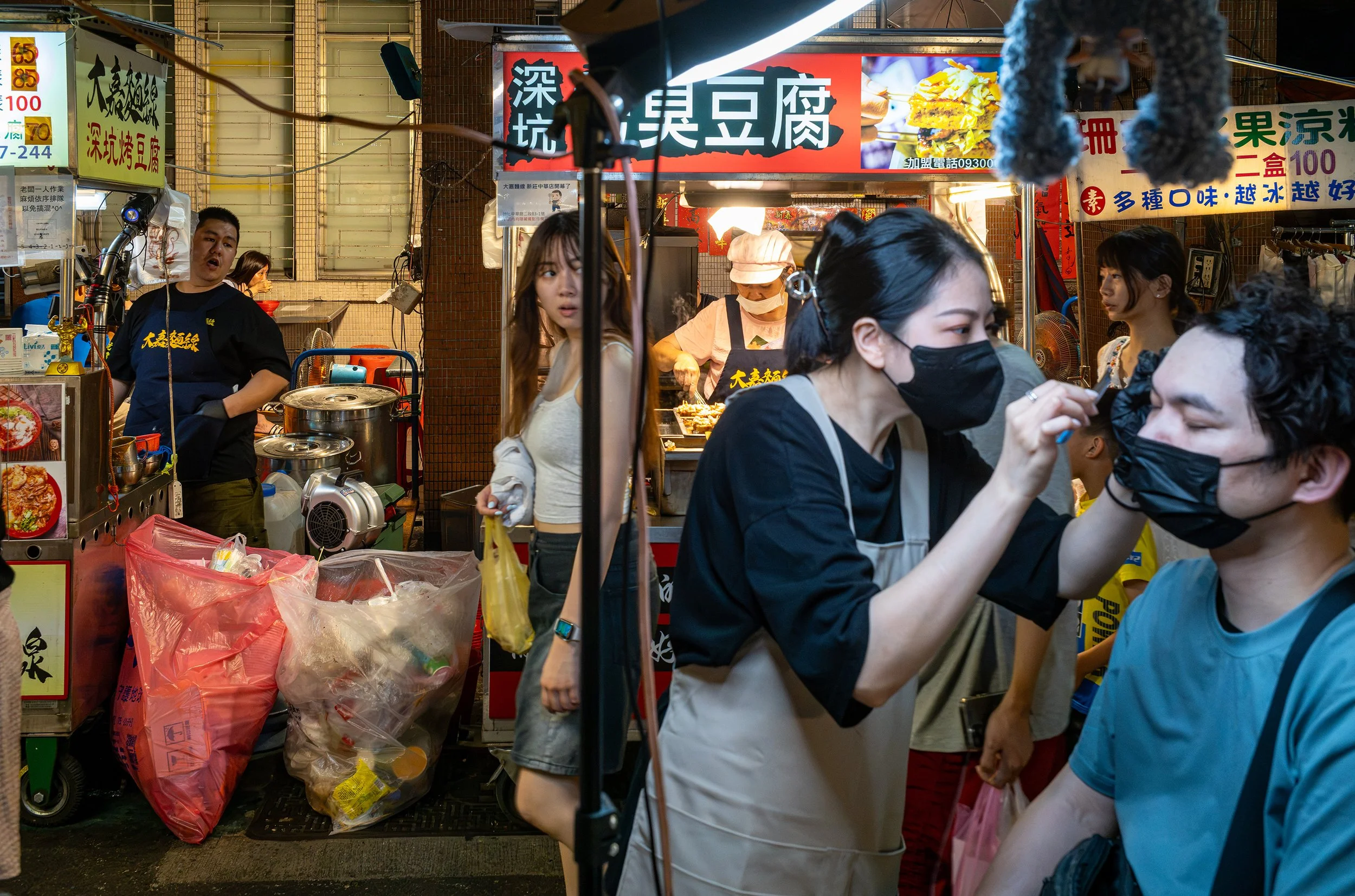
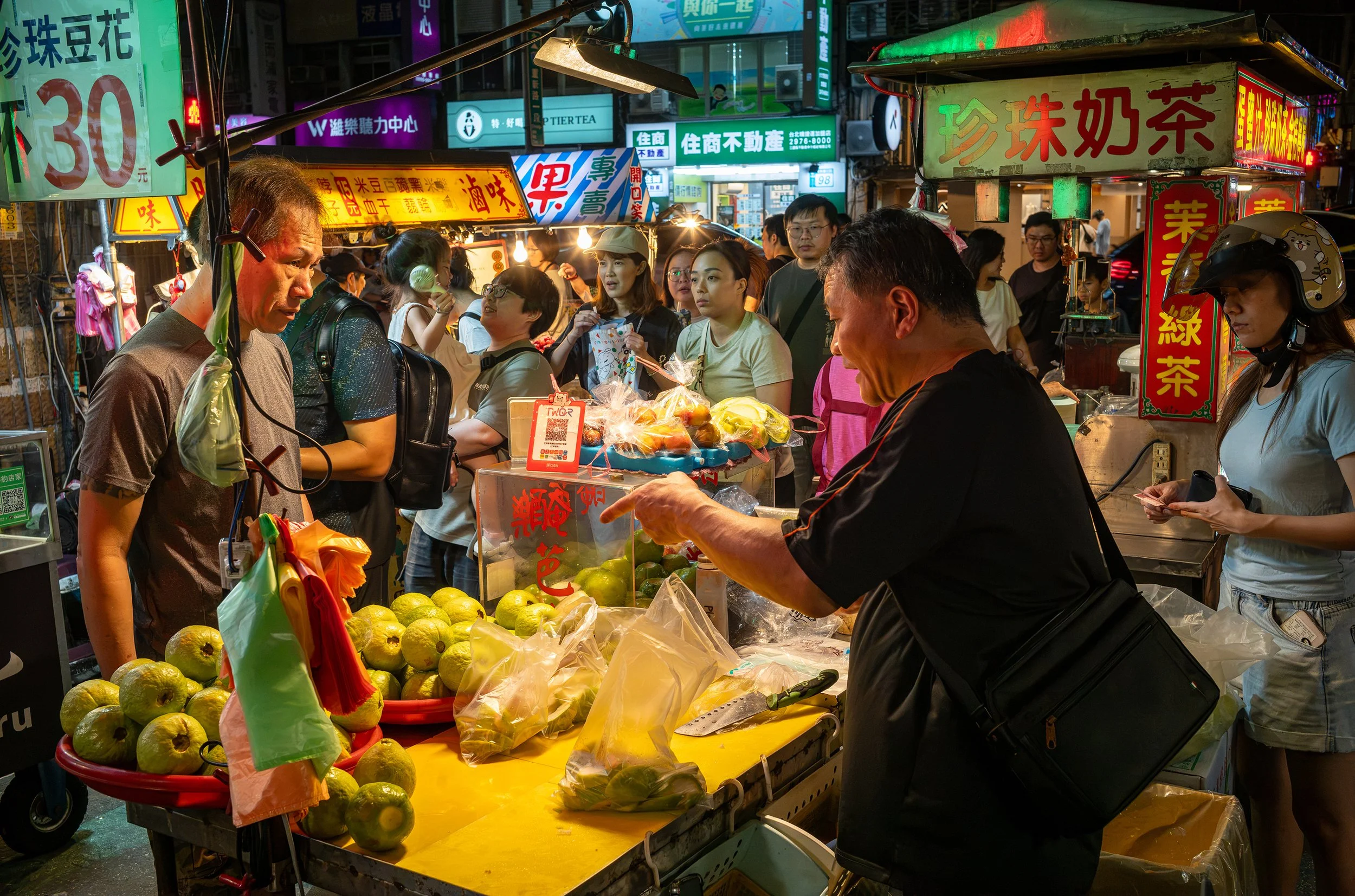
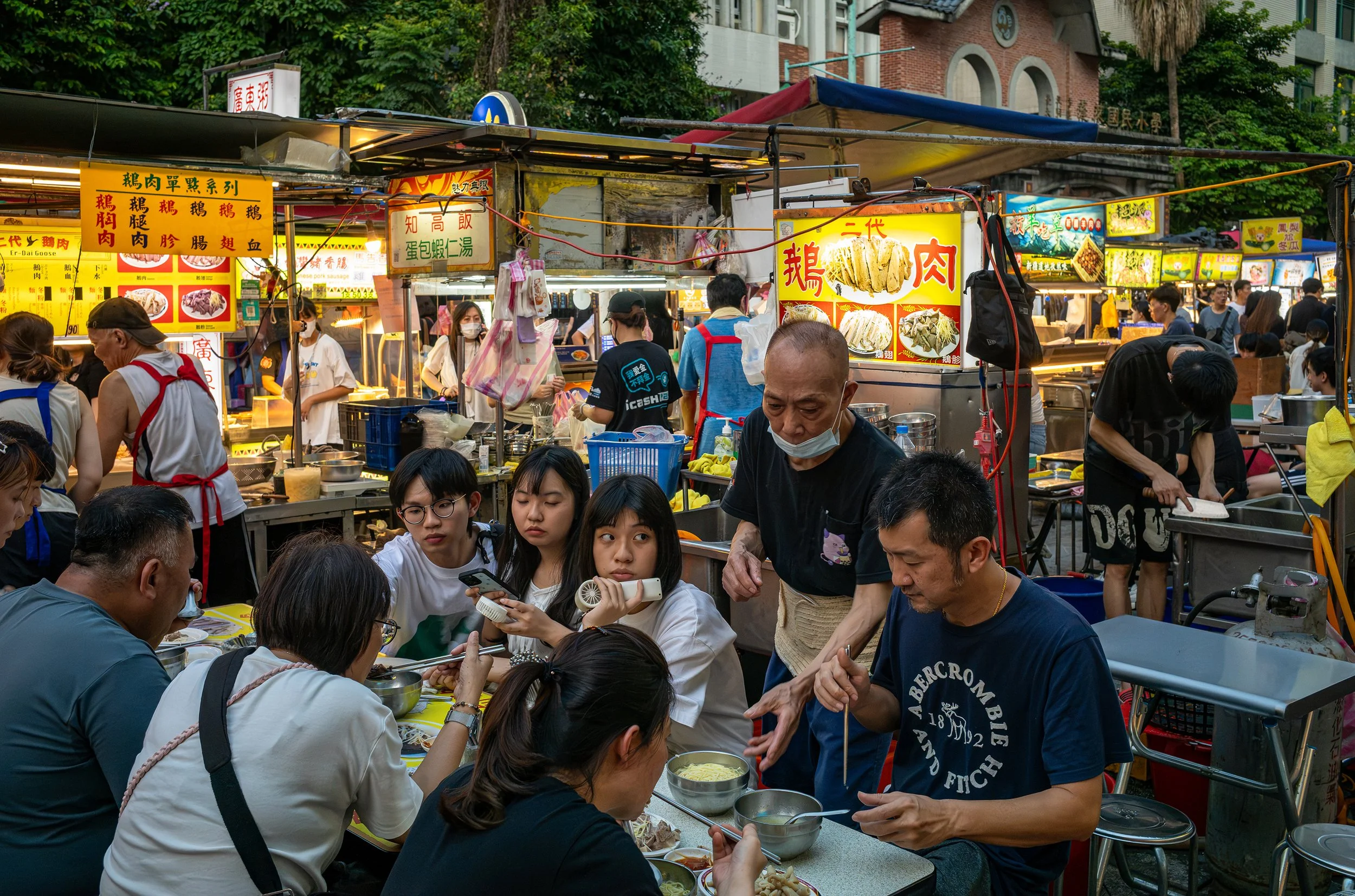
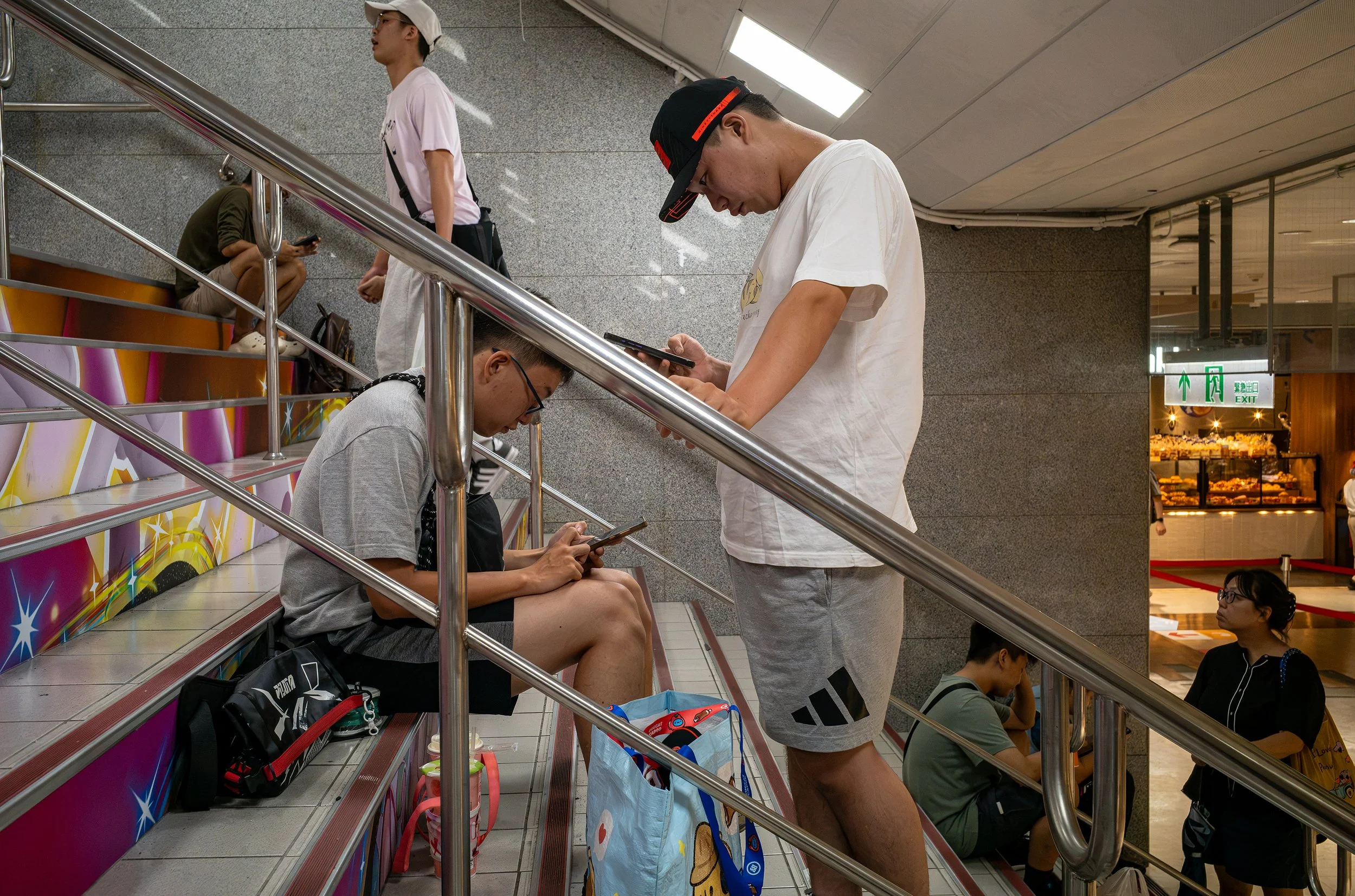
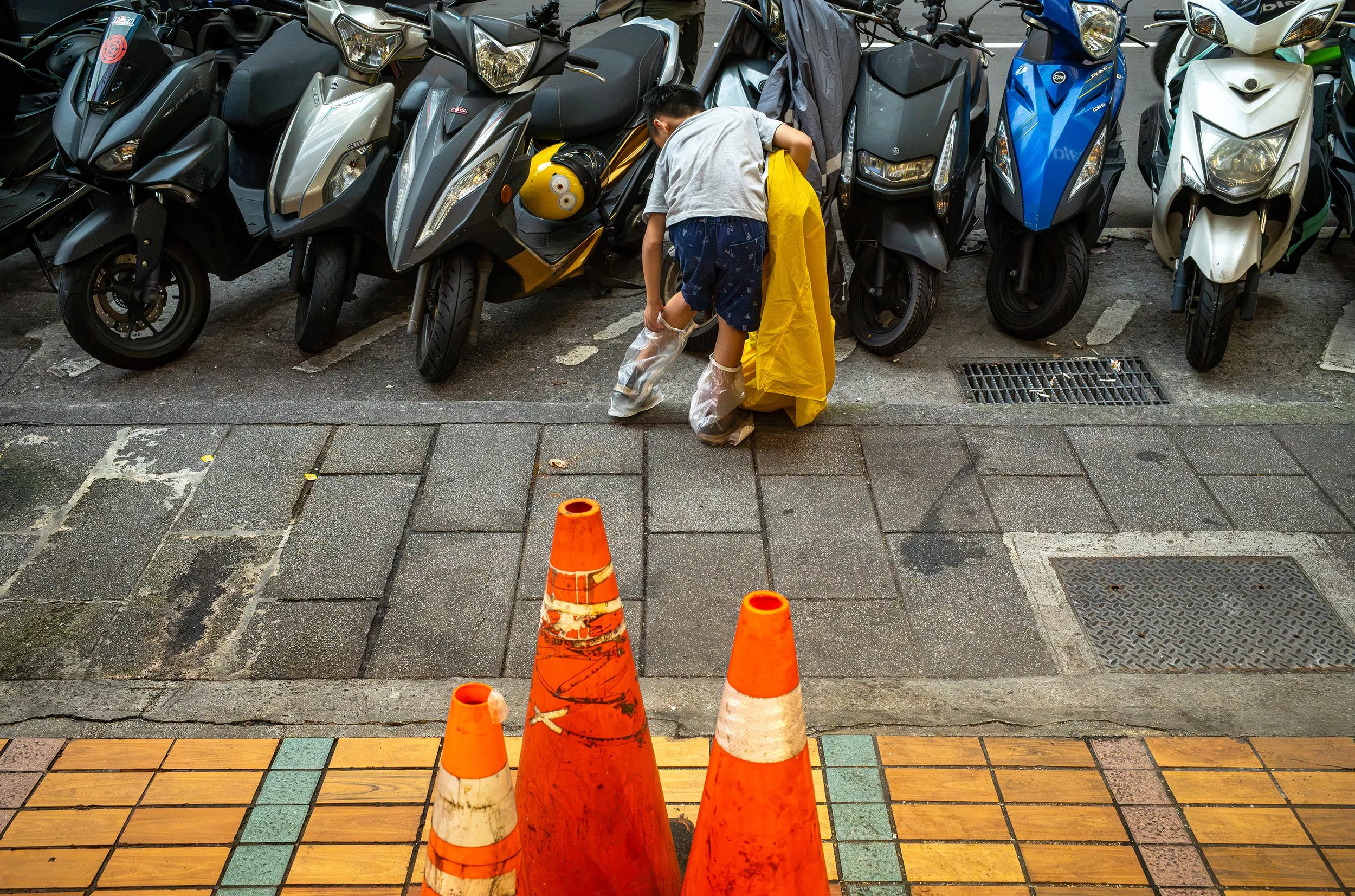
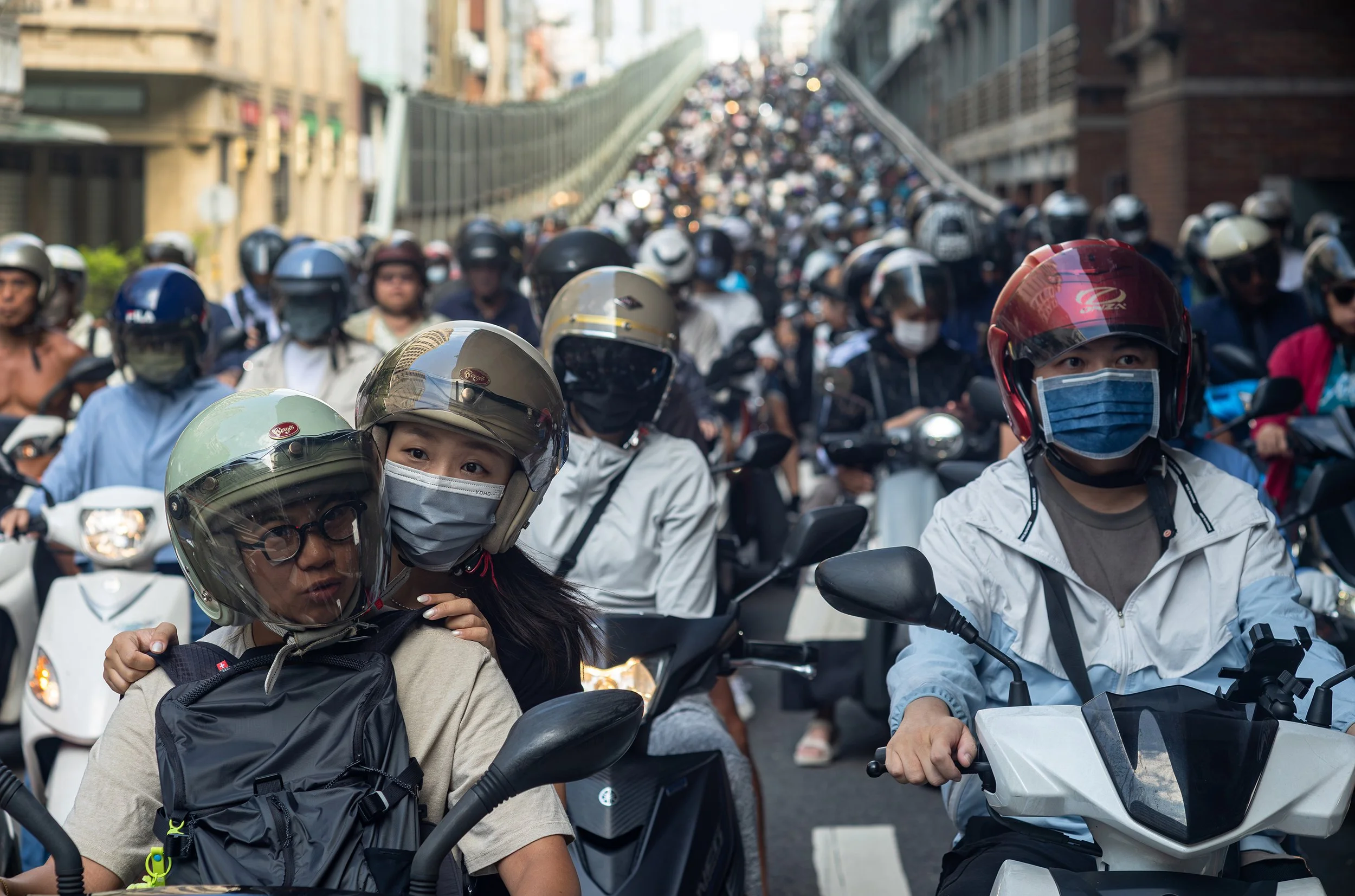
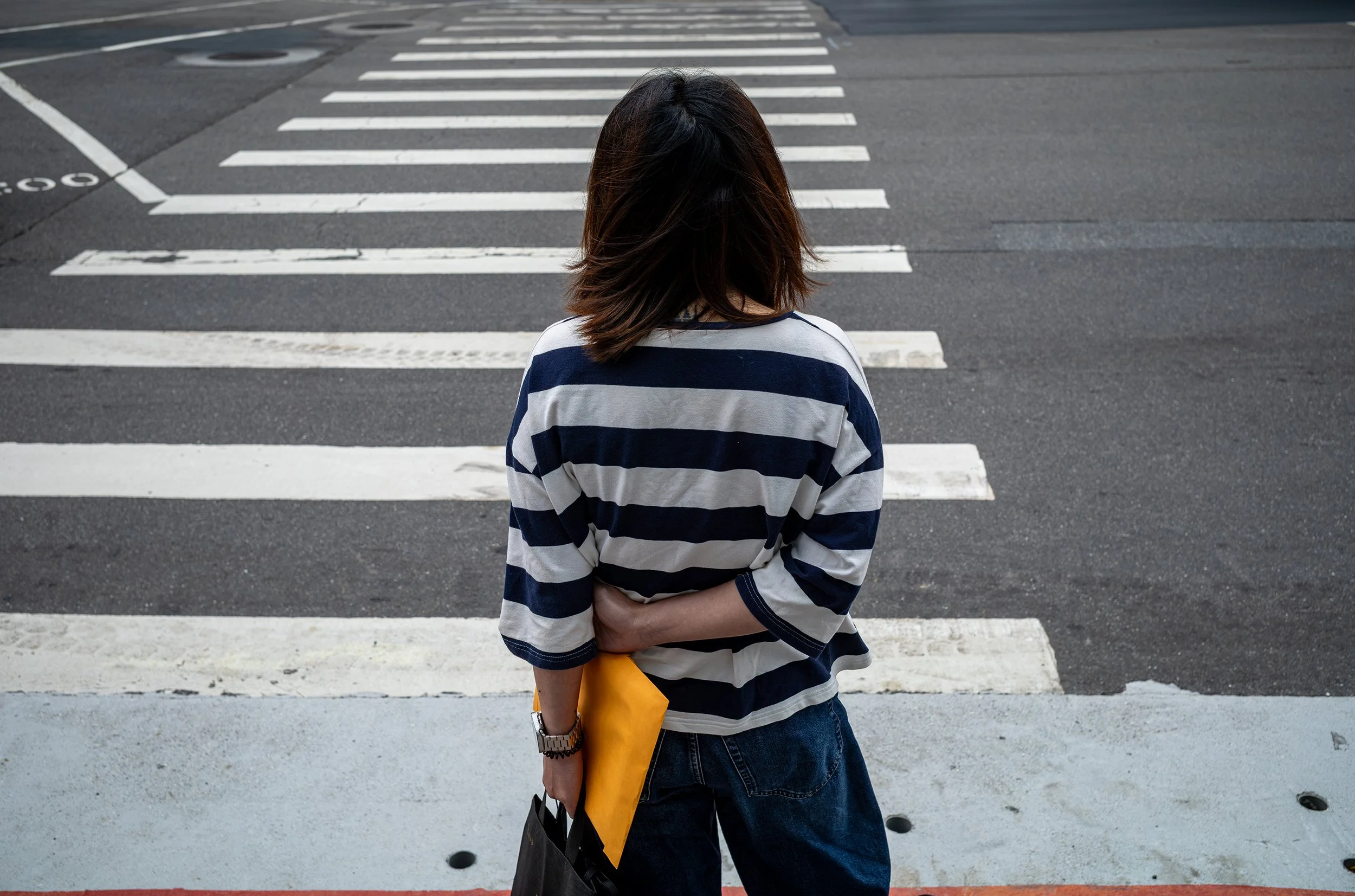
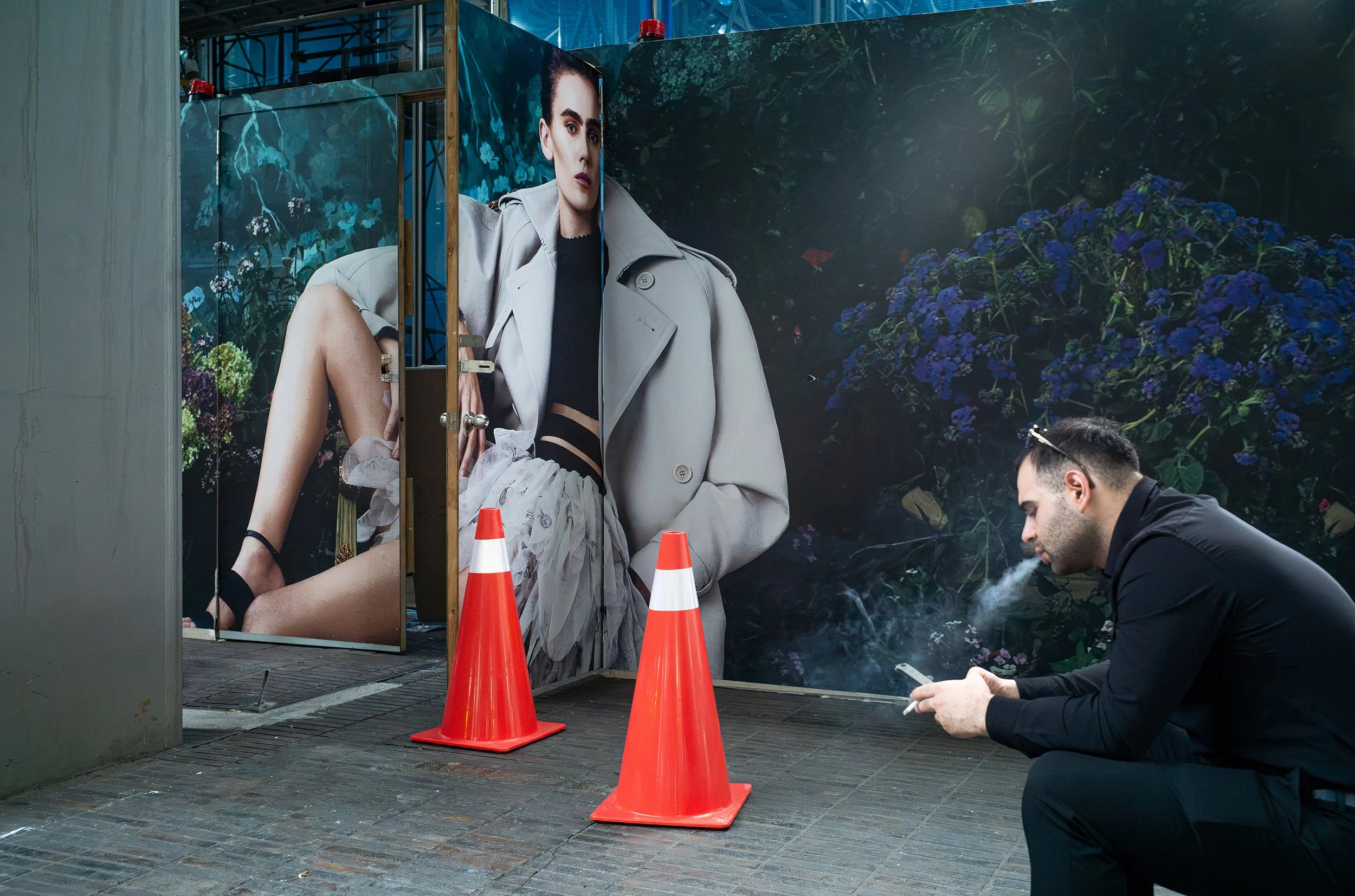
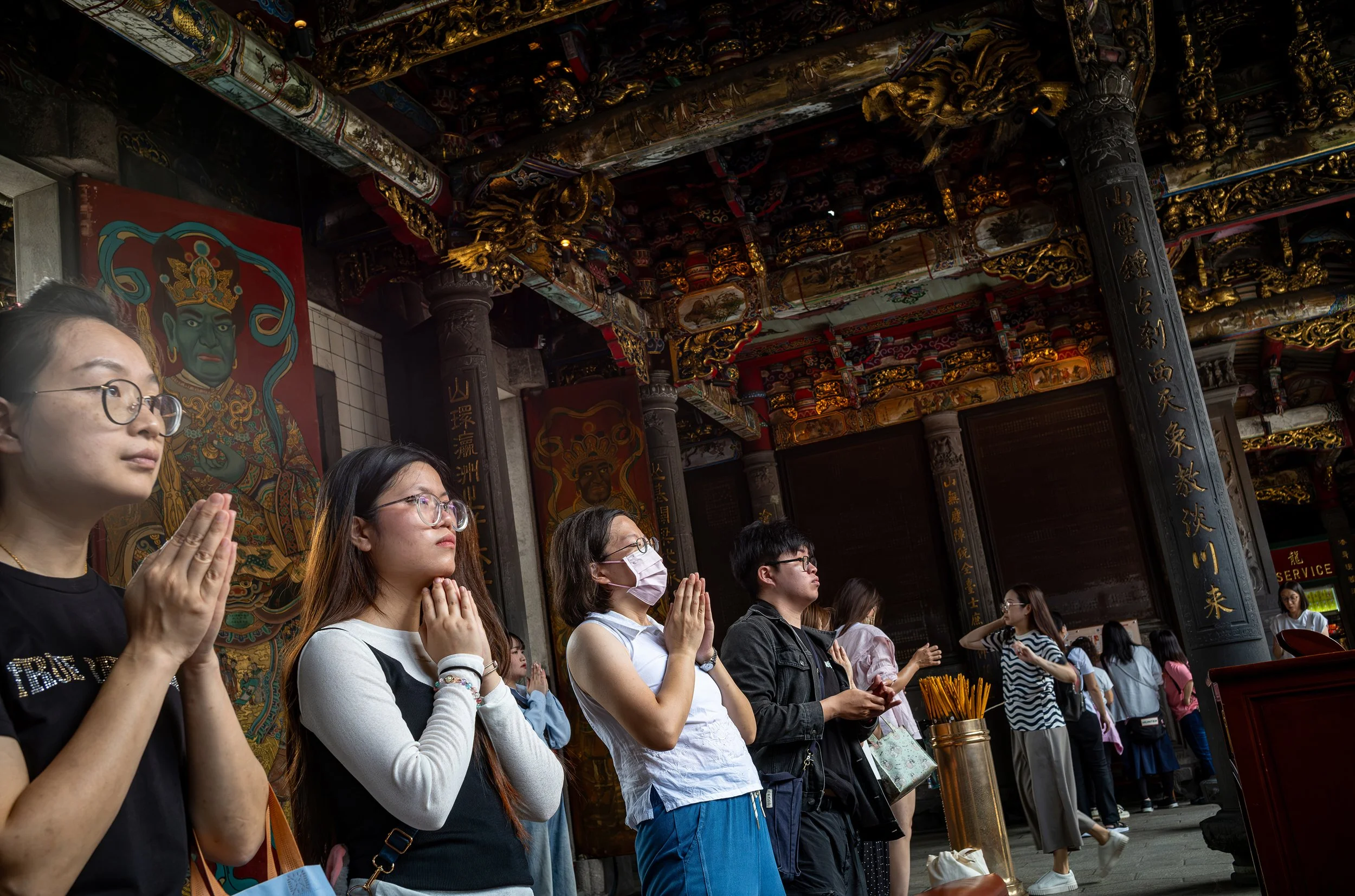
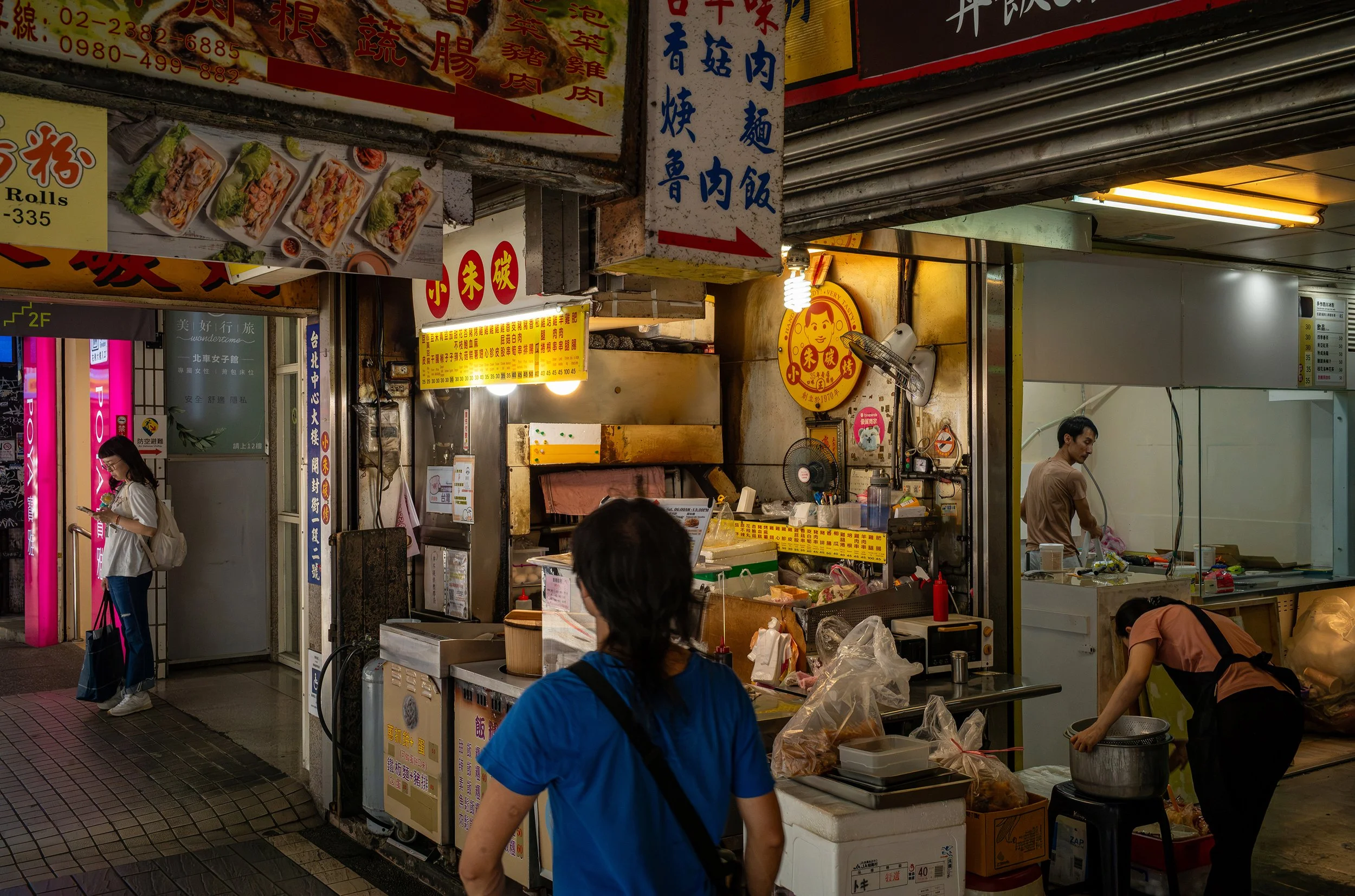
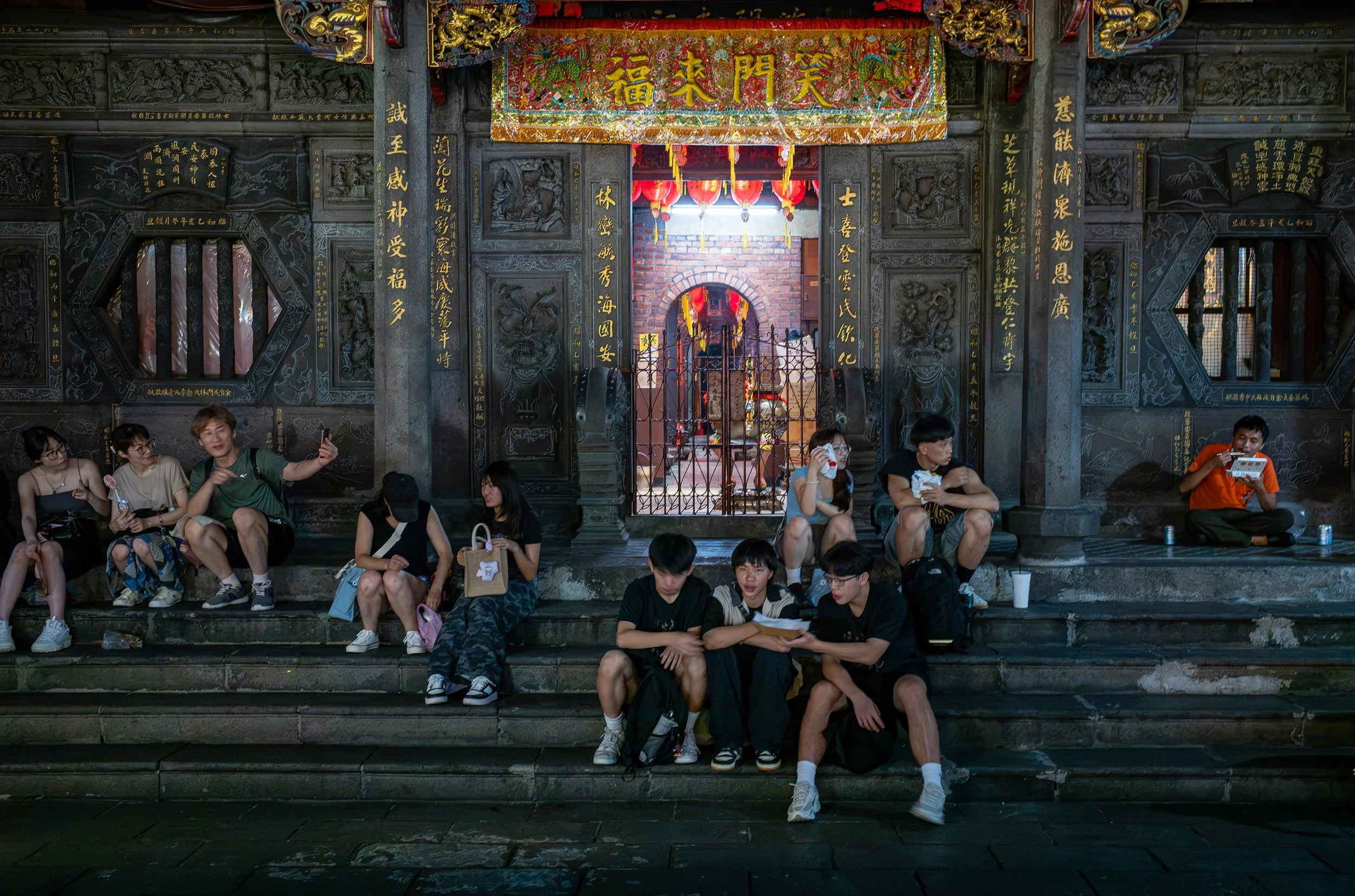
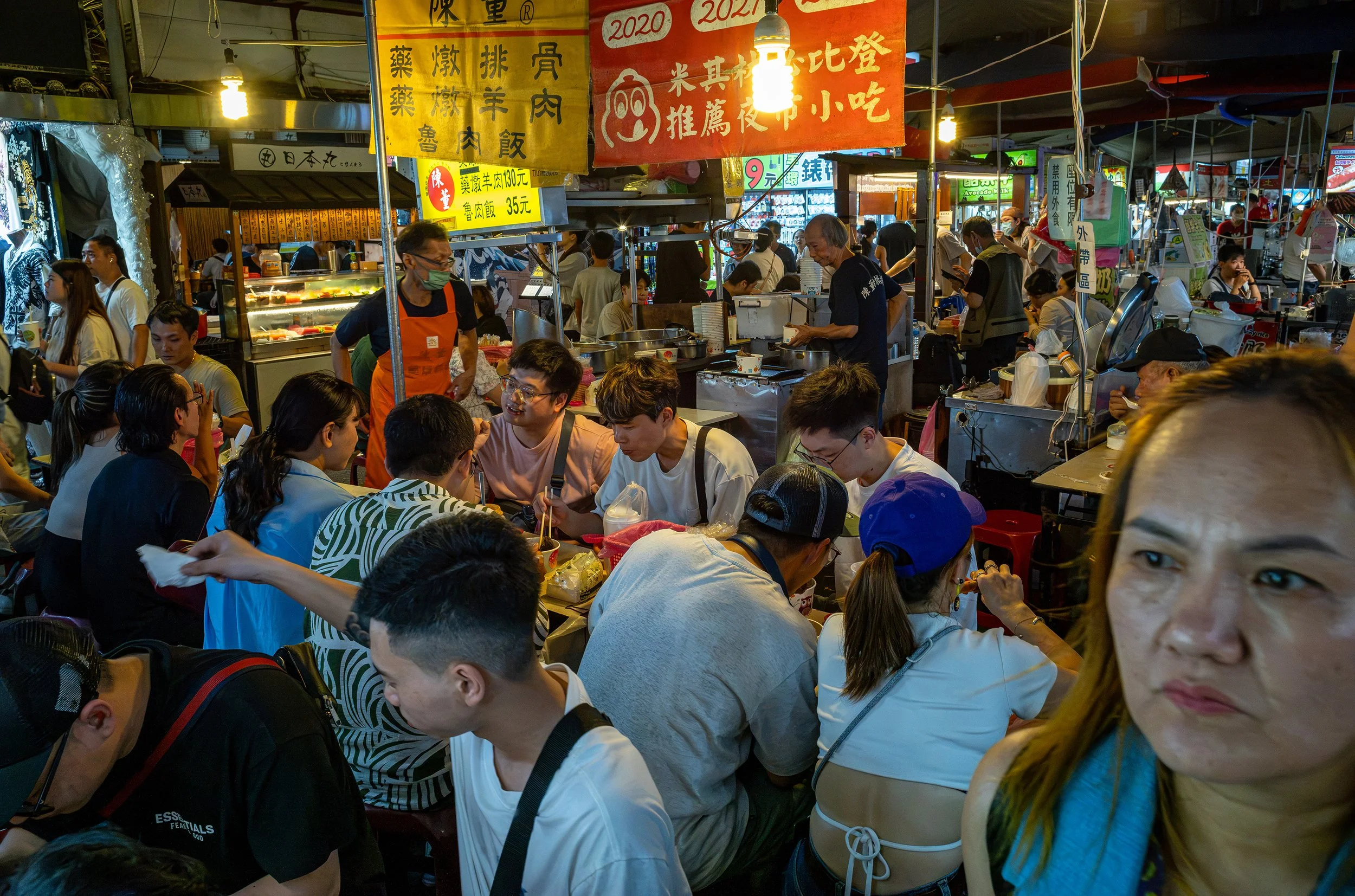
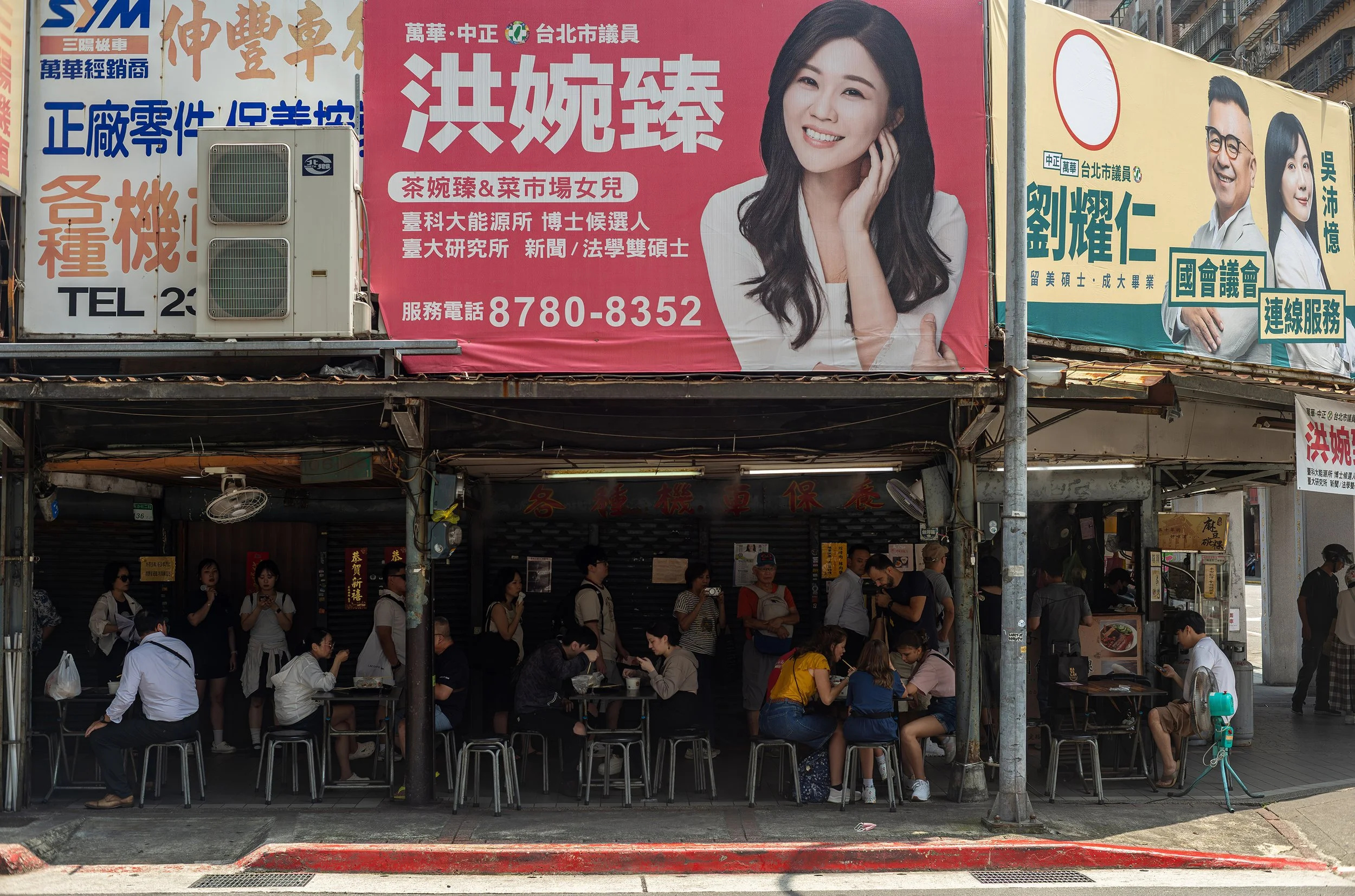
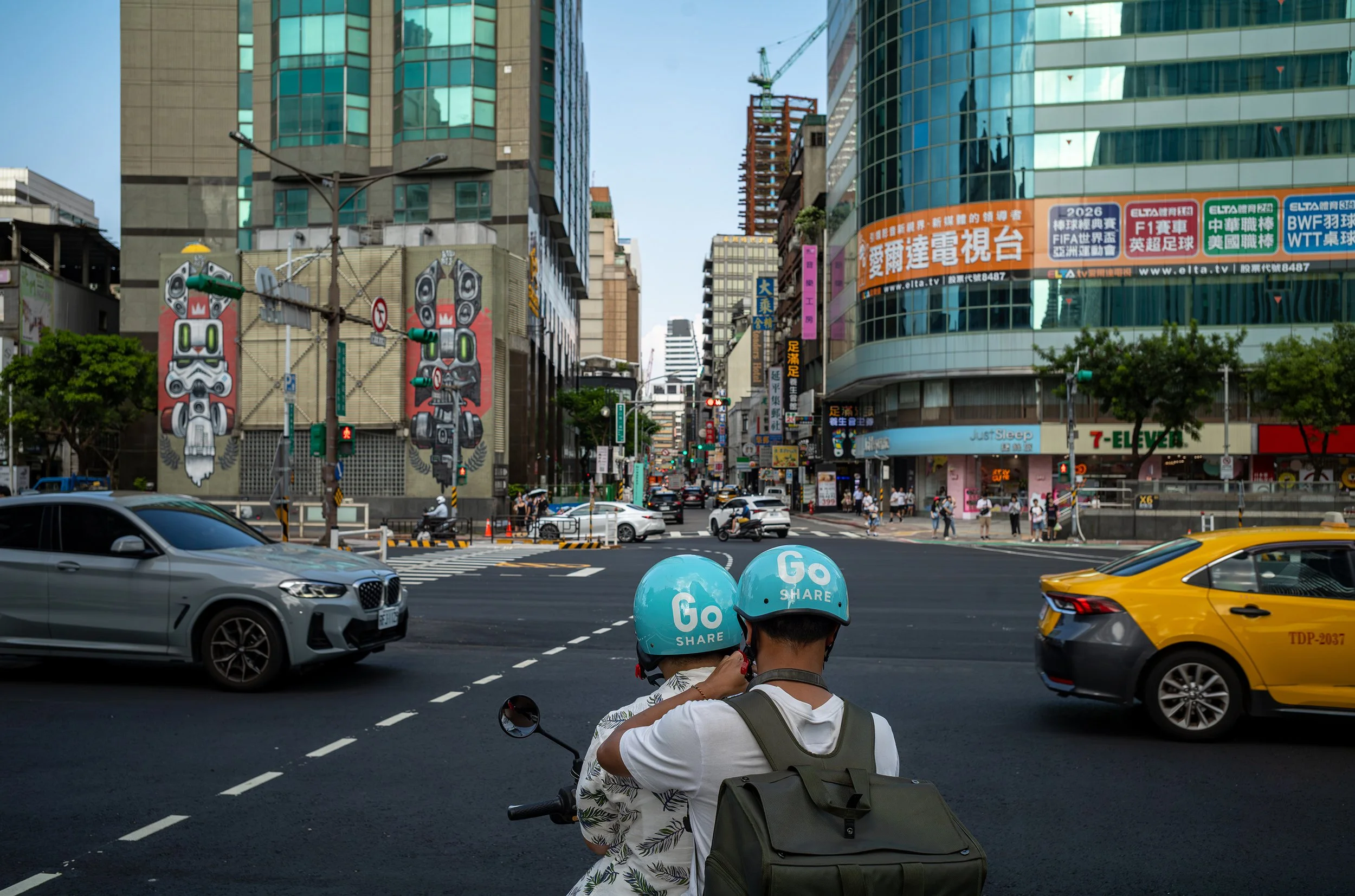
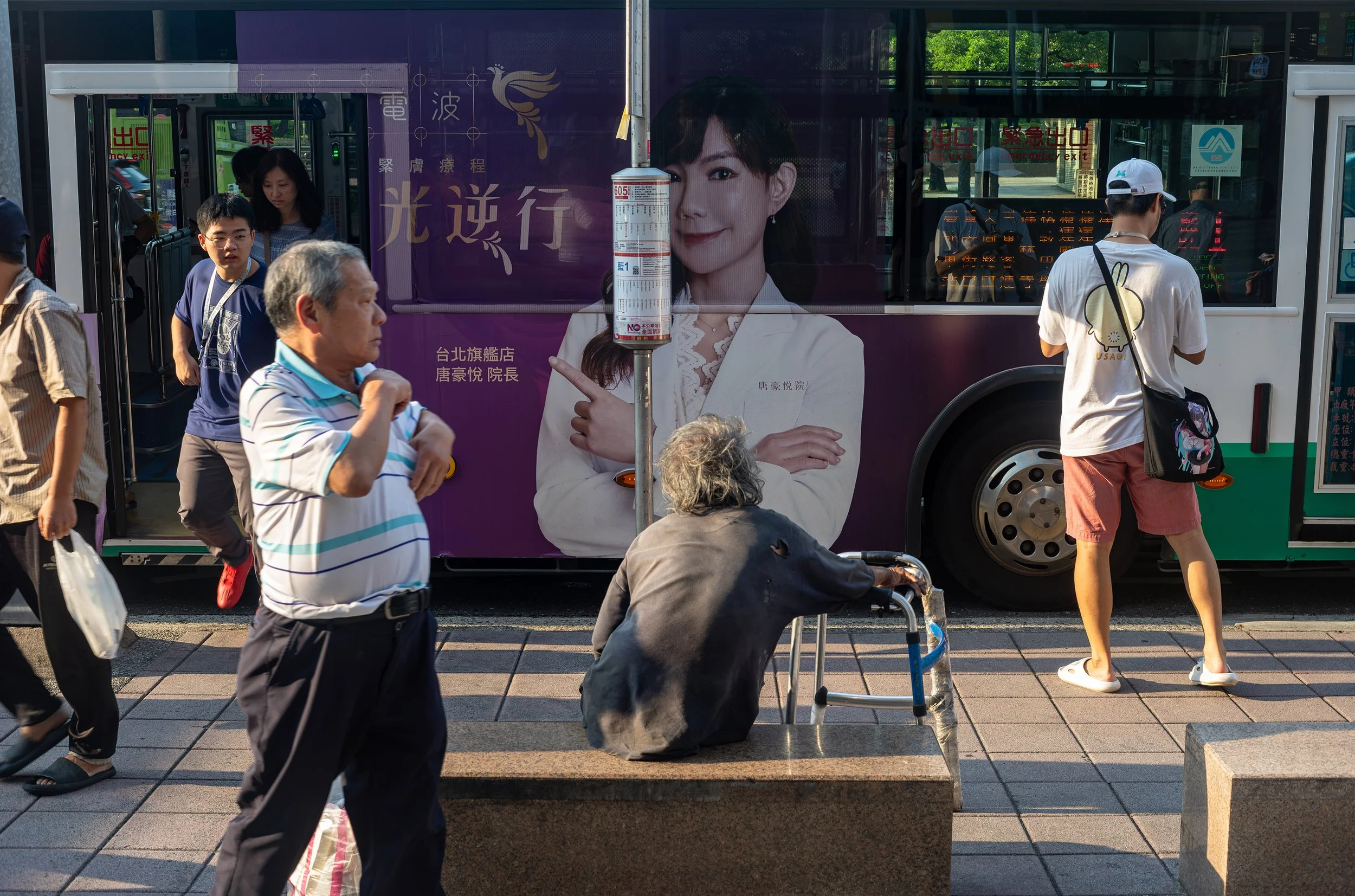
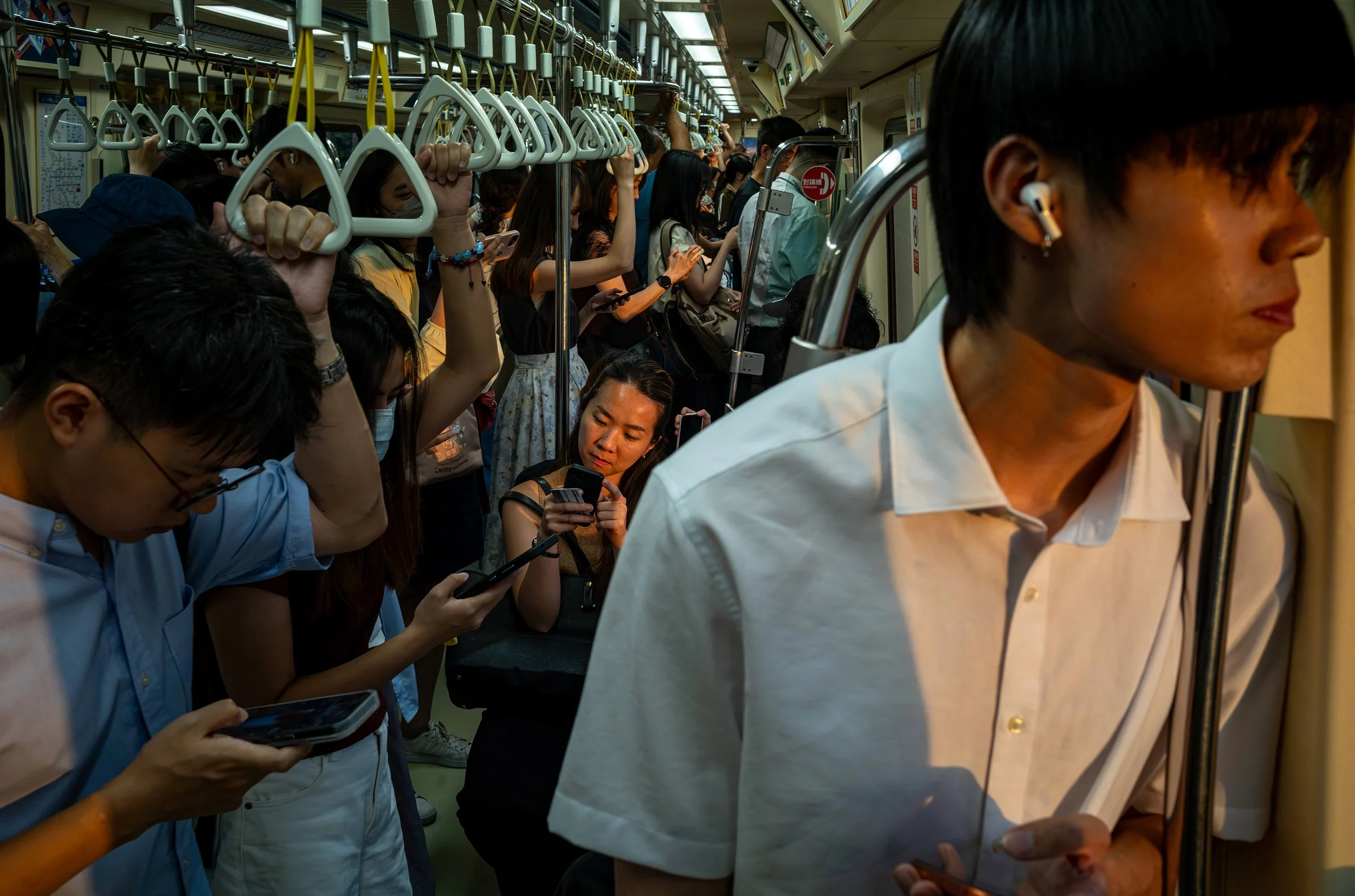
臺北 | Taipei
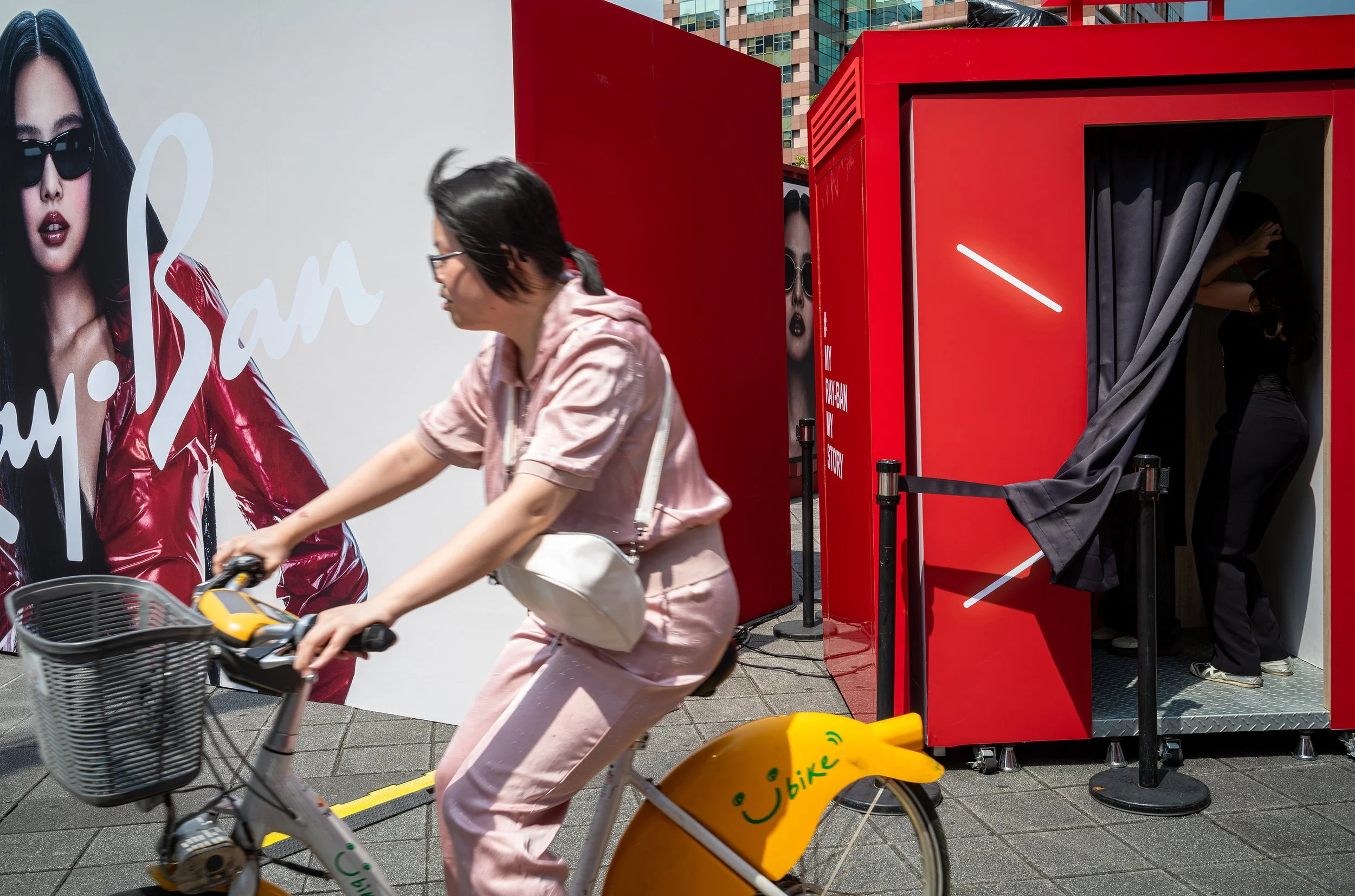
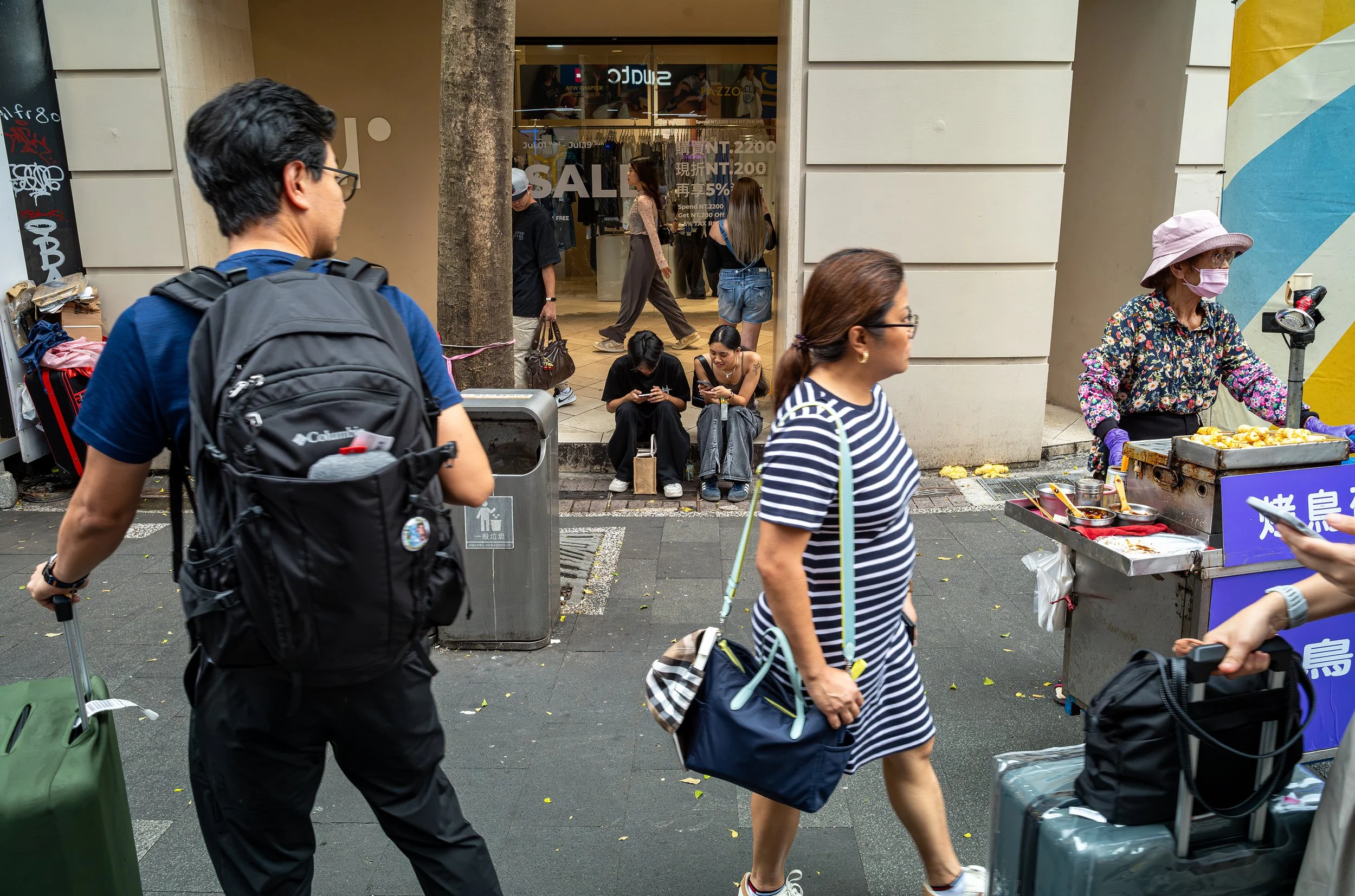
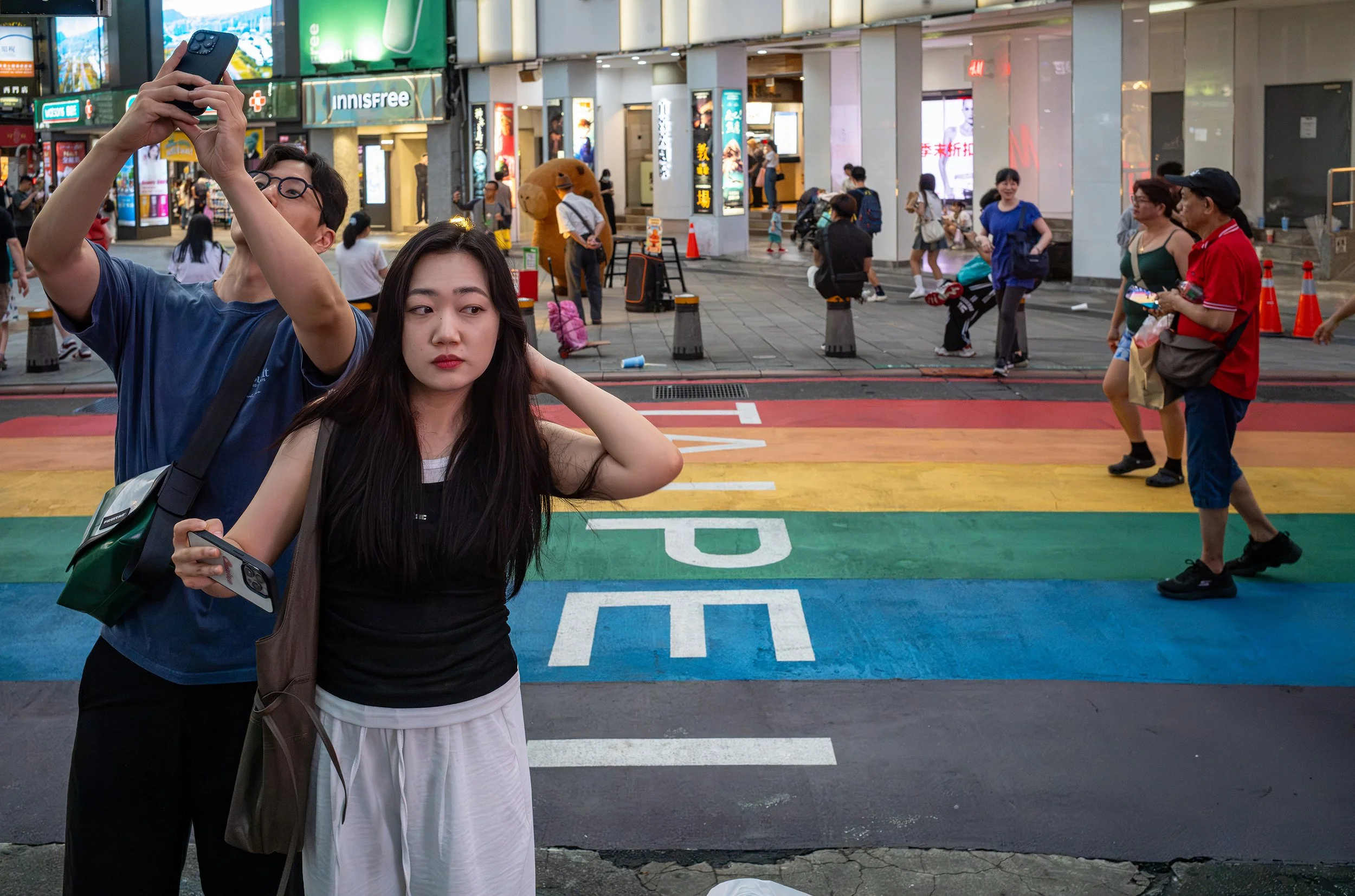
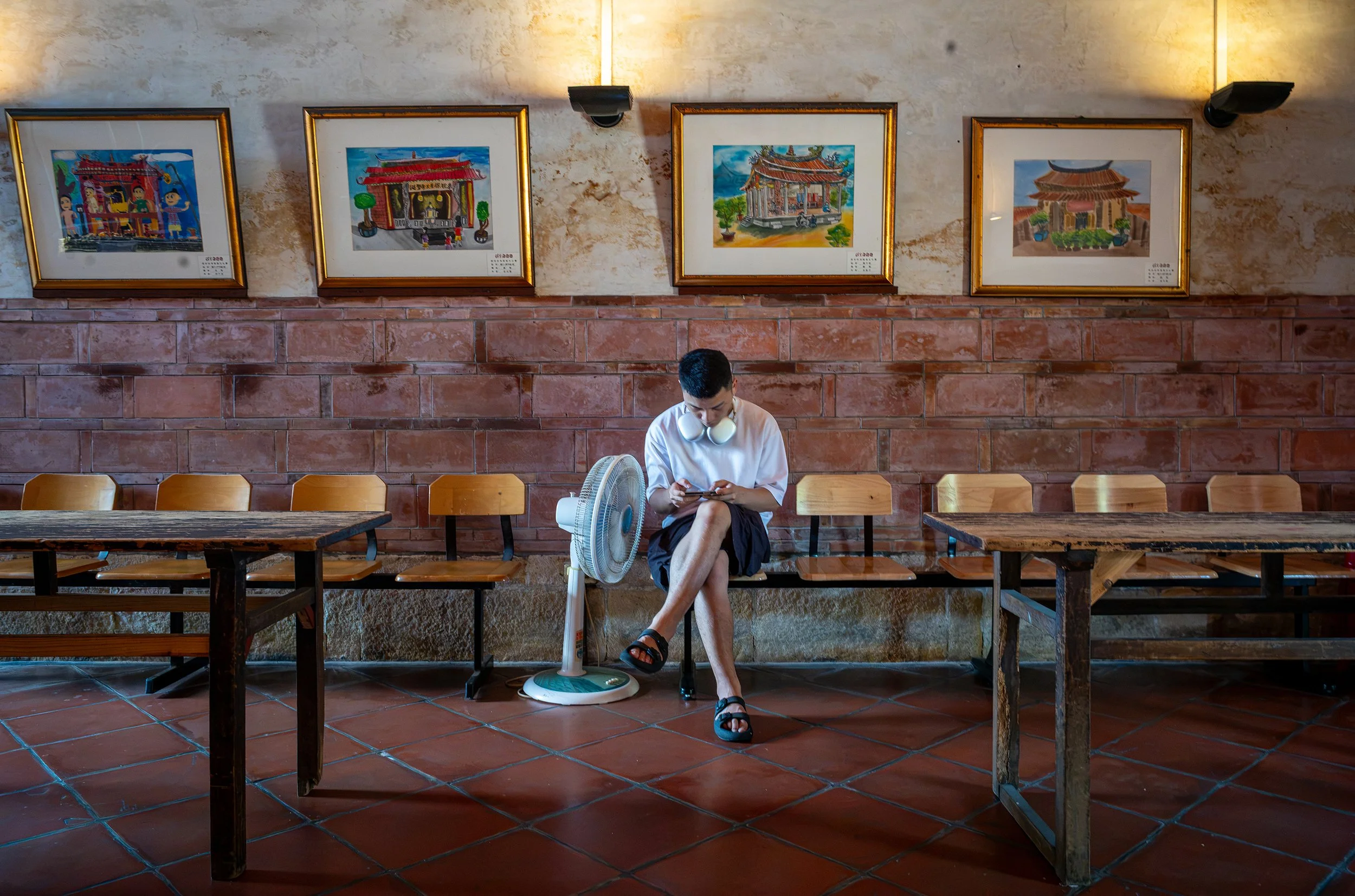
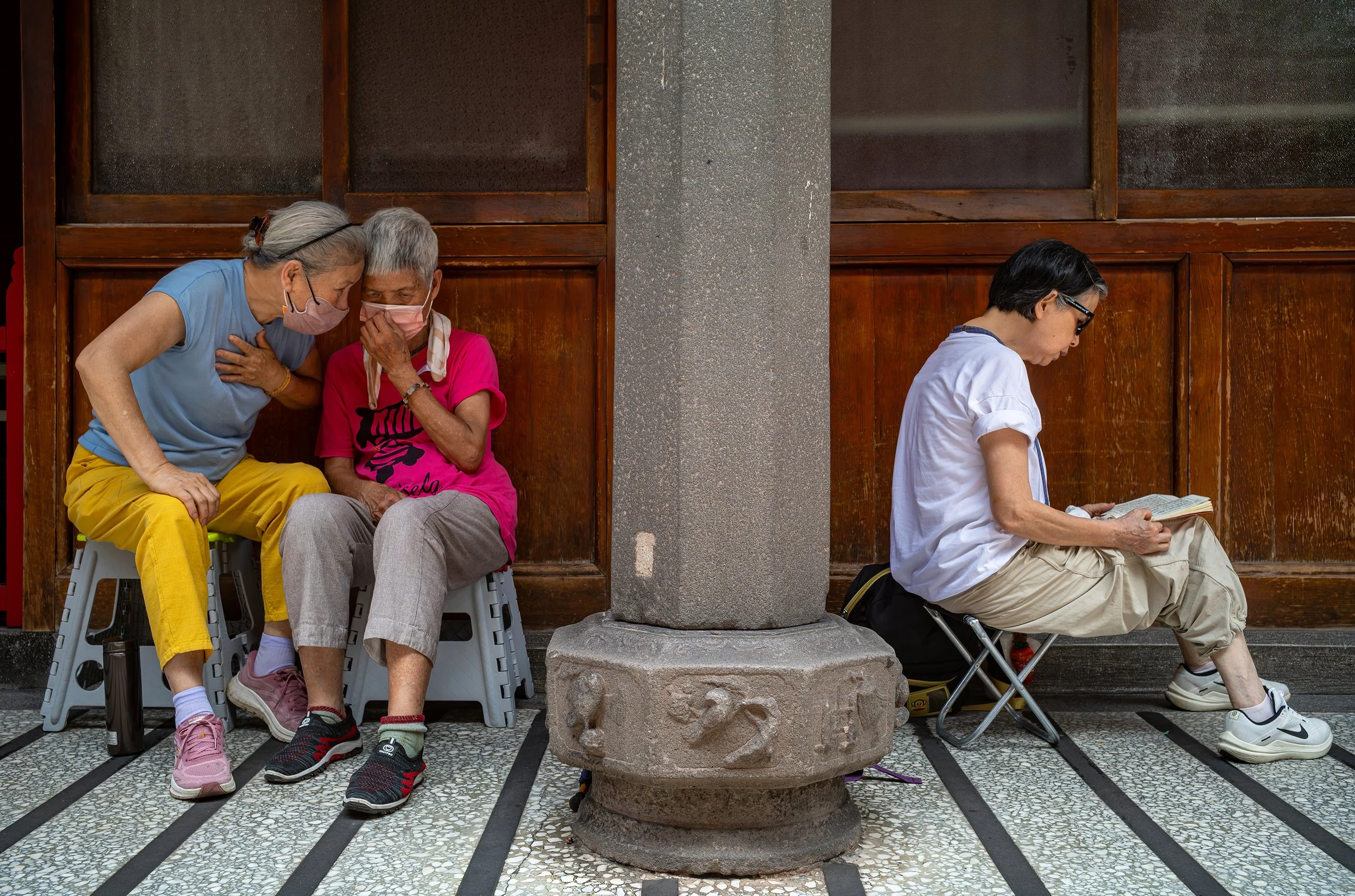
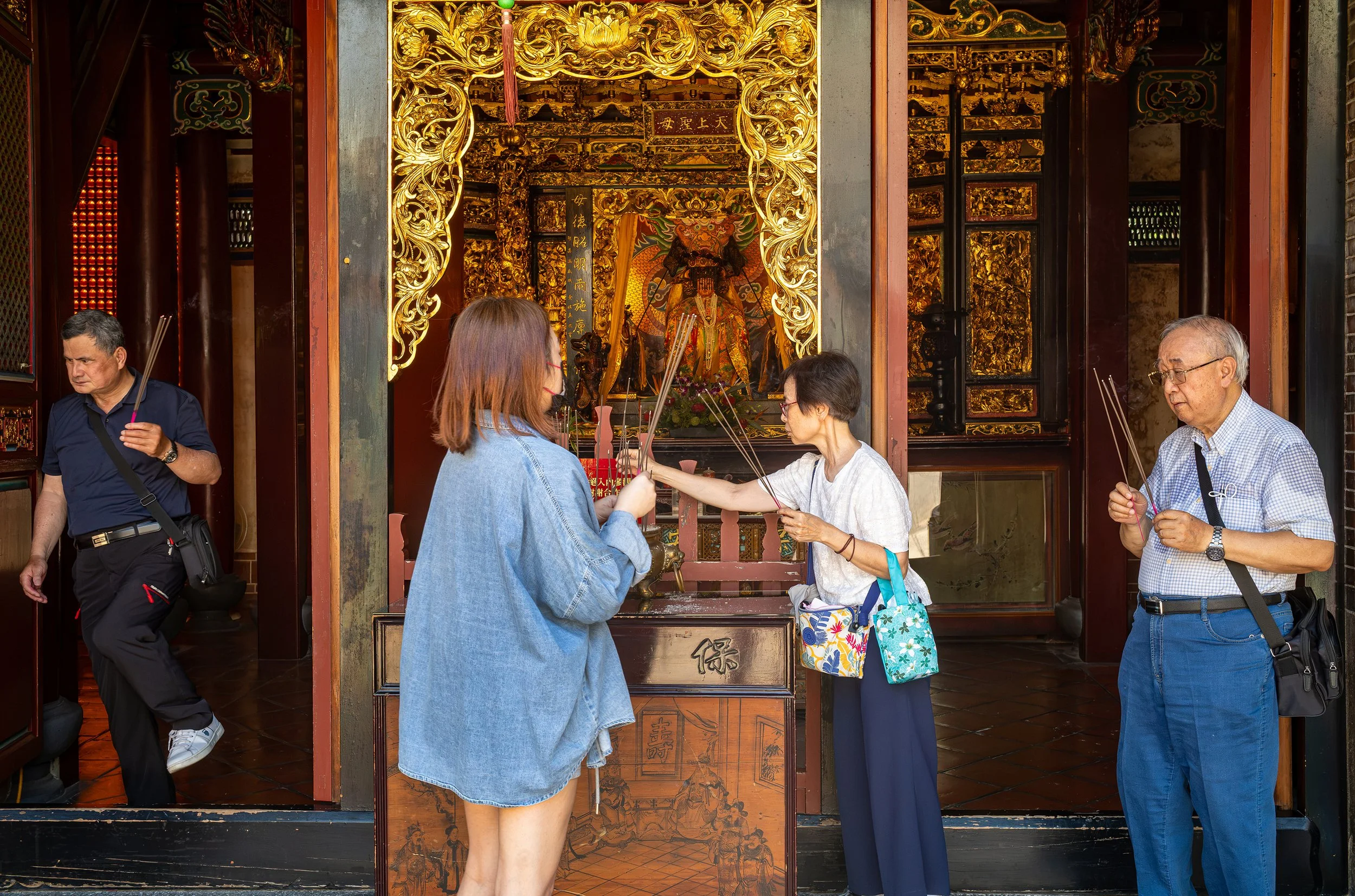
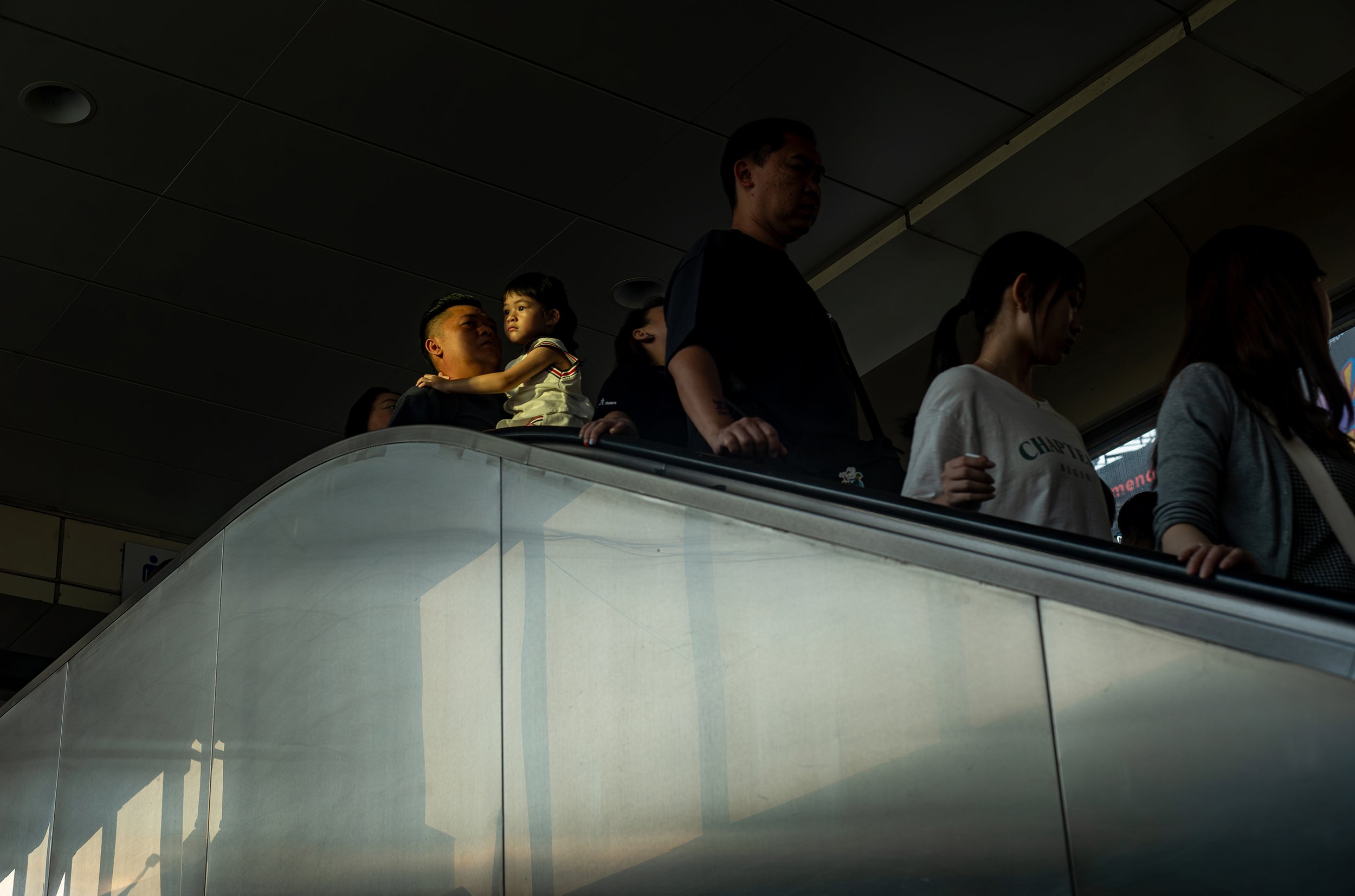
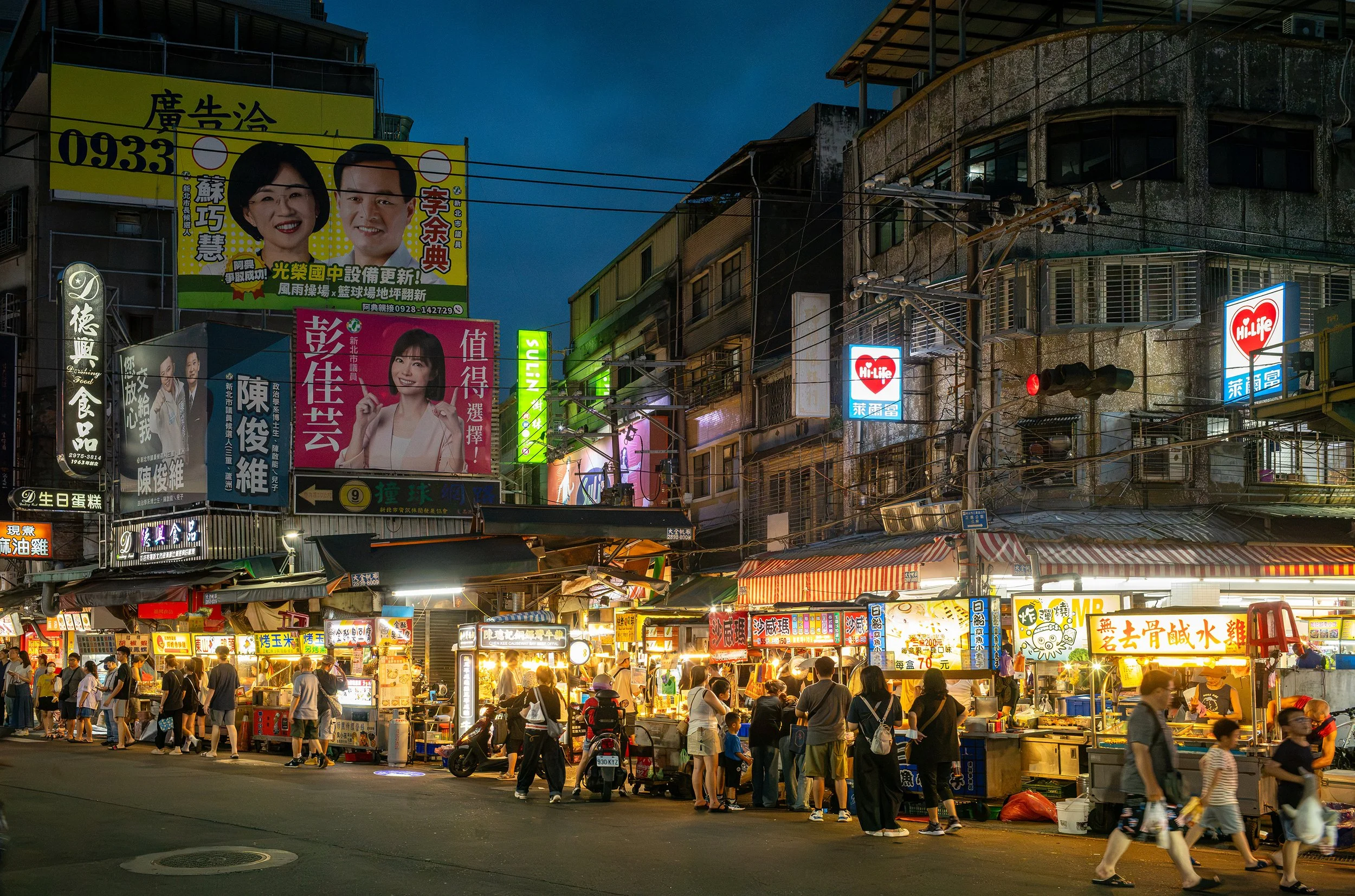
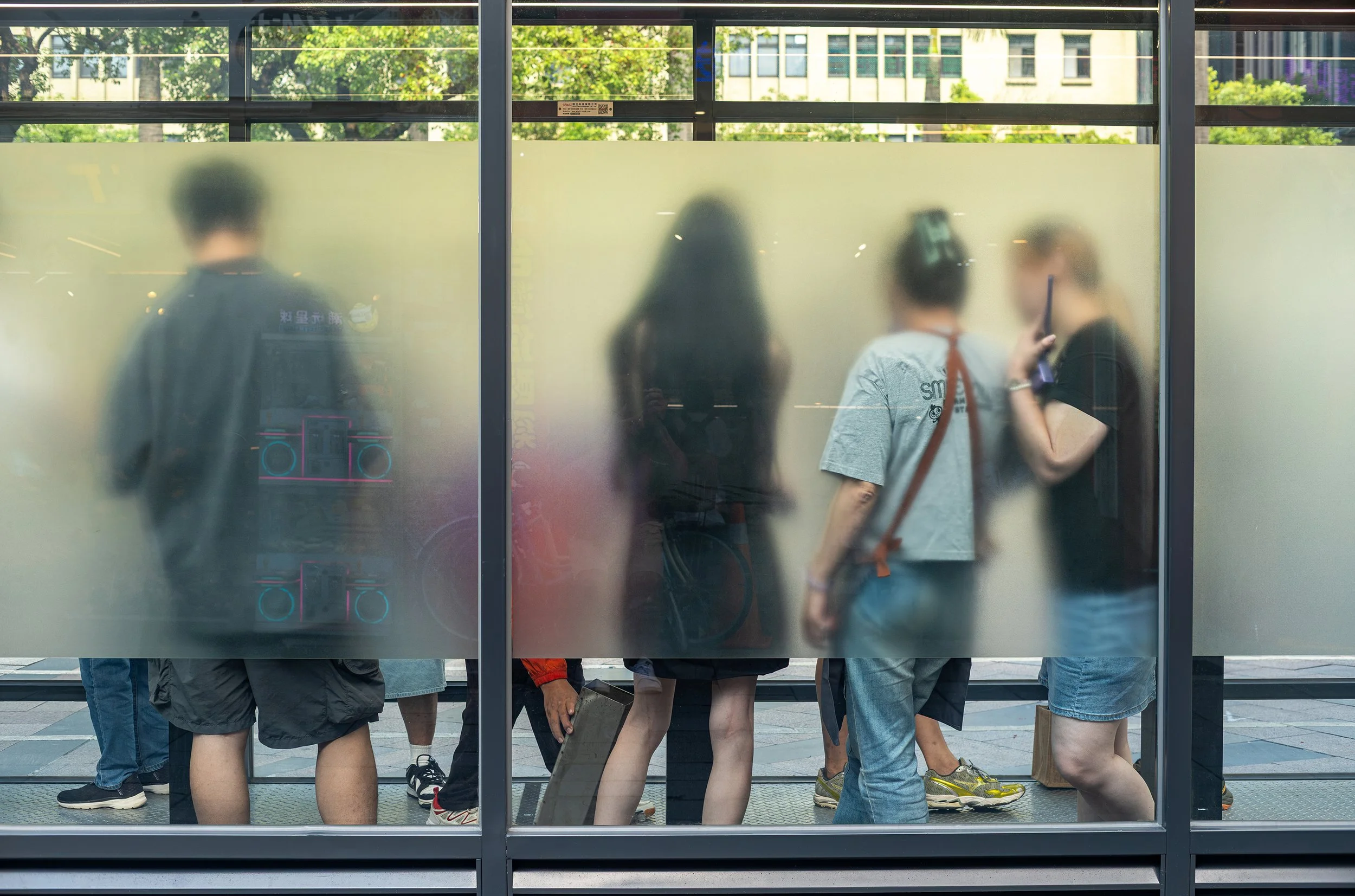
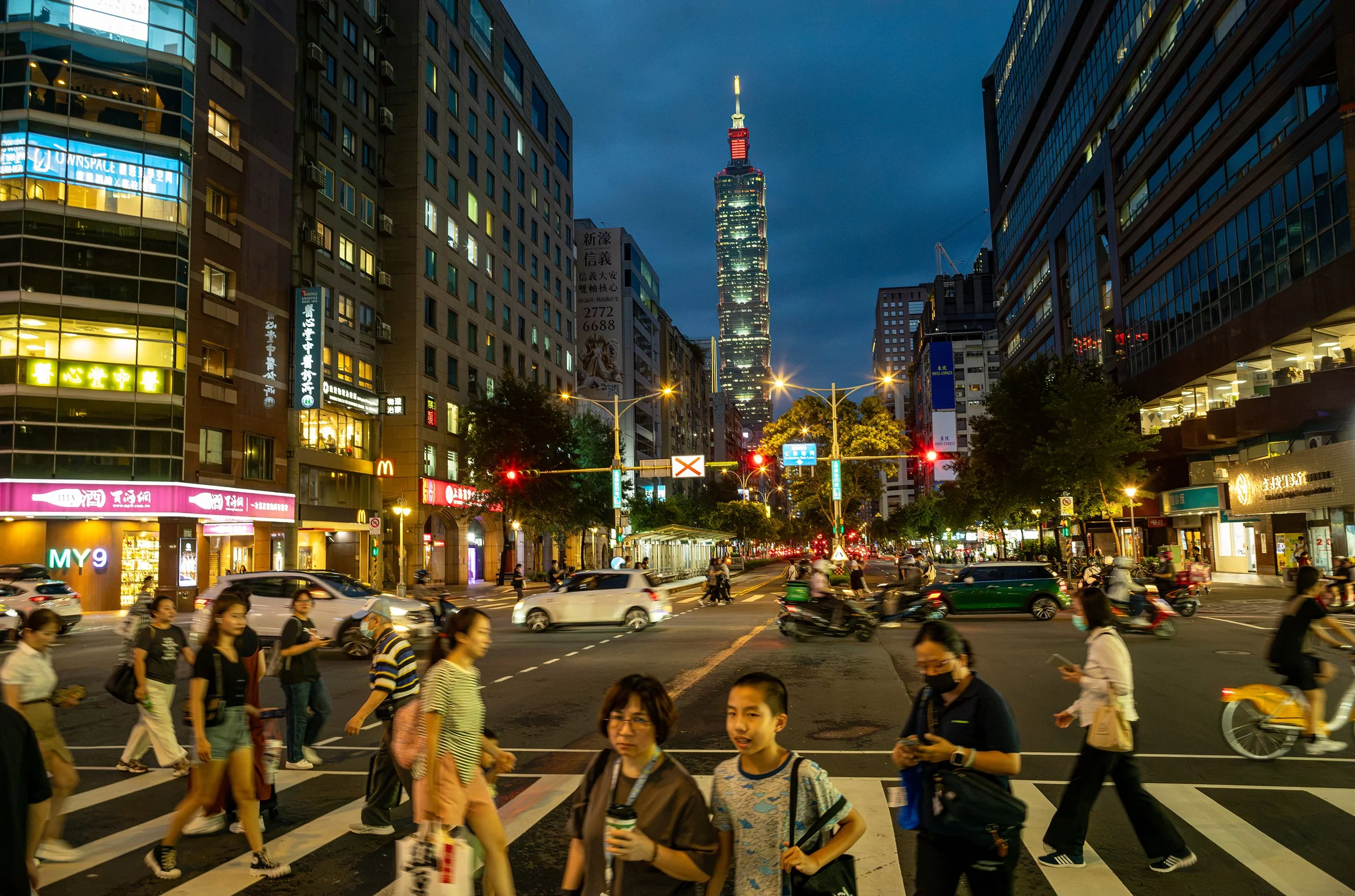
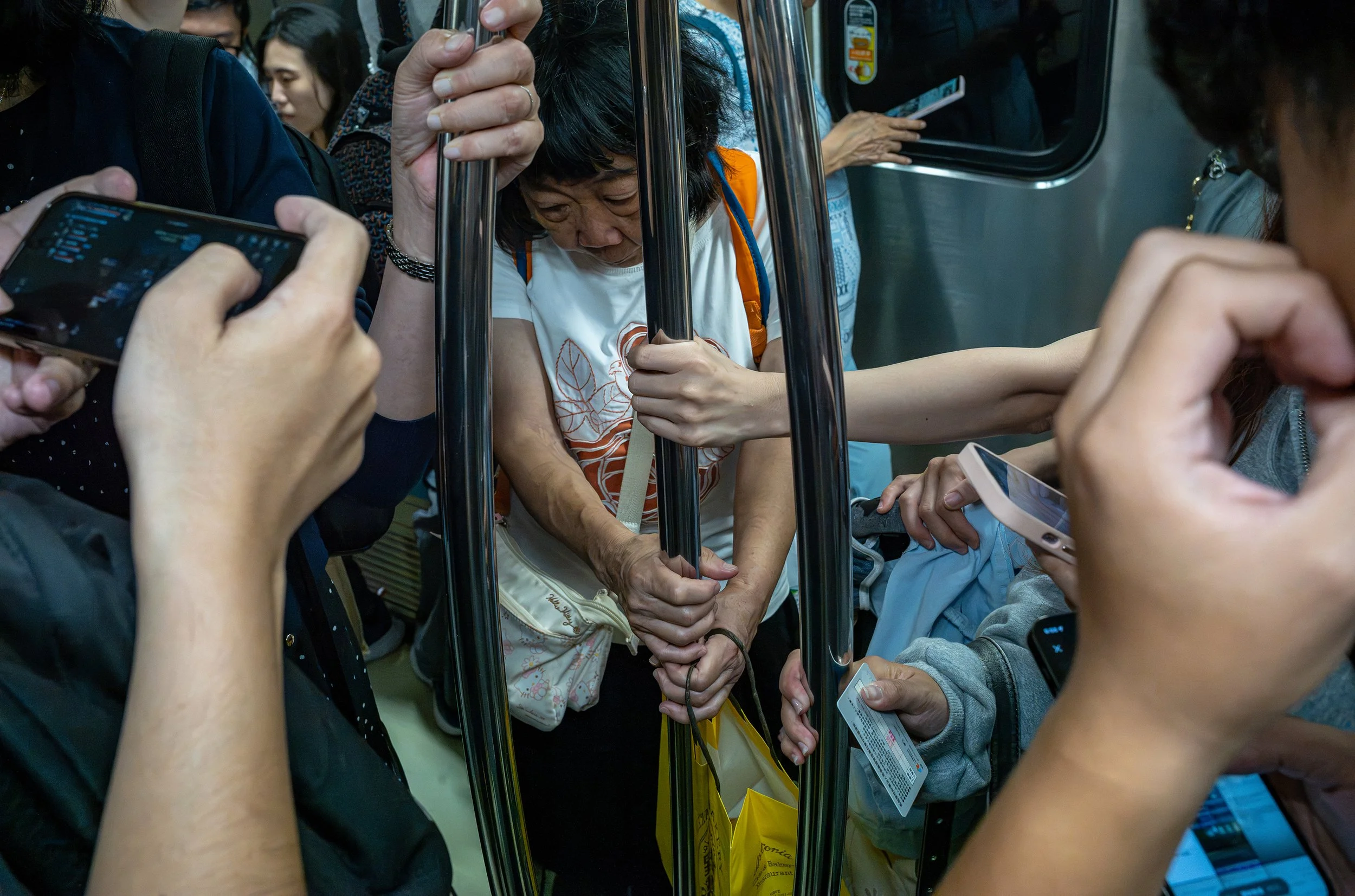
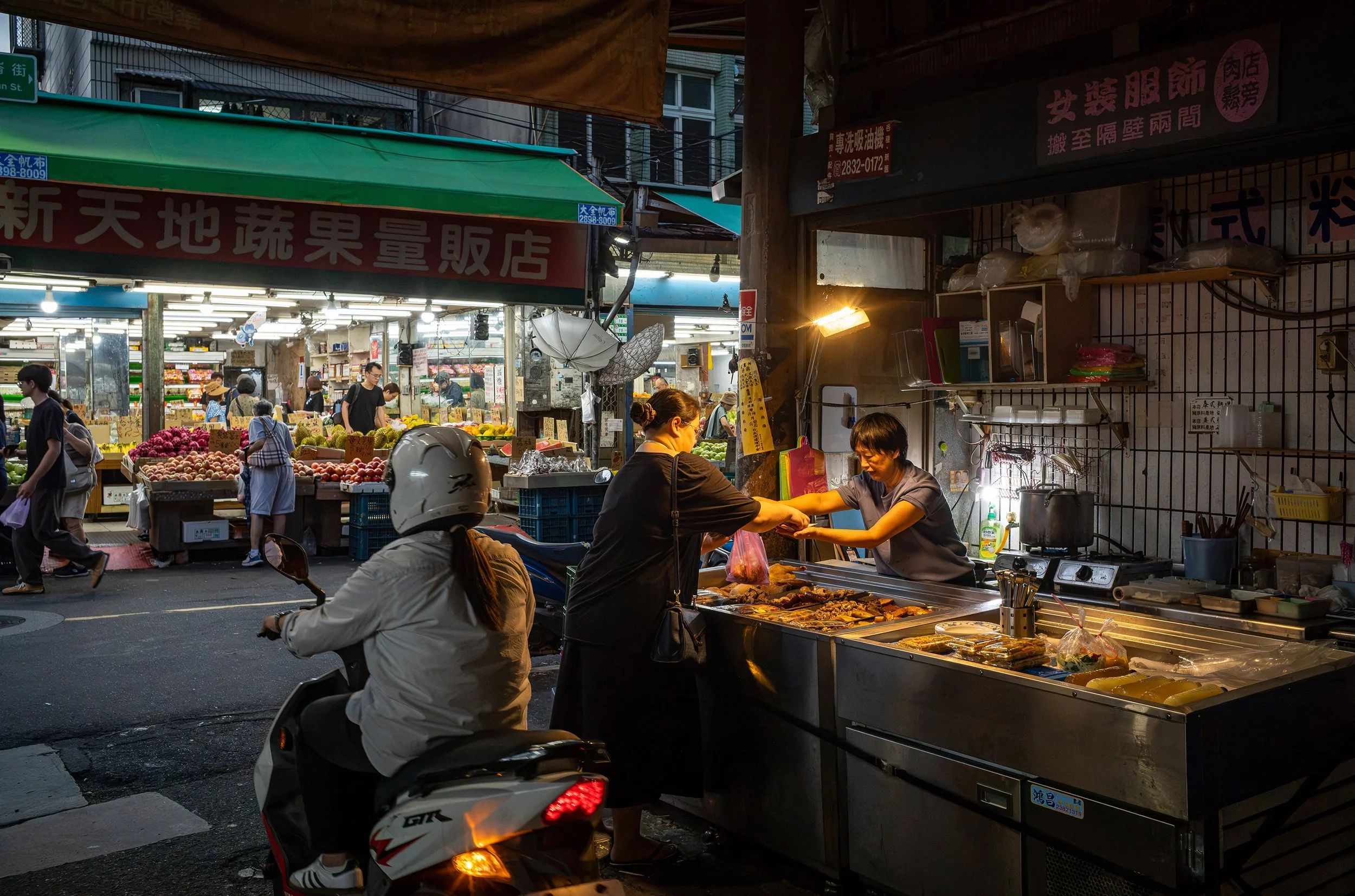
Taipei is the capital and a special municipality of Taiwan. Located in Northern Taiwan, Taipei City is an enclave of the municipality of New Taipei City that sits about 25 kilometres southwest of the northern port city of Keelung. Most of the city rests on the Taipei Basin, an ancient lakebed. The municipality of Taipei is home to an estimated population of about 2,500,000 (March 2023), forming the core part of the Taipei–Keelung metropolitan area, also known as "Greater Taipei", the 40th most-populous urban area in the world—roughly one-third of Taiwanese citizens live in the metro areas. The name "Taipei" can refer either to the whole metropolitan area or just the municipality alone.
Taipei is the economic, political, educational and cultural center of Taiwan. Taipei also forms a major part of a high-tech industrial area. In English-language news reports, the name Taipei often serves as a synecdoche referring to the central government that controls the Taiwan Area. Due to the ambiguous political status of Taiwan internationally, the term Chinese Taipei is also frequently used as a synonym for the entire country.
台北は、台湾の首都であり、直轄市の一つである。台湾北部に位置する台北市は、新北市に囲まれた形で存在する行政区で、北部の港湾都市・基隆市から約25キロメートル南西に位置している。市域の大部分は、かつて湖であった場所に形成された台北盆地に広がっている。台北市の人口は約250万人(2023年3月現在)で、台北・基隆都市圏、一般に「大台北」と呼ばれる都市圏の中心を形成している。この都市圏は世界で40番目に人口の多い都市圏であり、台湾の人口のおよそ3分の1がこの都市圏に暮らしている。「台北」という名称は、都市圏全体を指す場合と、台北市という行政区そのものを指す場合がある。
台北は、台湾の経済、政治、教育、文化の中心地であり、ハイテク産業地域の主要な一部も形成している。英語圏の報道では、「台北」という名称が、台湾地域を統治する中央政府を指す代名詞として使われることも多い。台湾の国際的な政治的地位をめぐる複雑な事情から、「チャイニーズ・タイペイ(Chinese Taipei)」という名称が、台湾全体を指すものとして使われることもある。
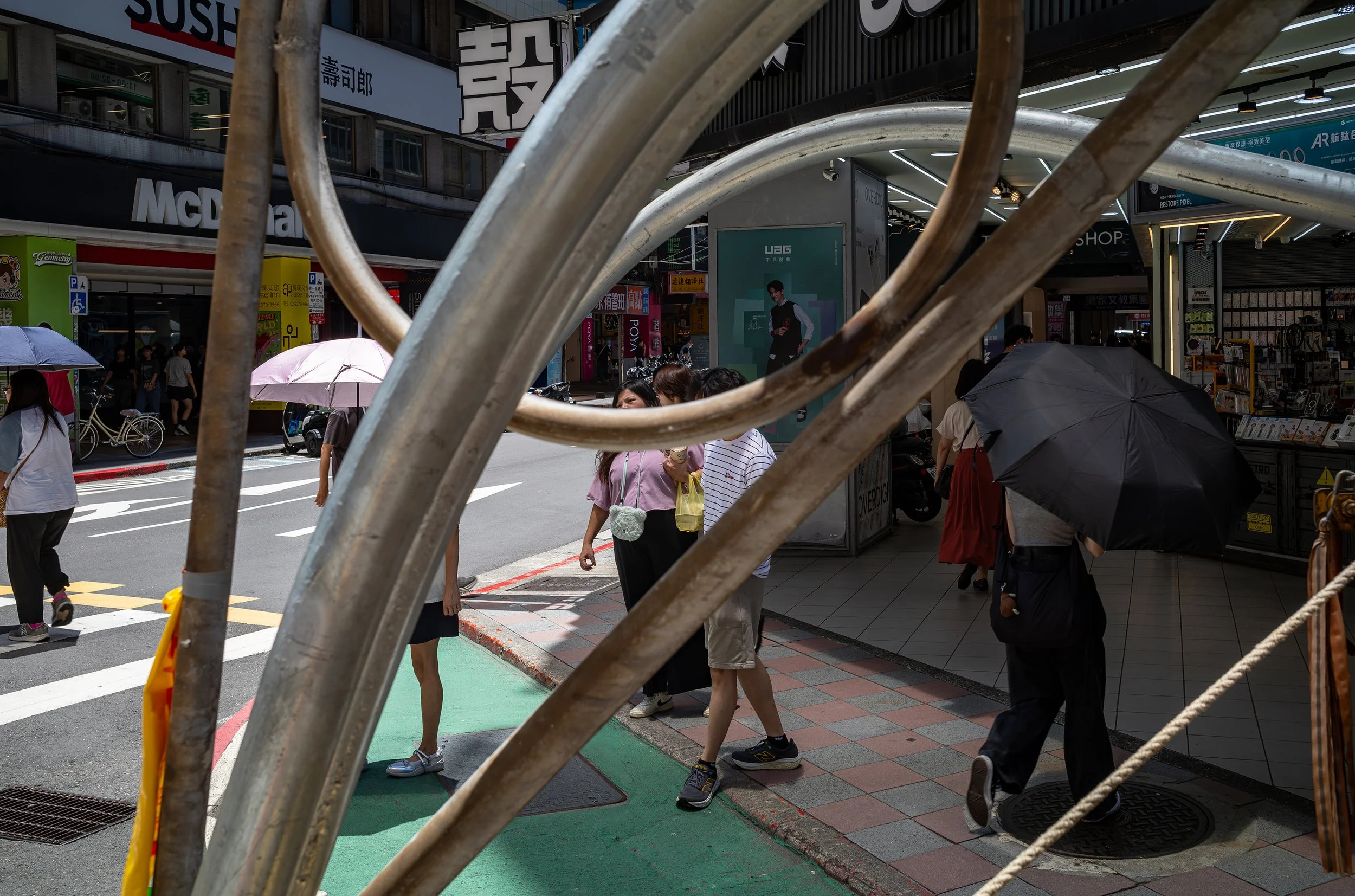
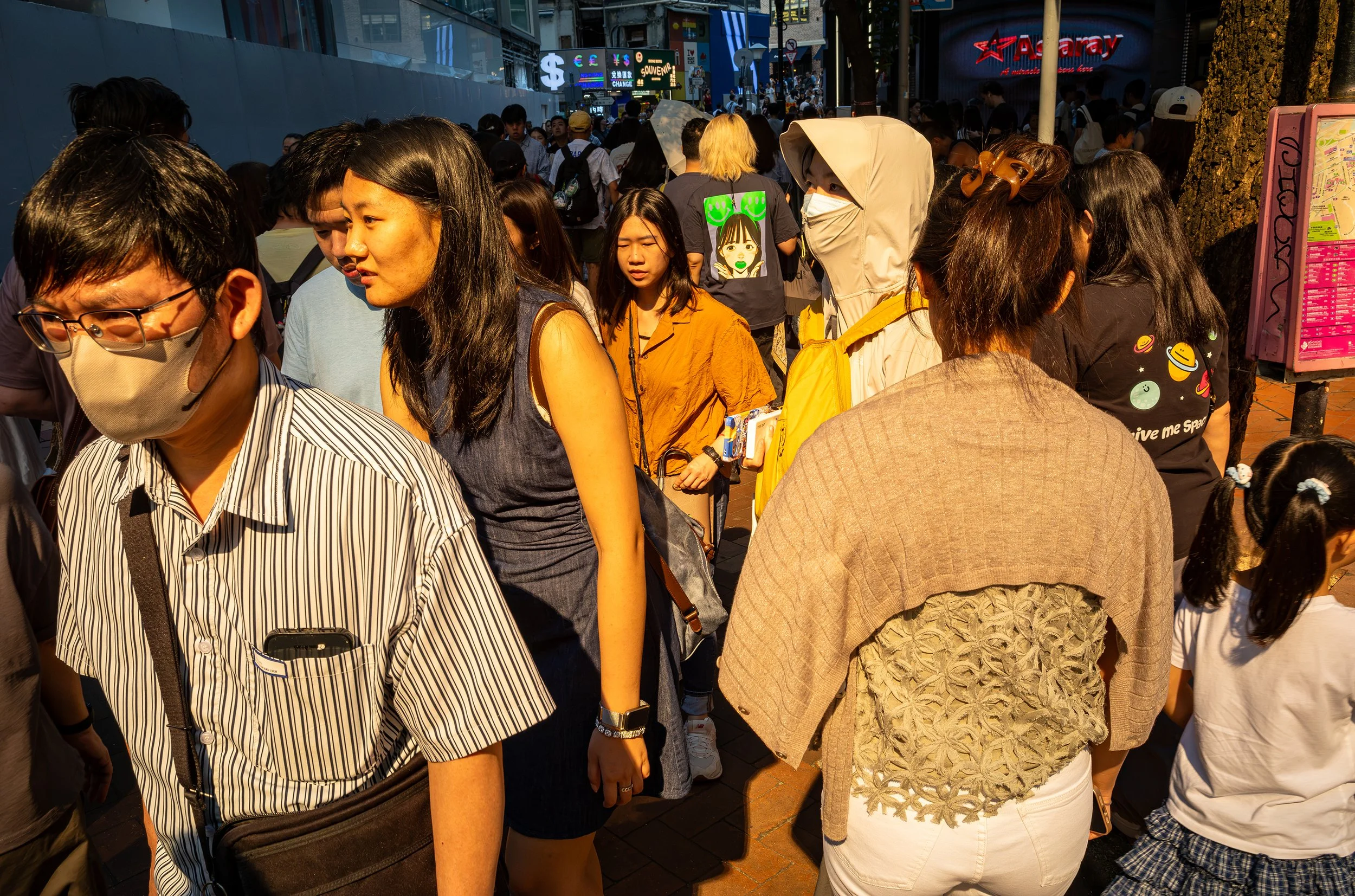
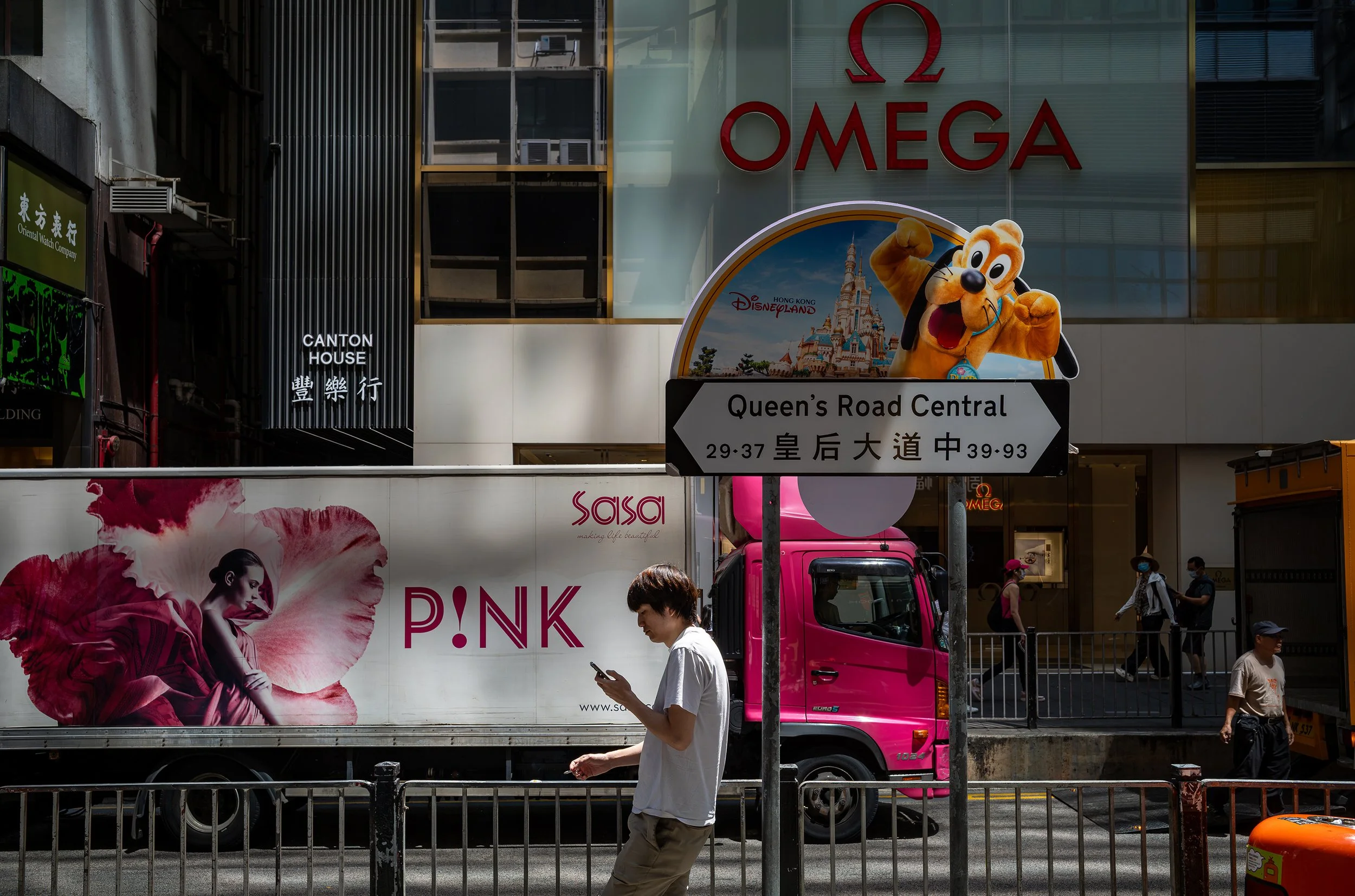
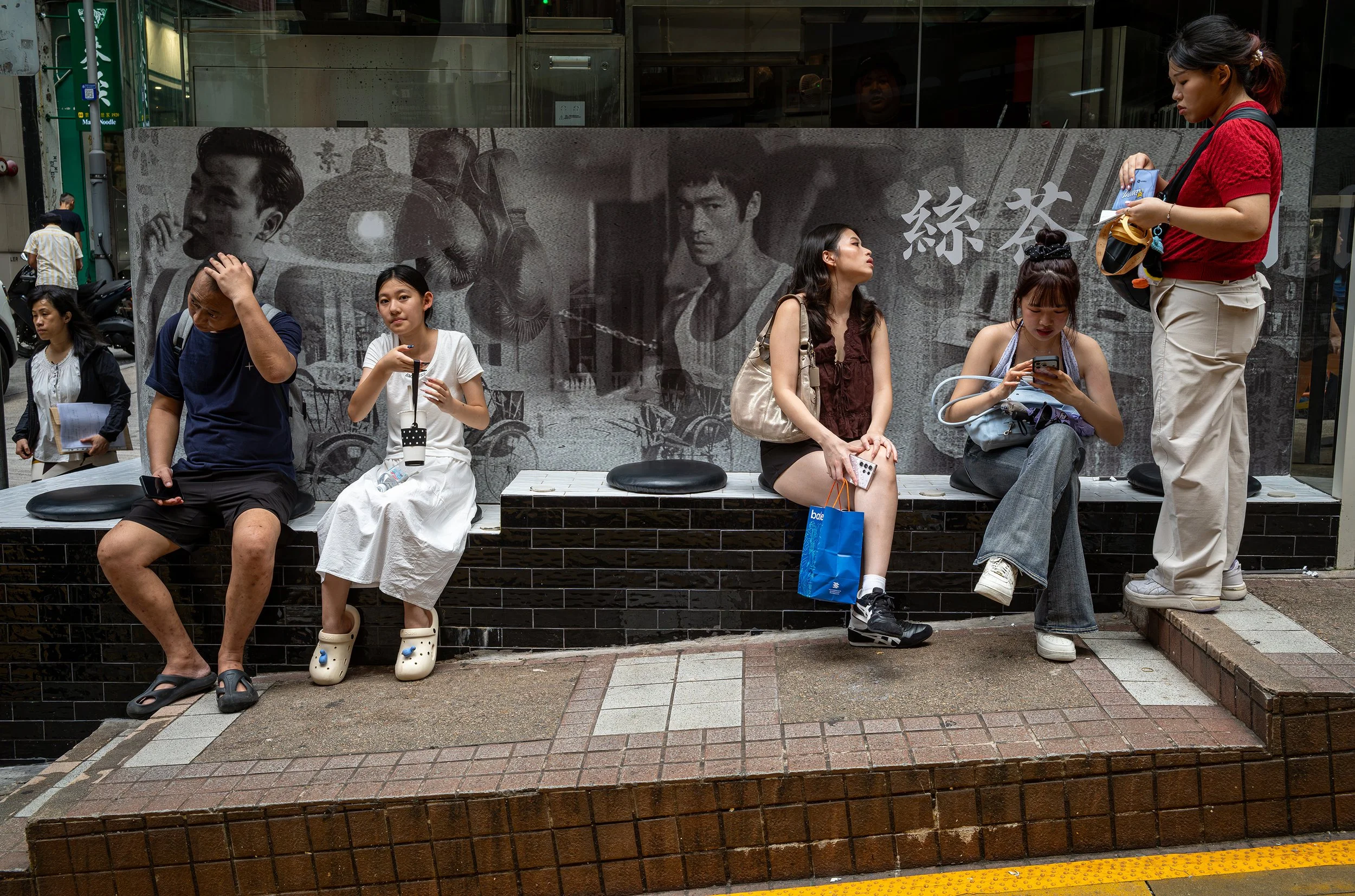
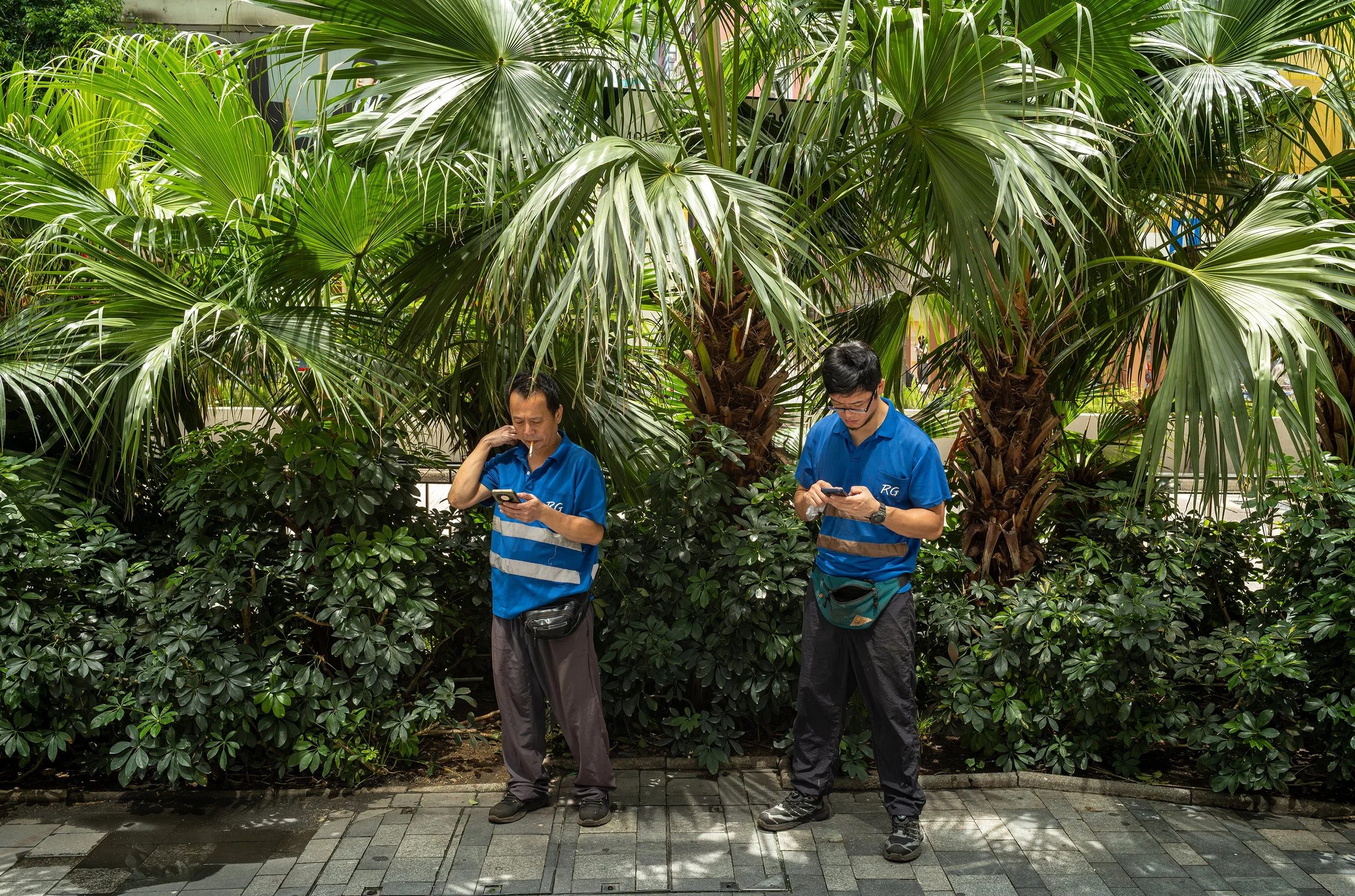
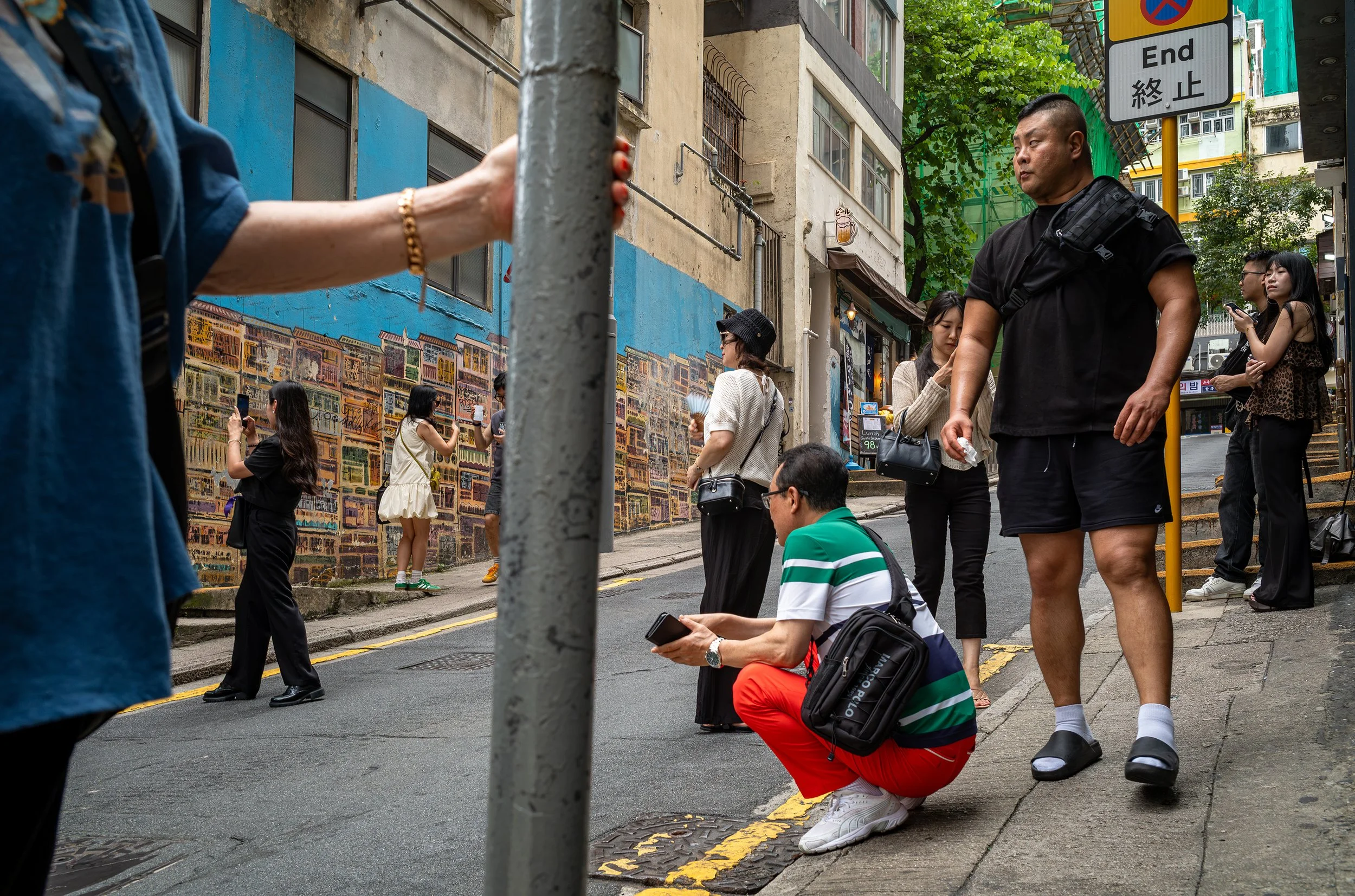
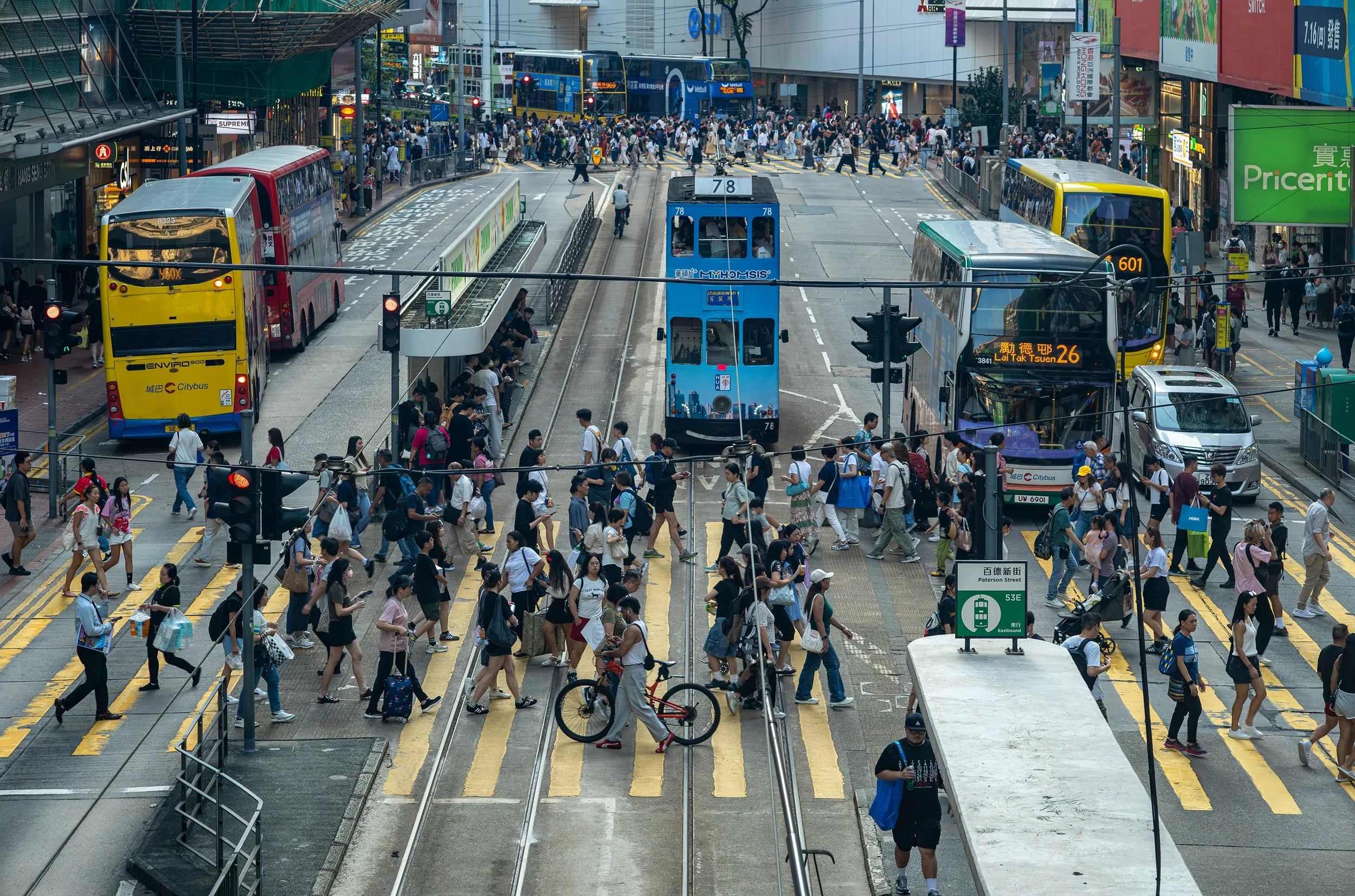
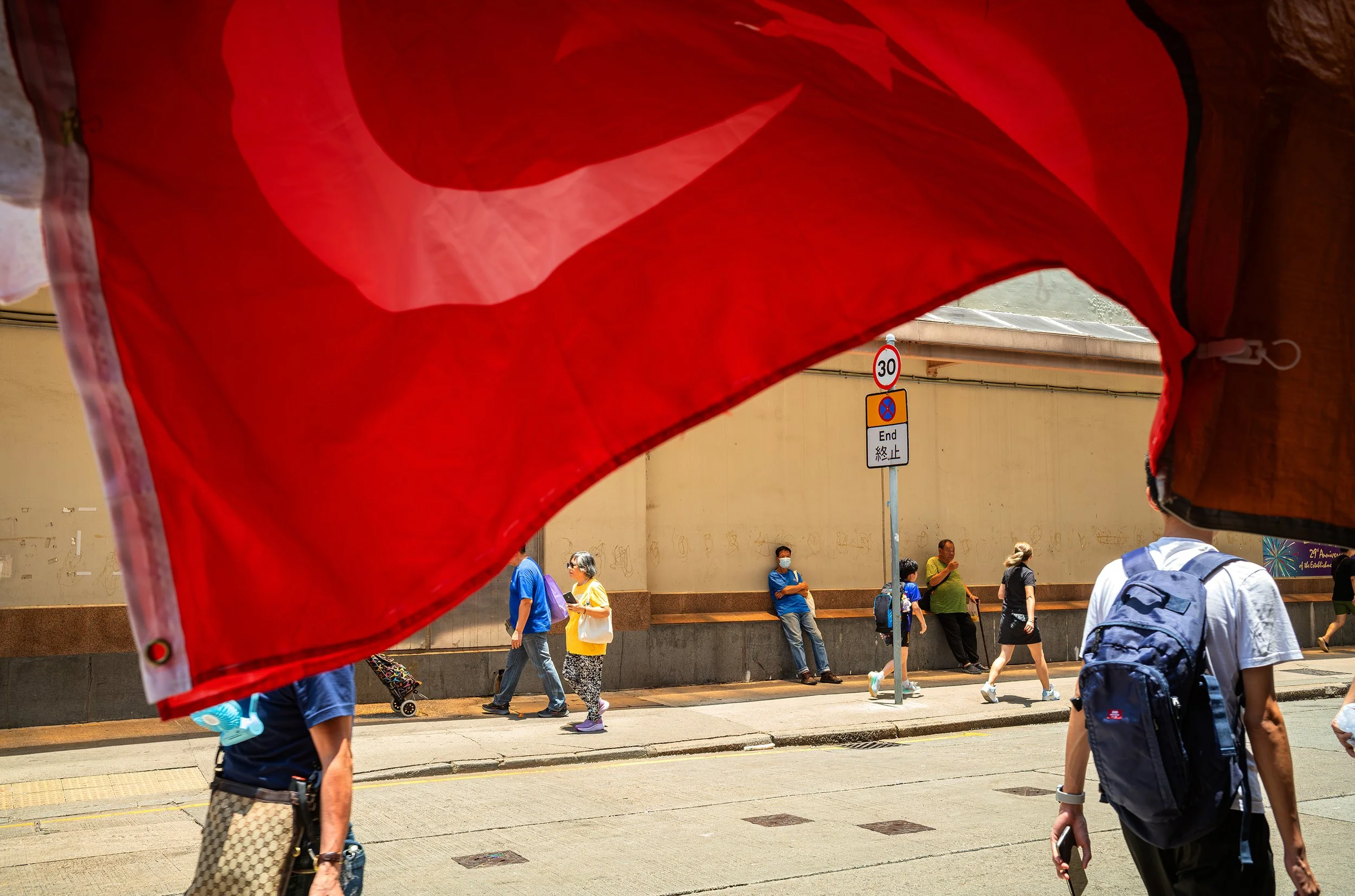
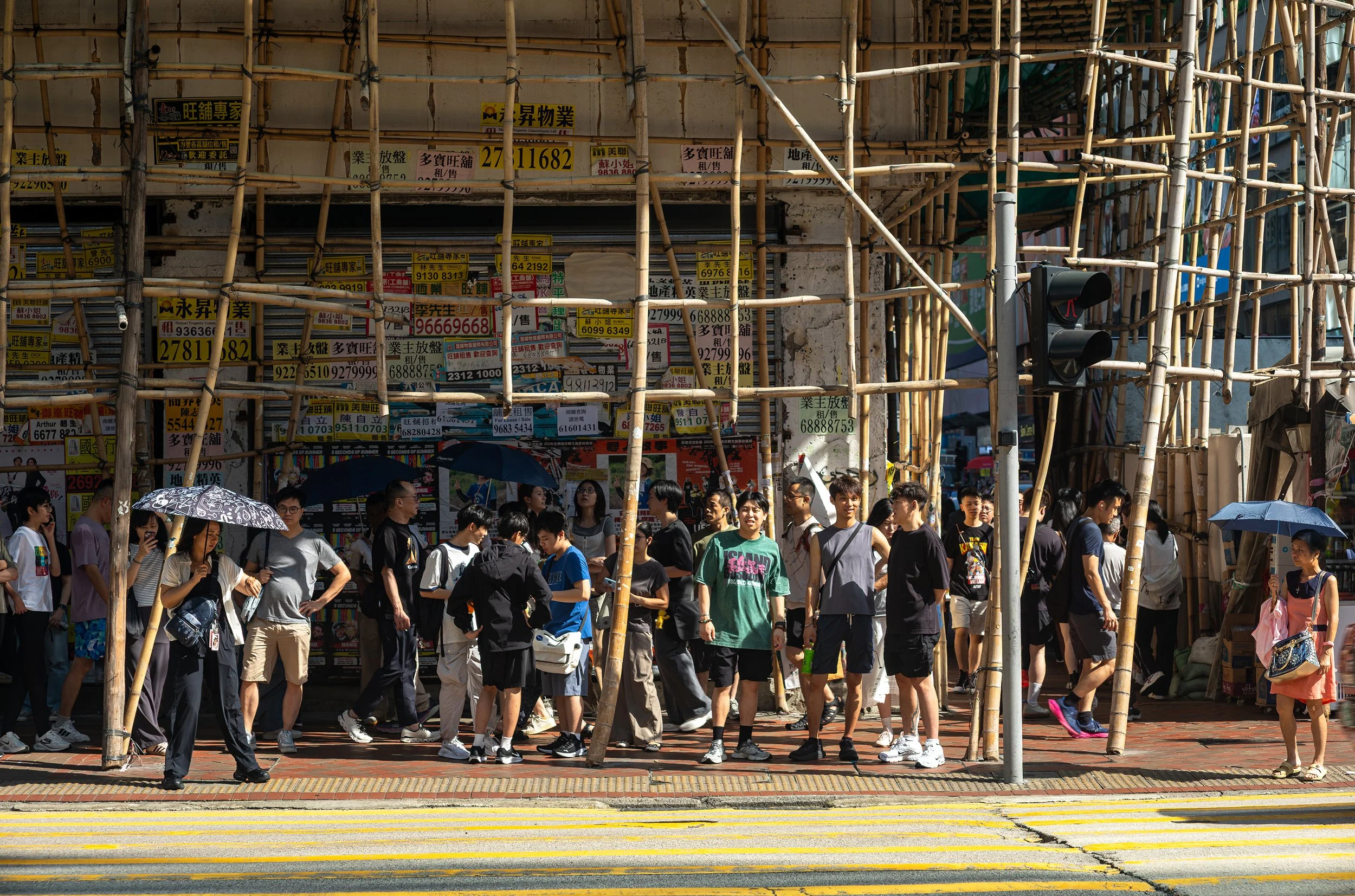
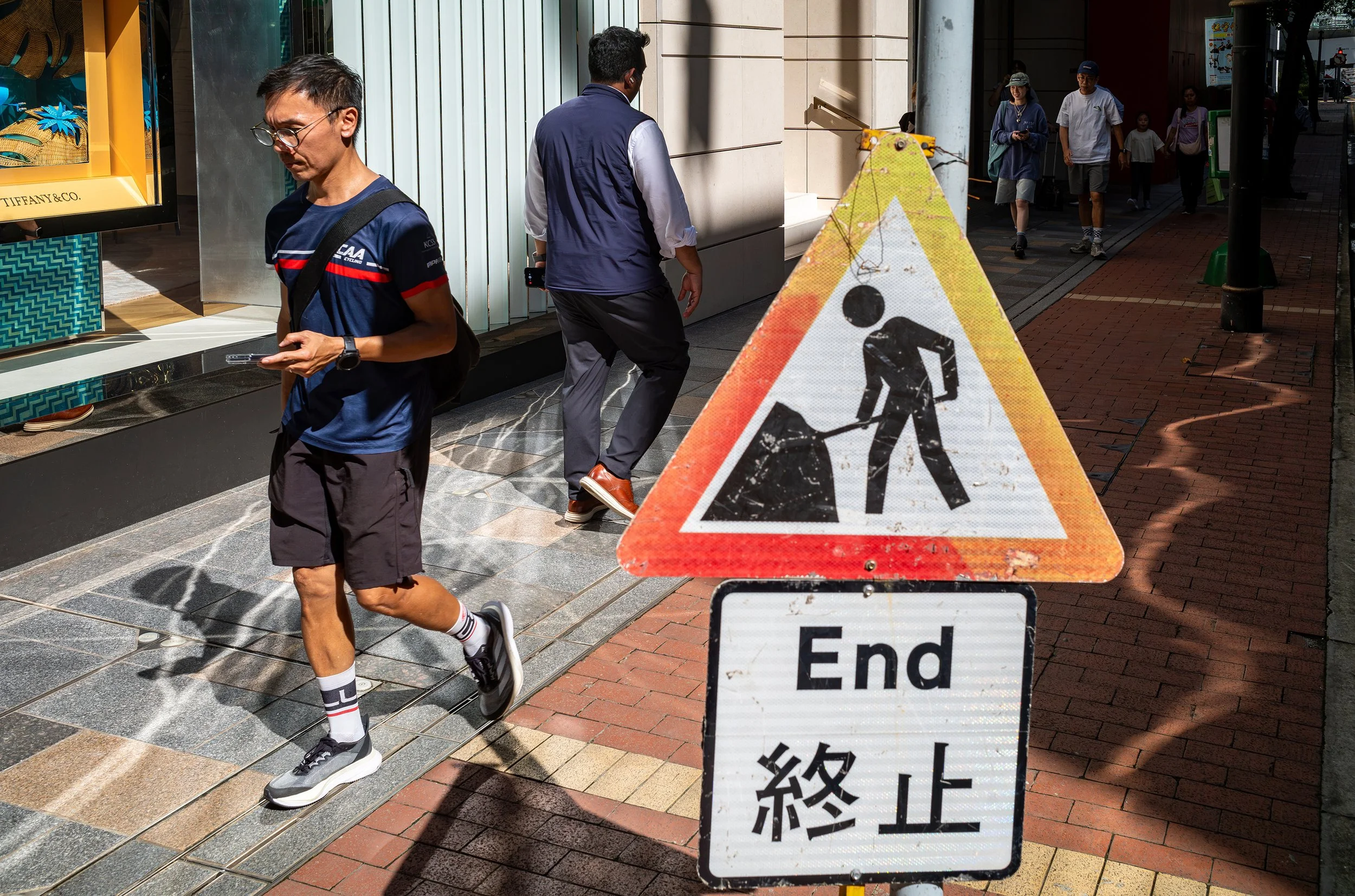
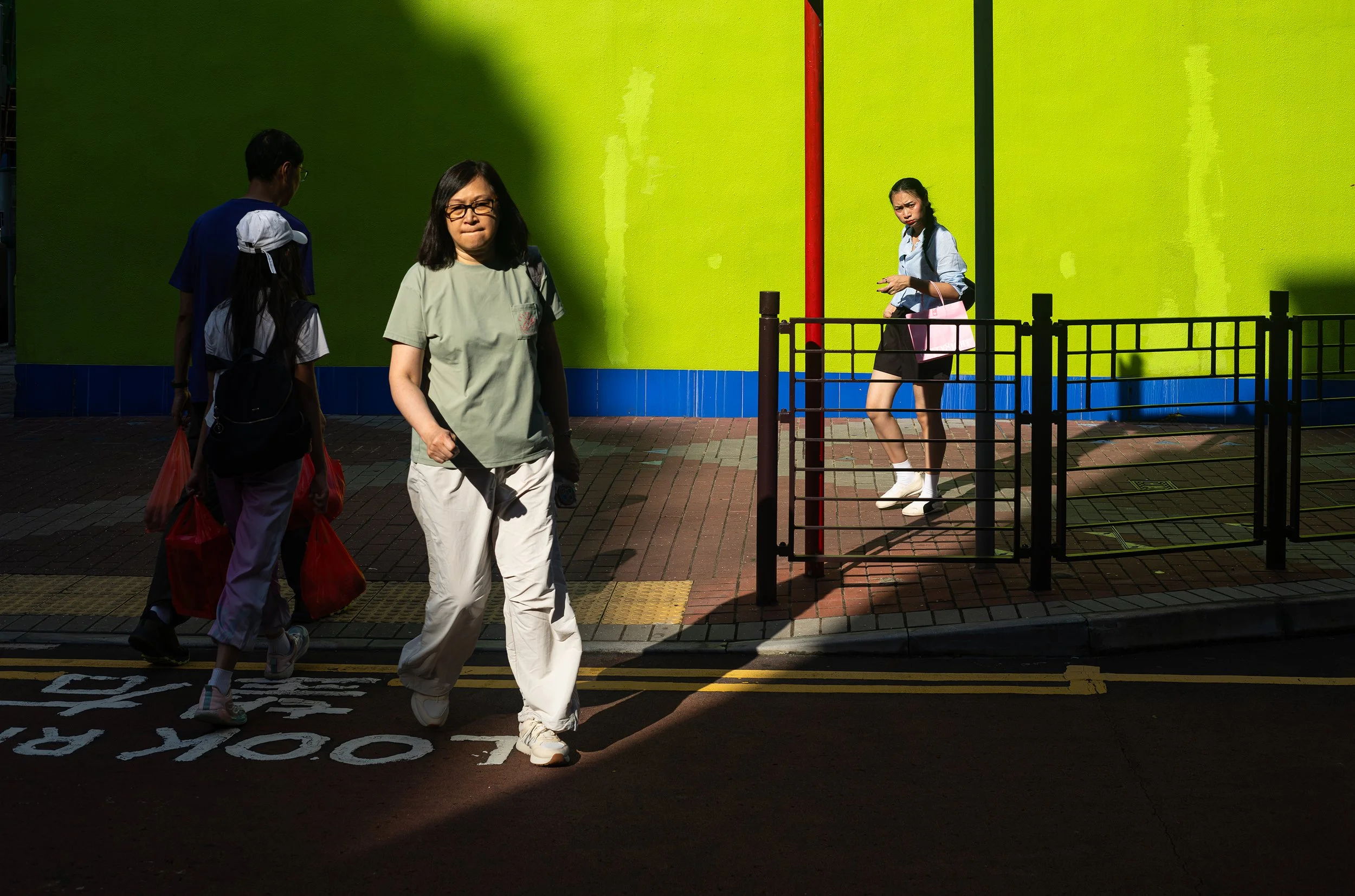
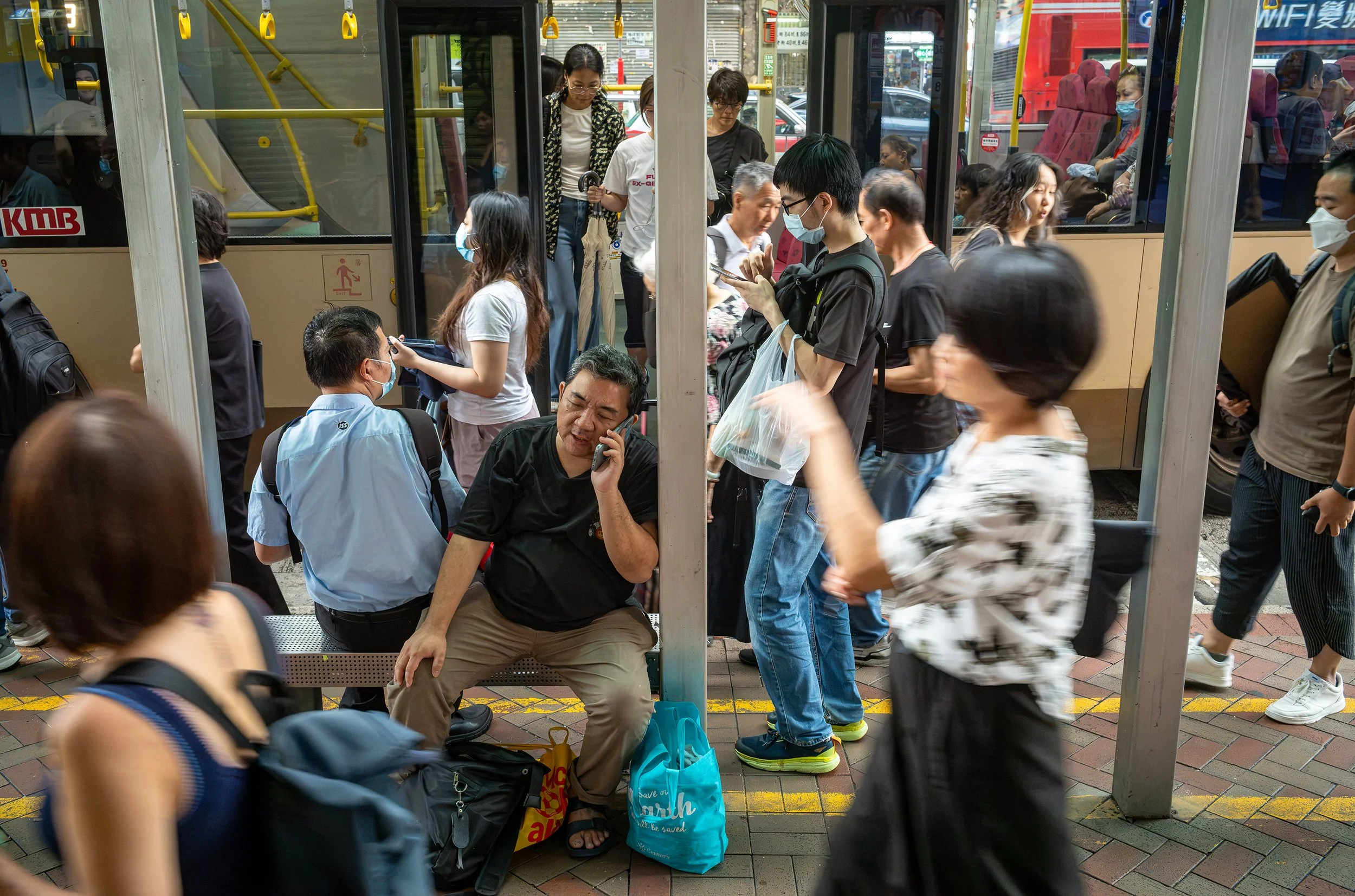
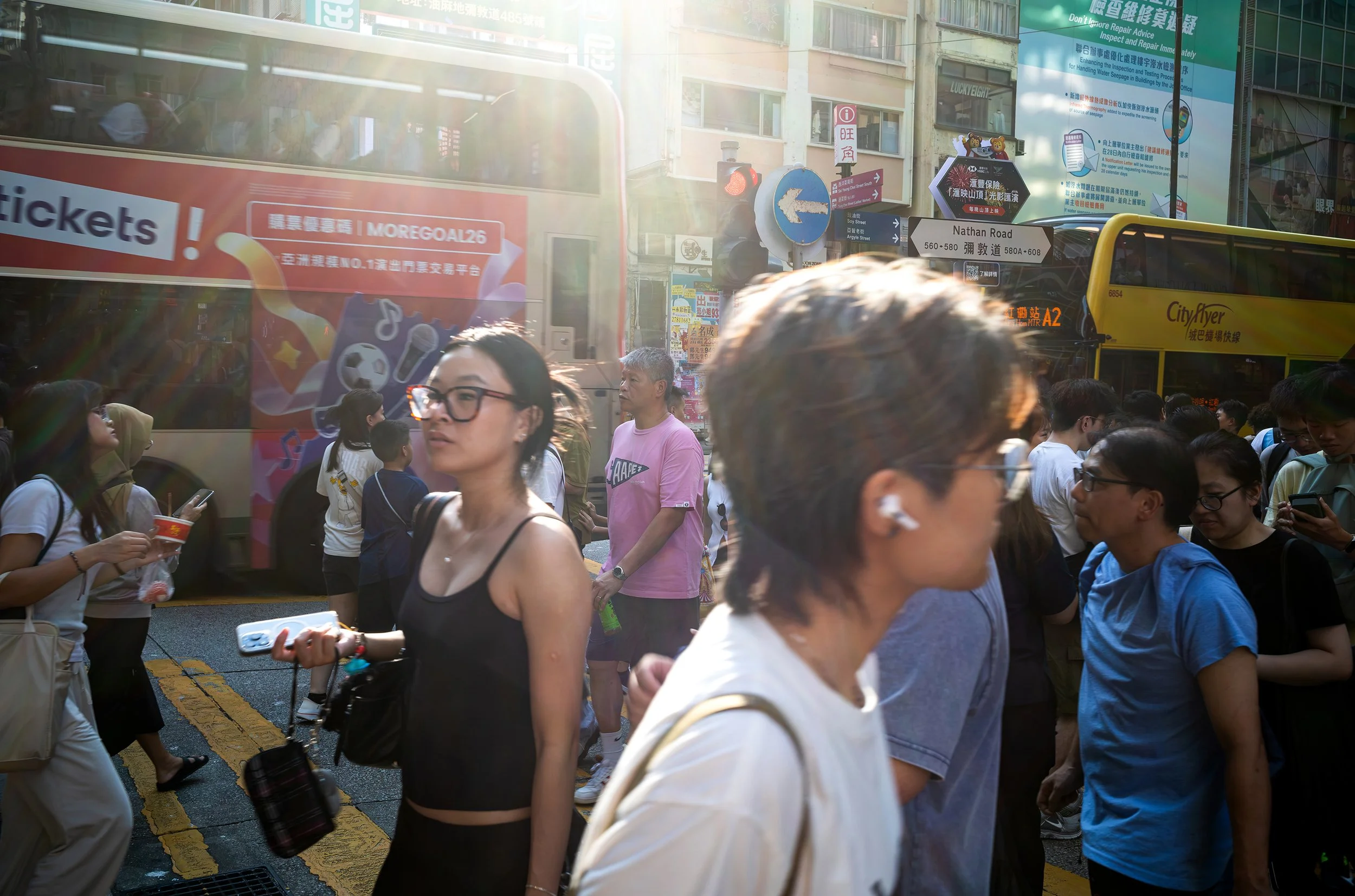
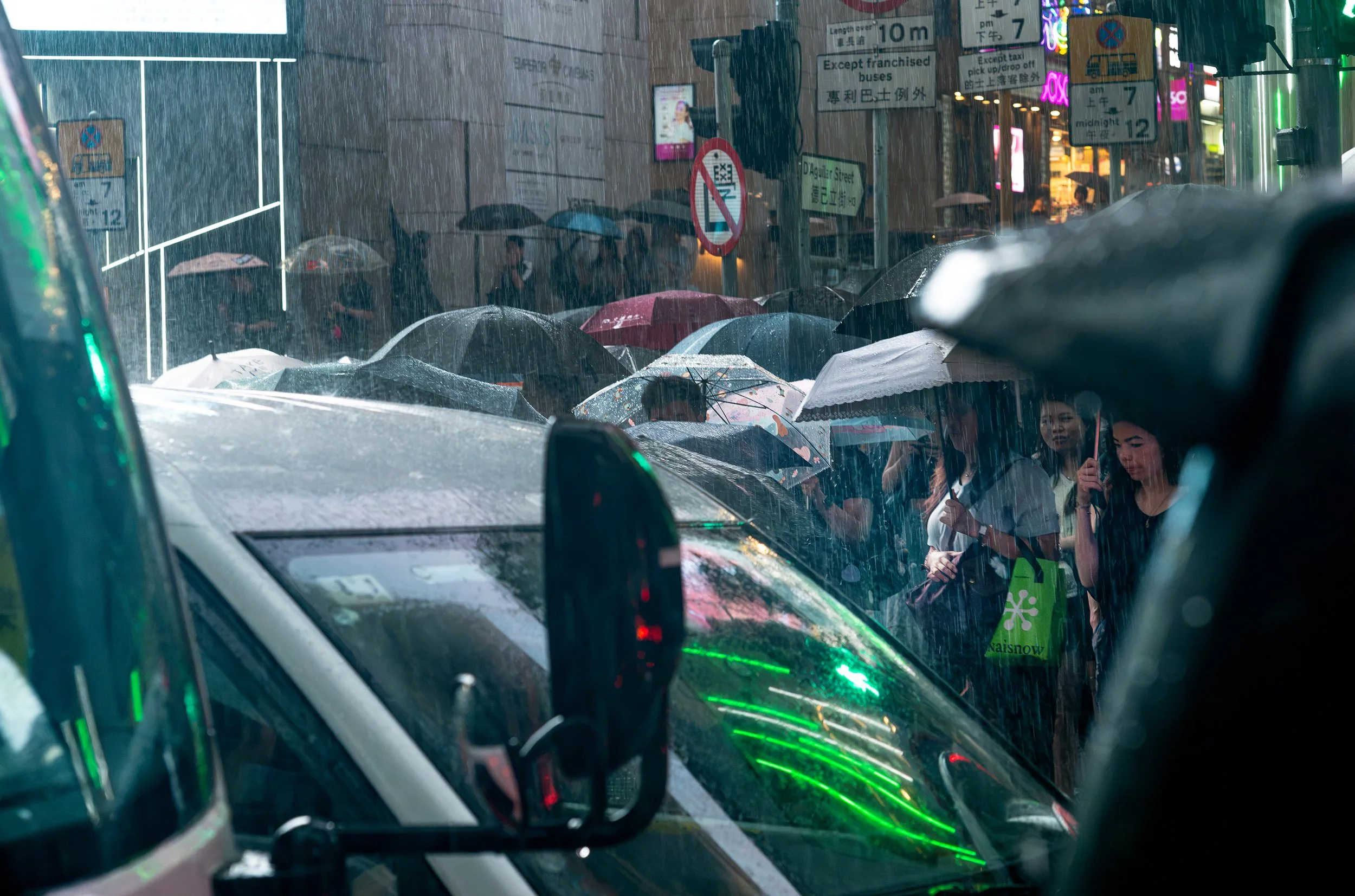
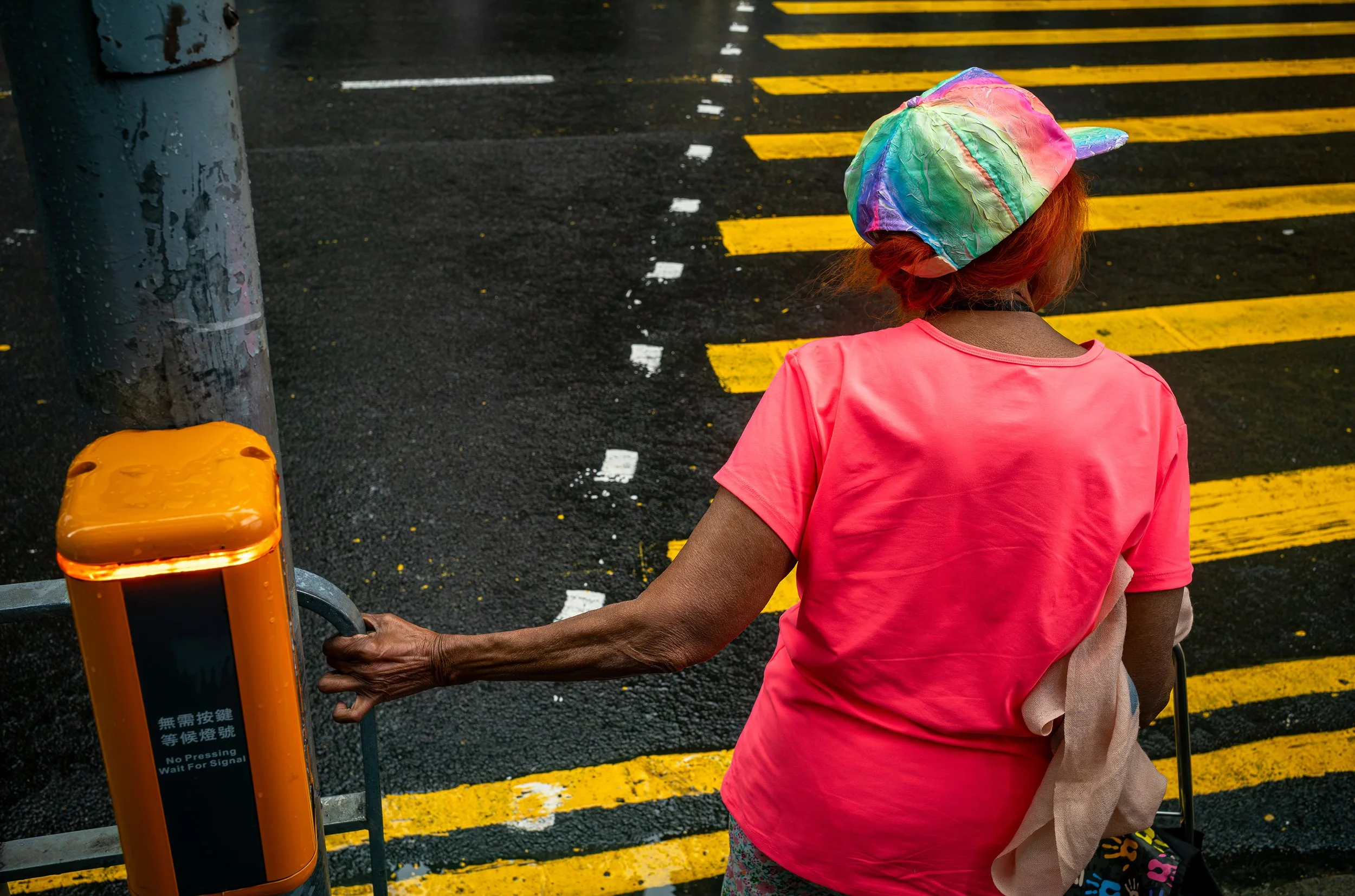
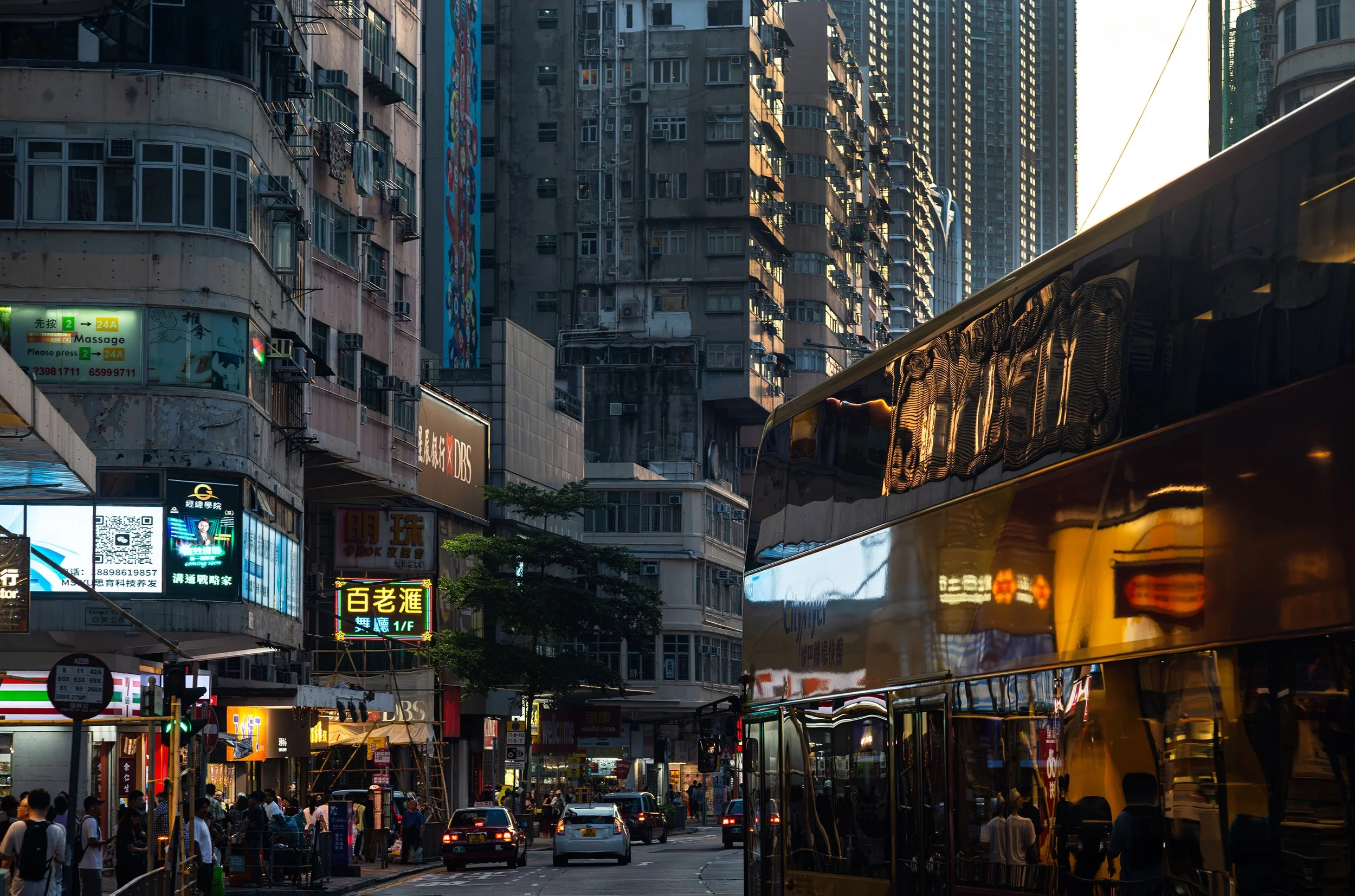
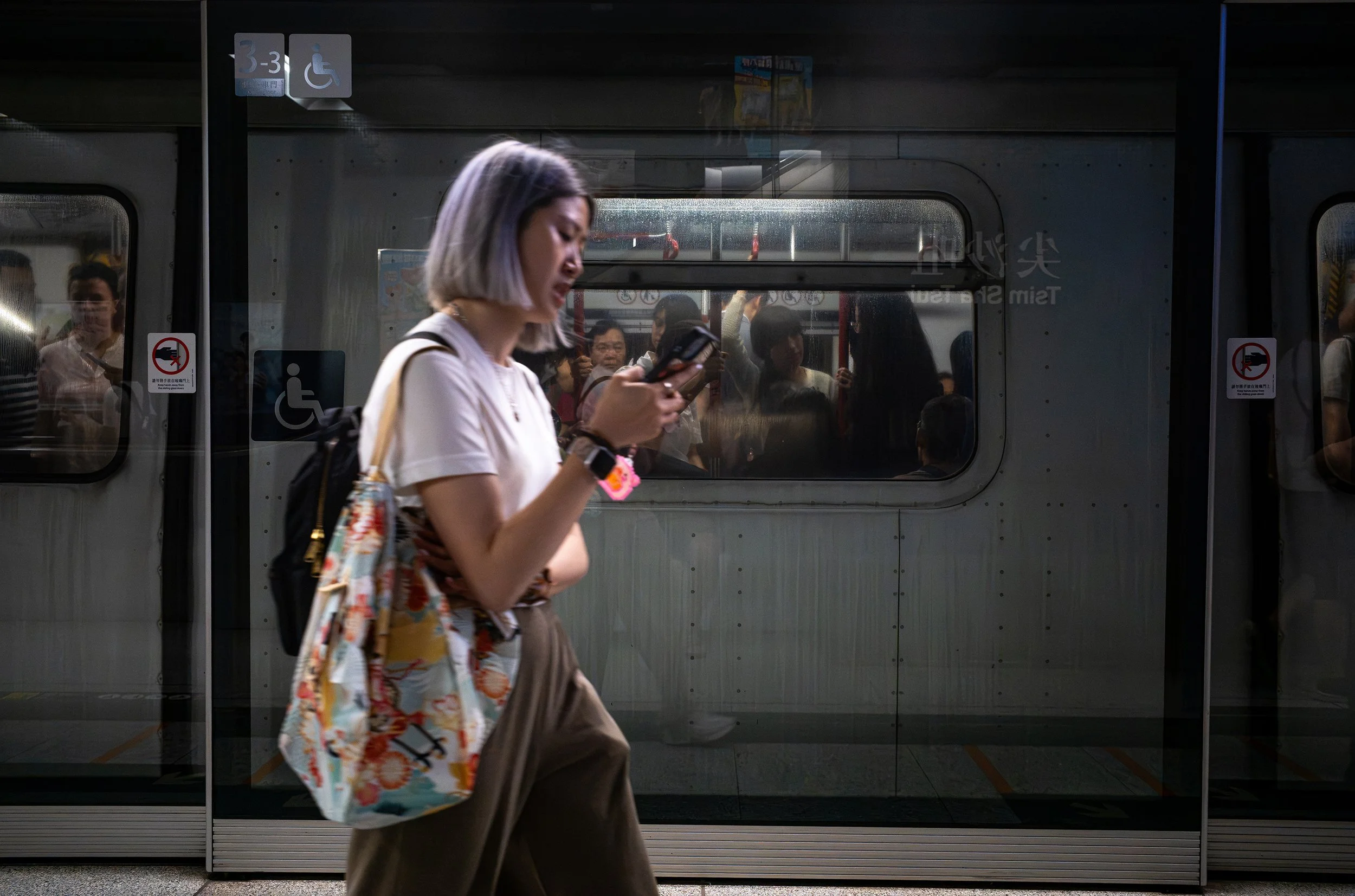
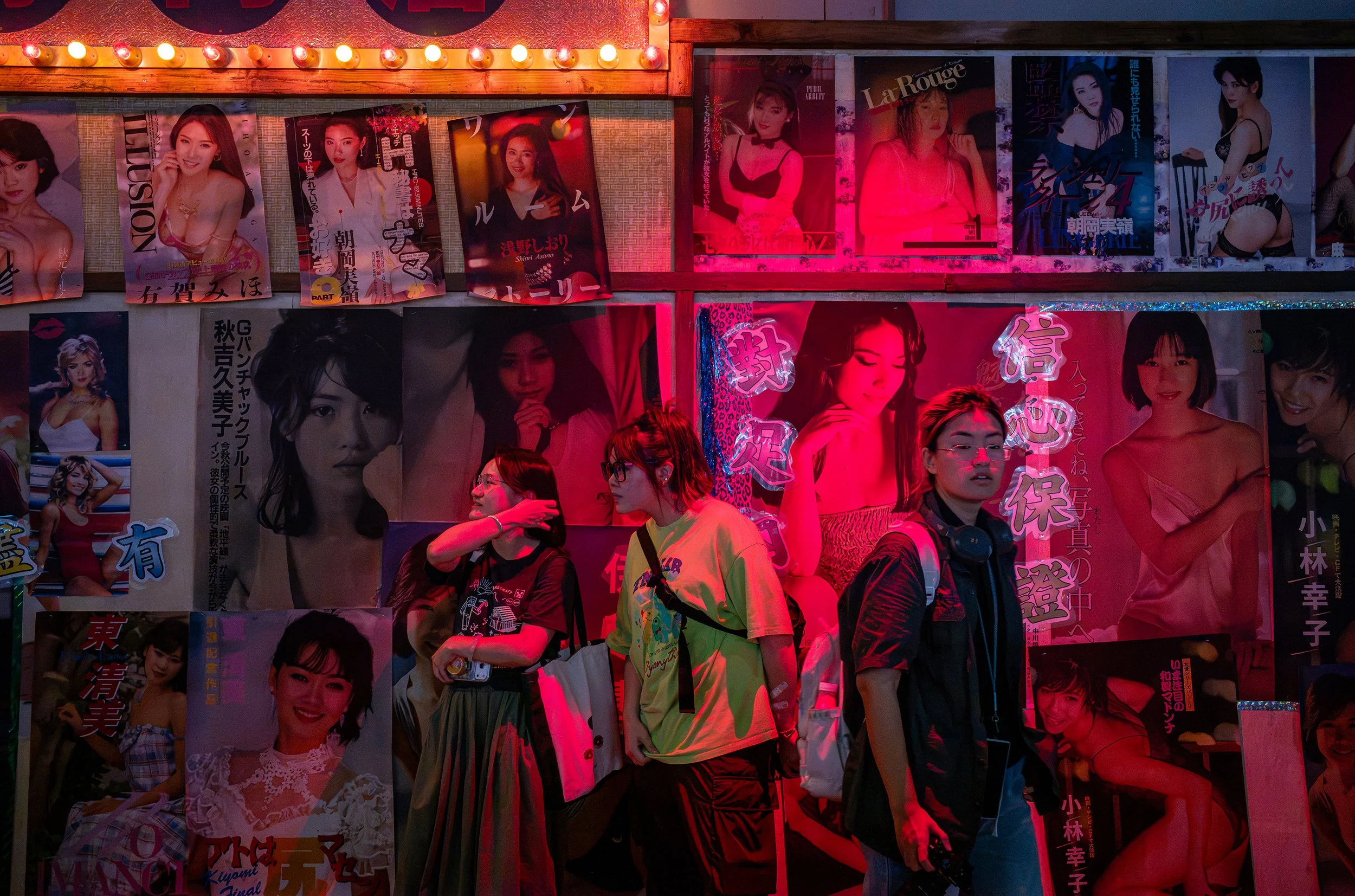
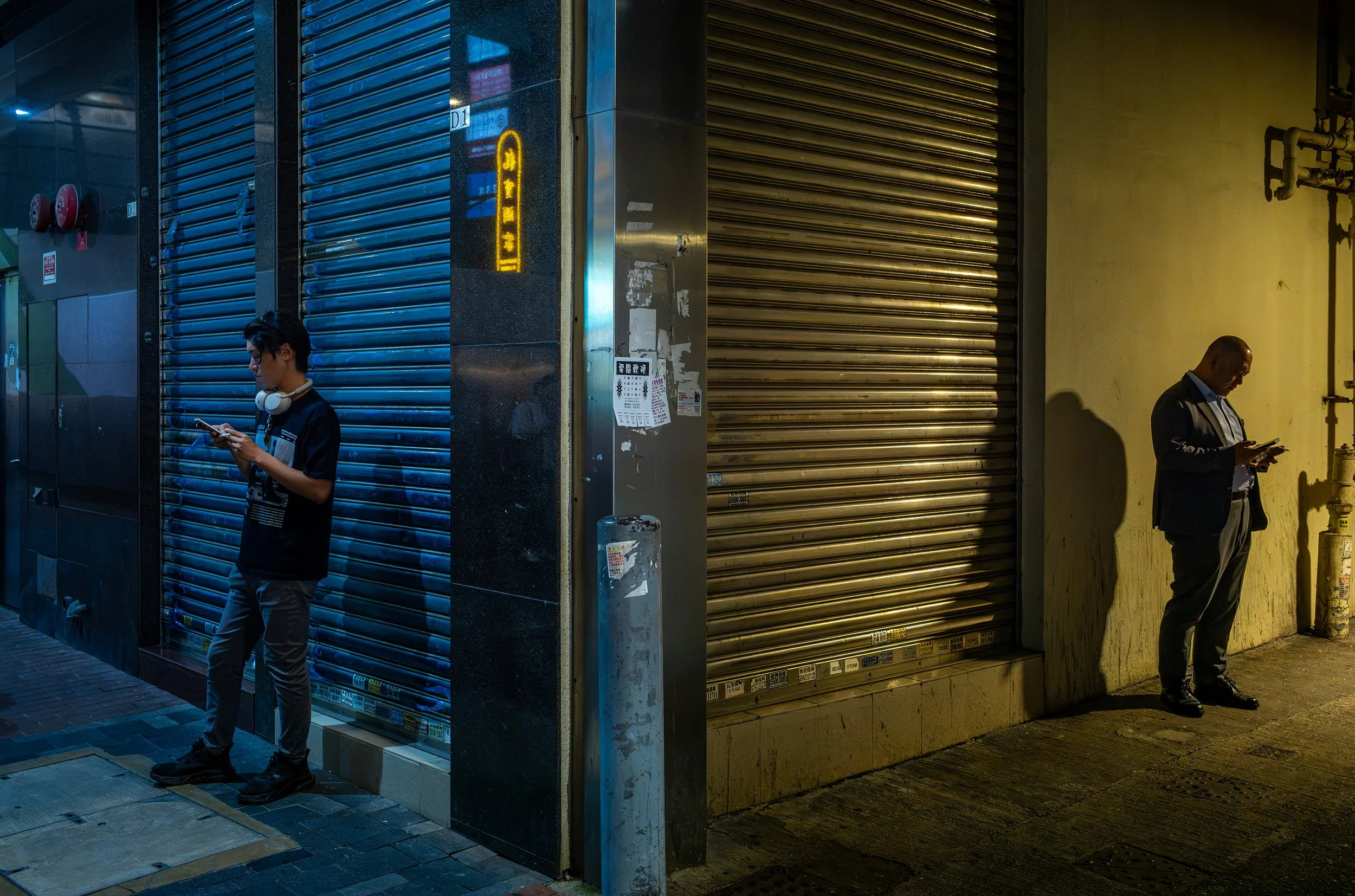
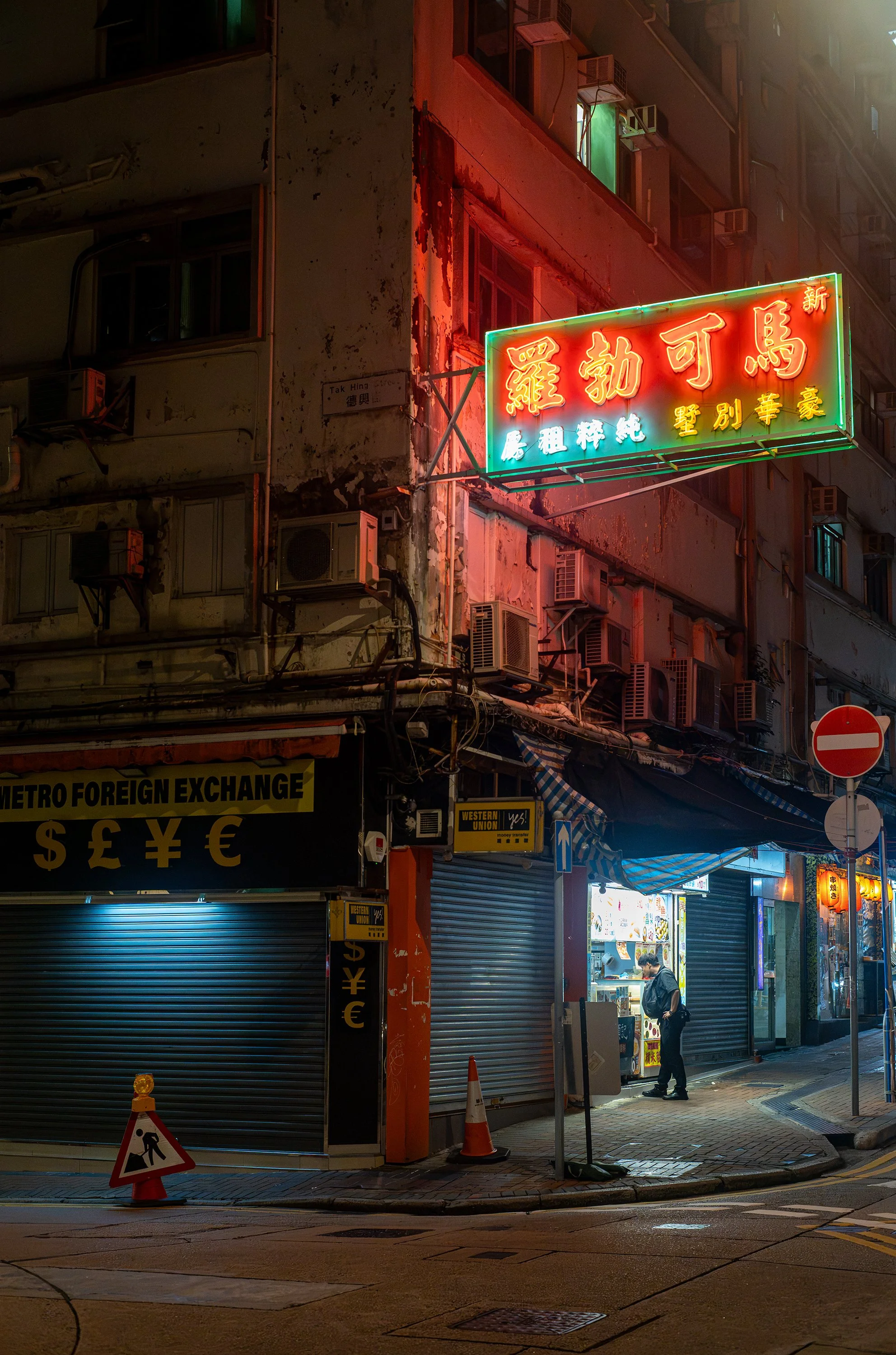
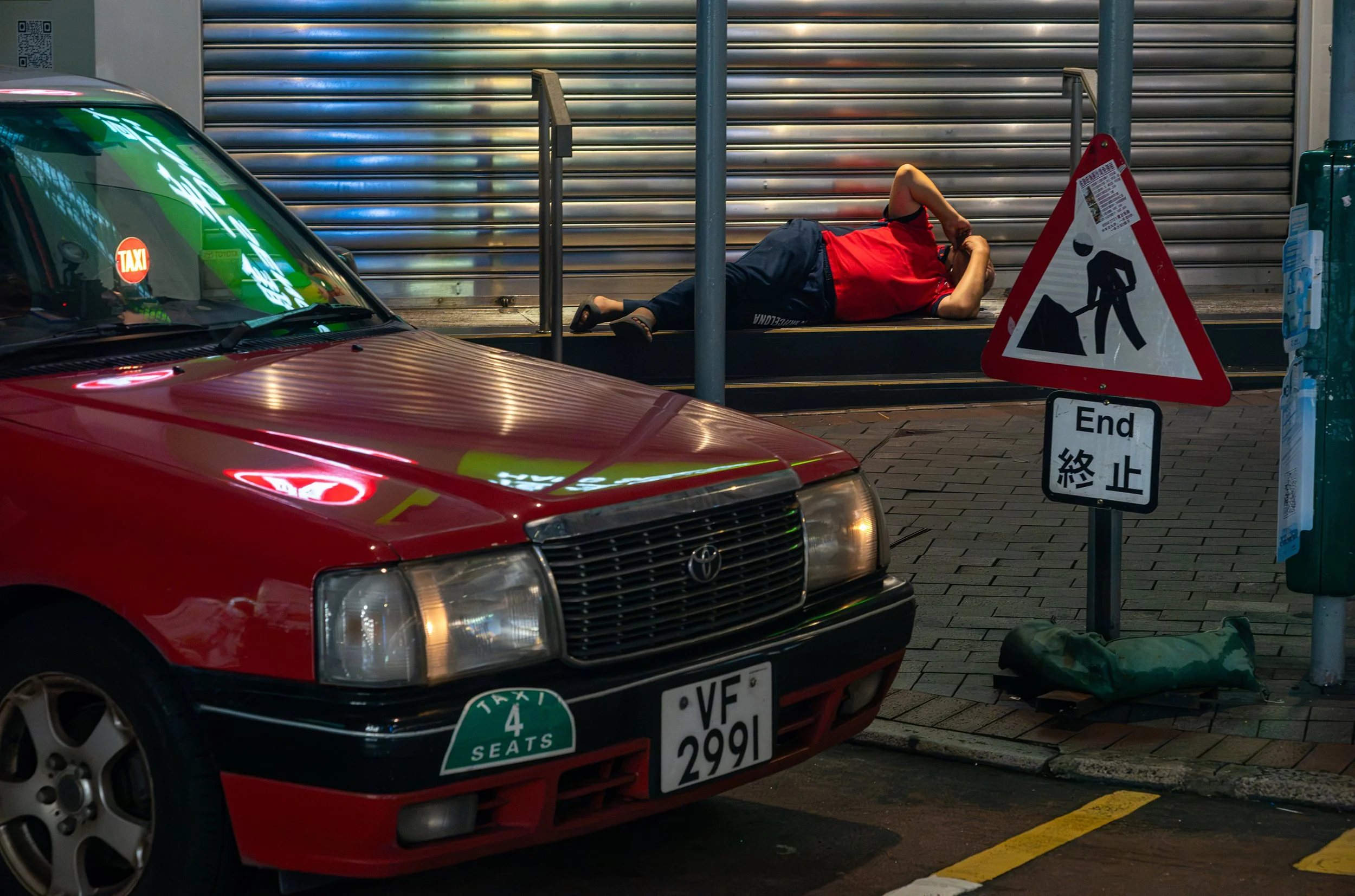
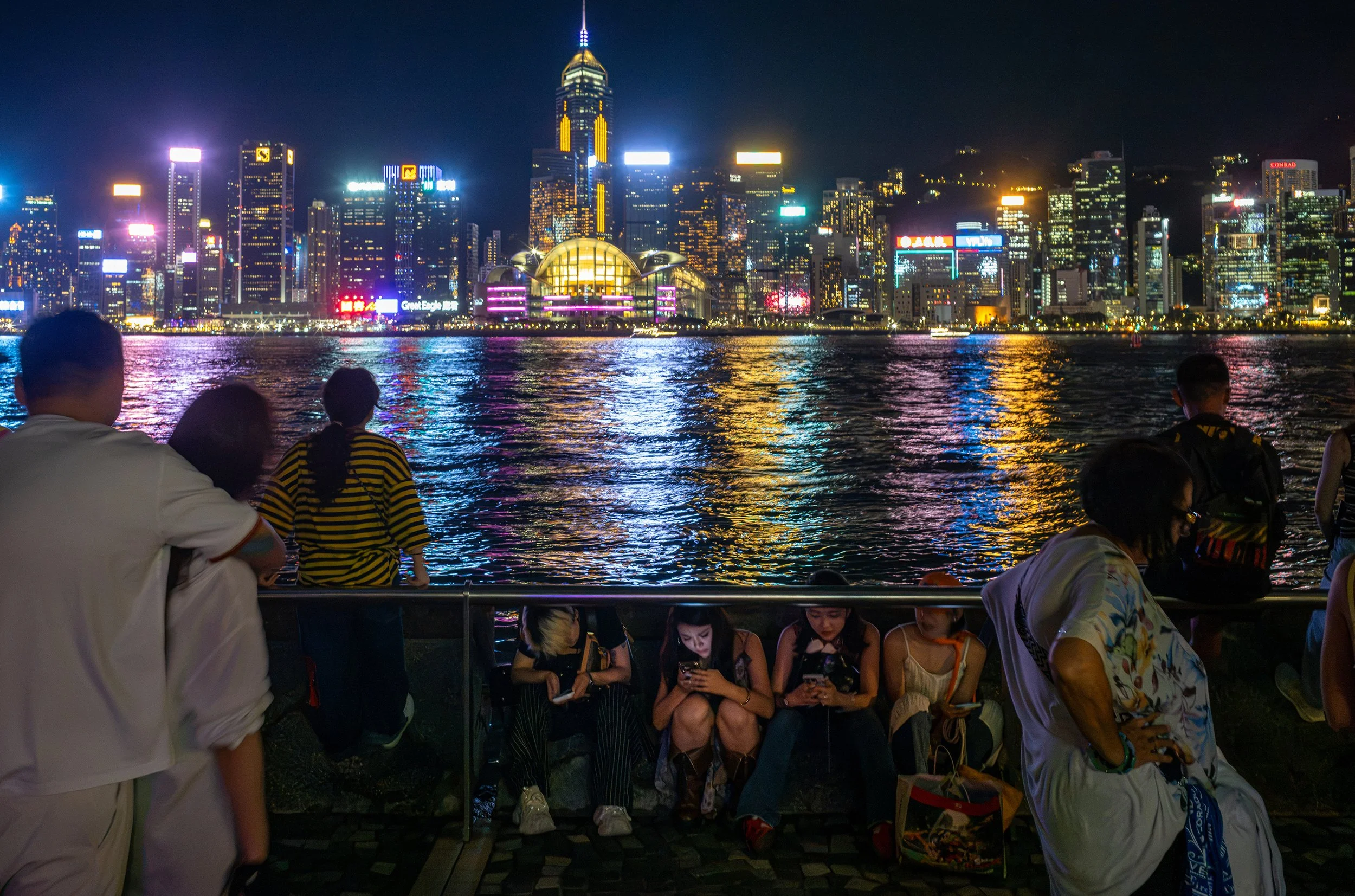
香港 | Hong Kong
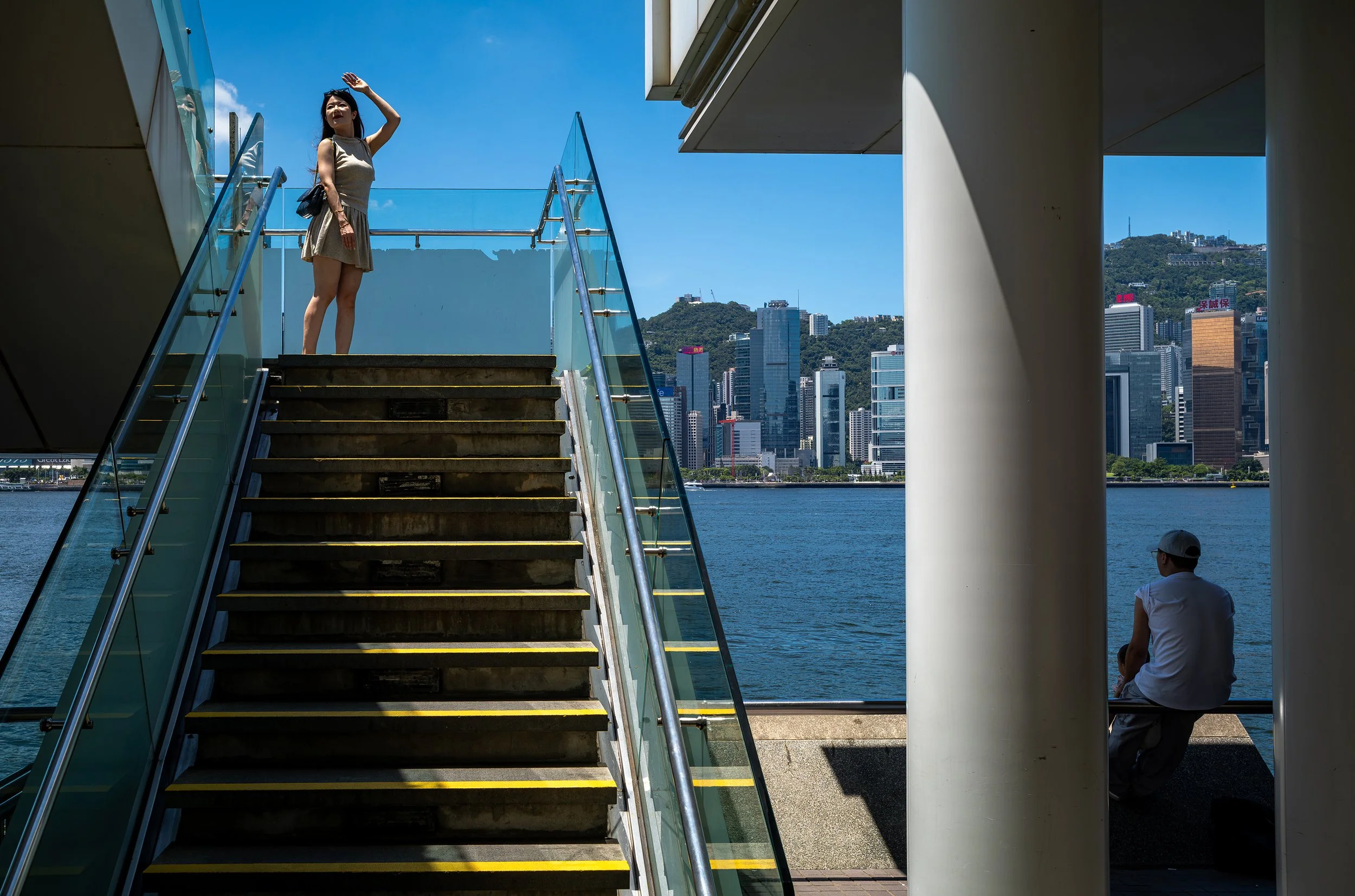
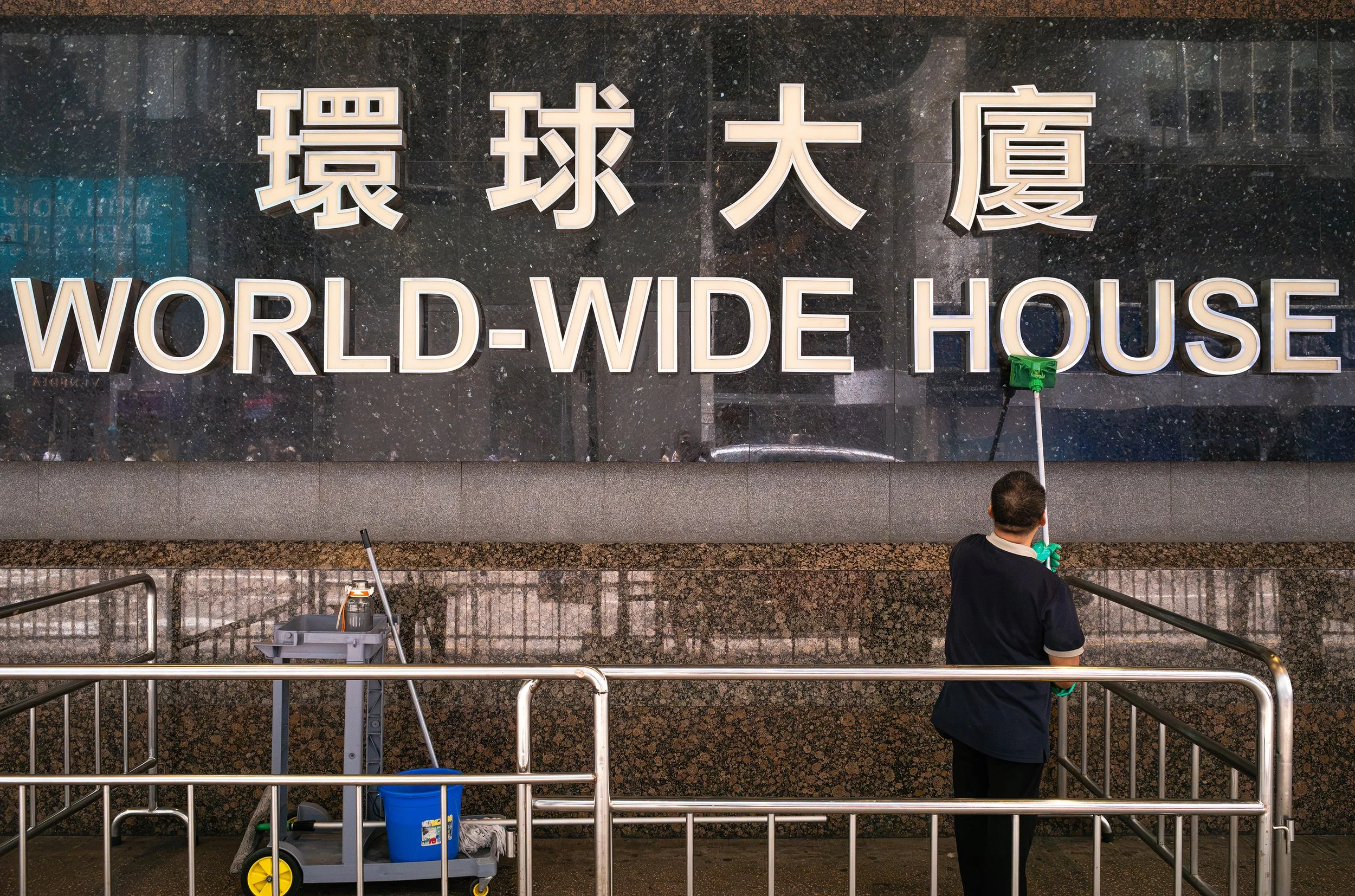
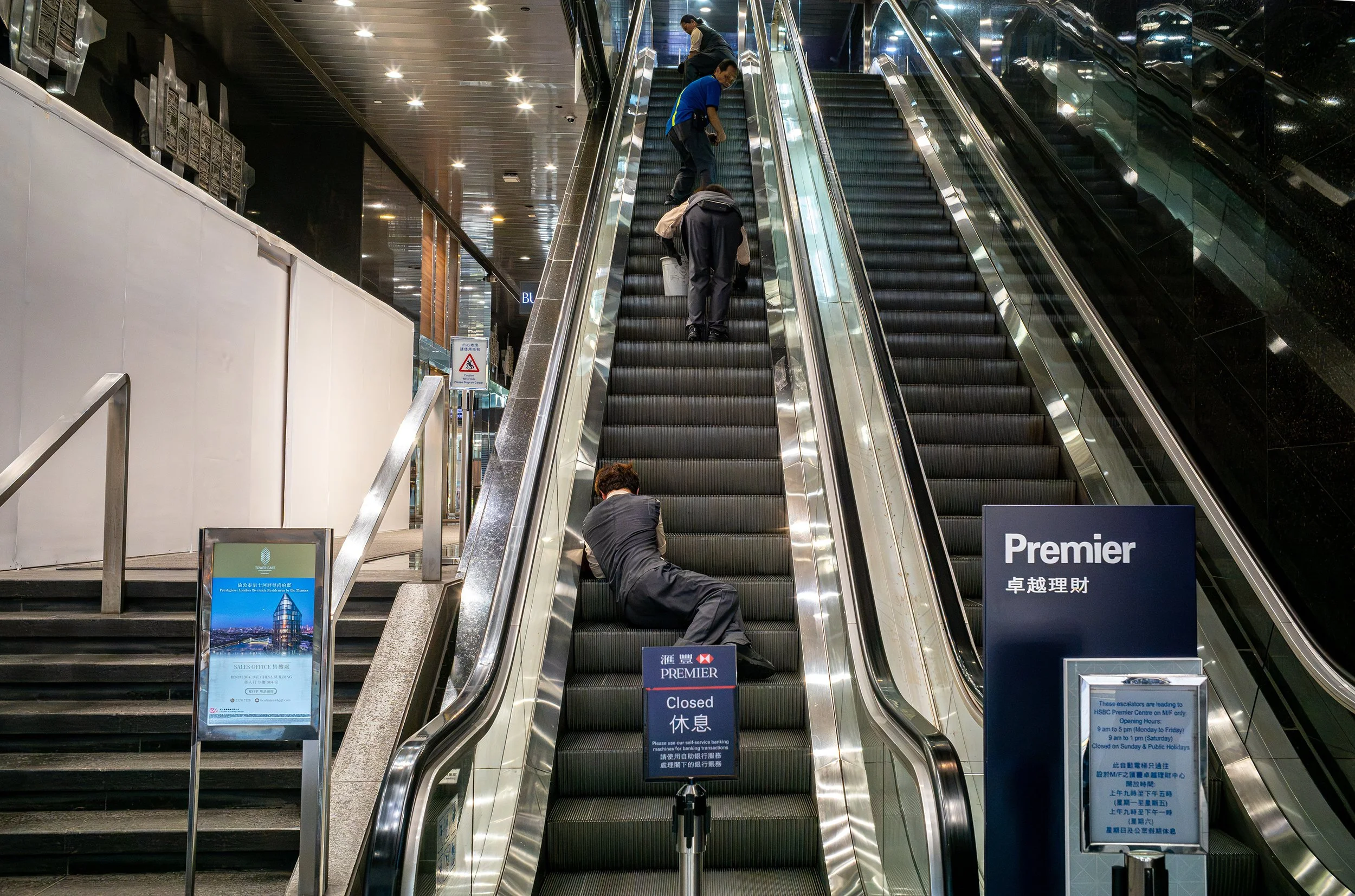
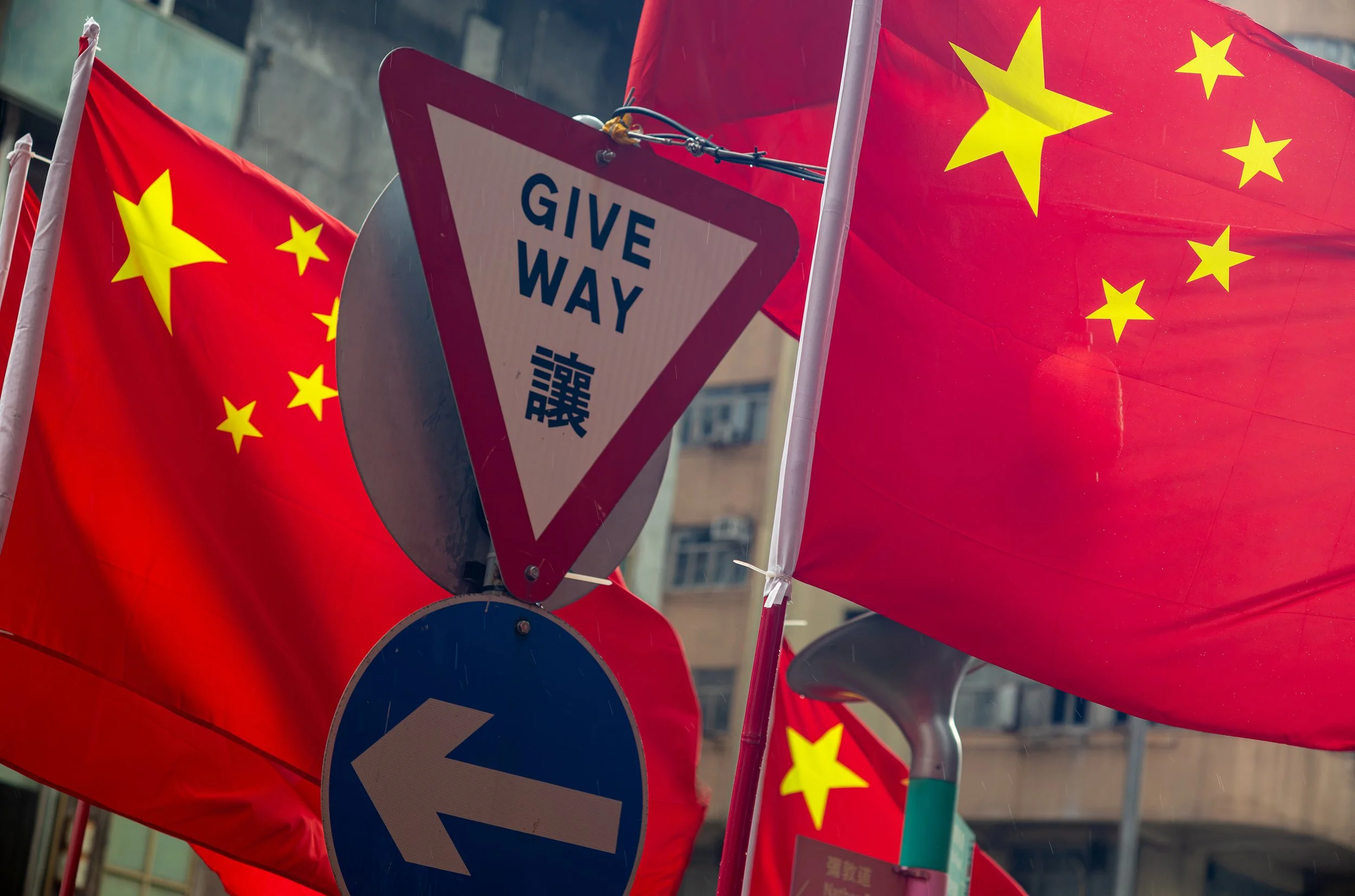
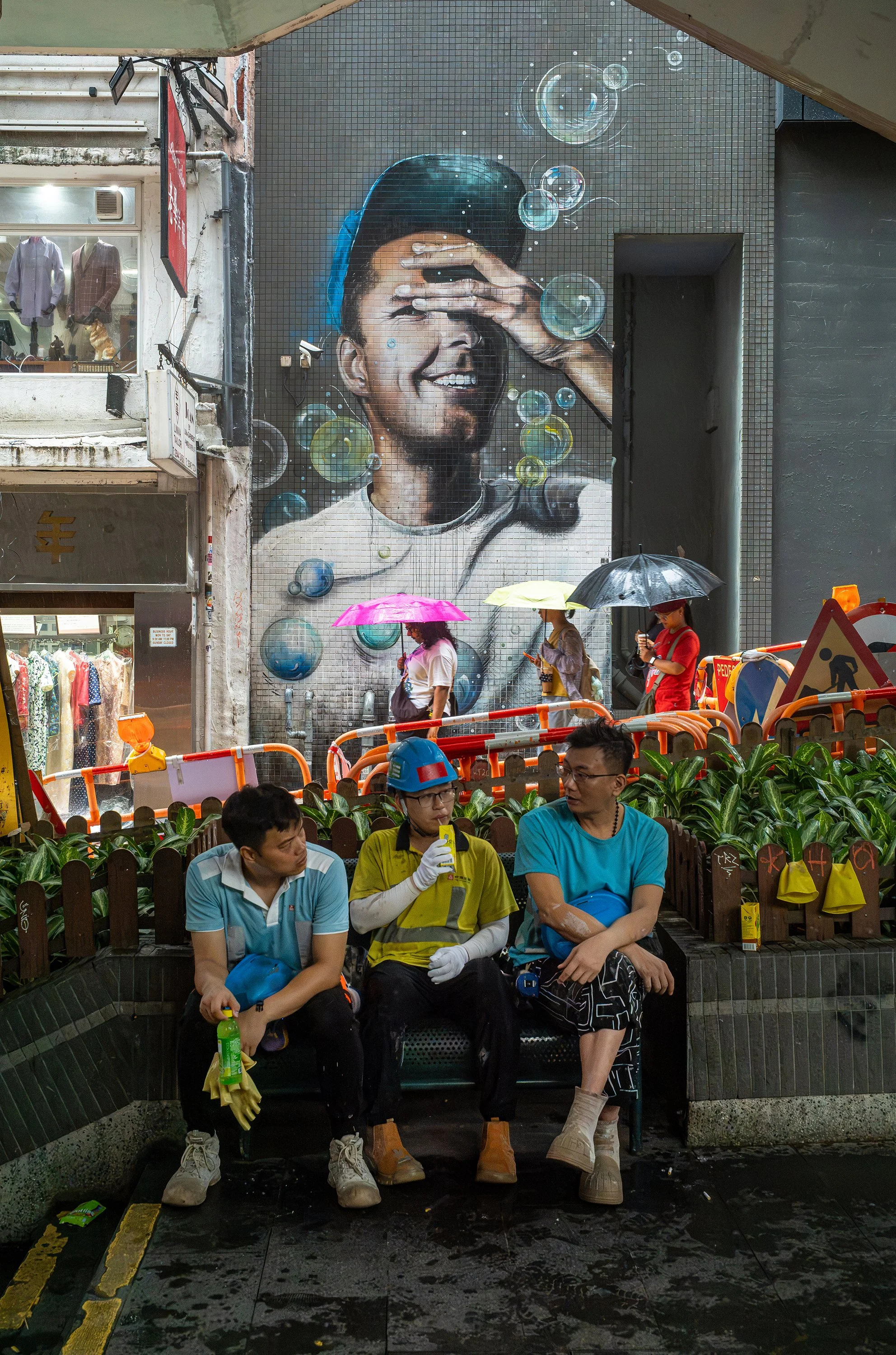
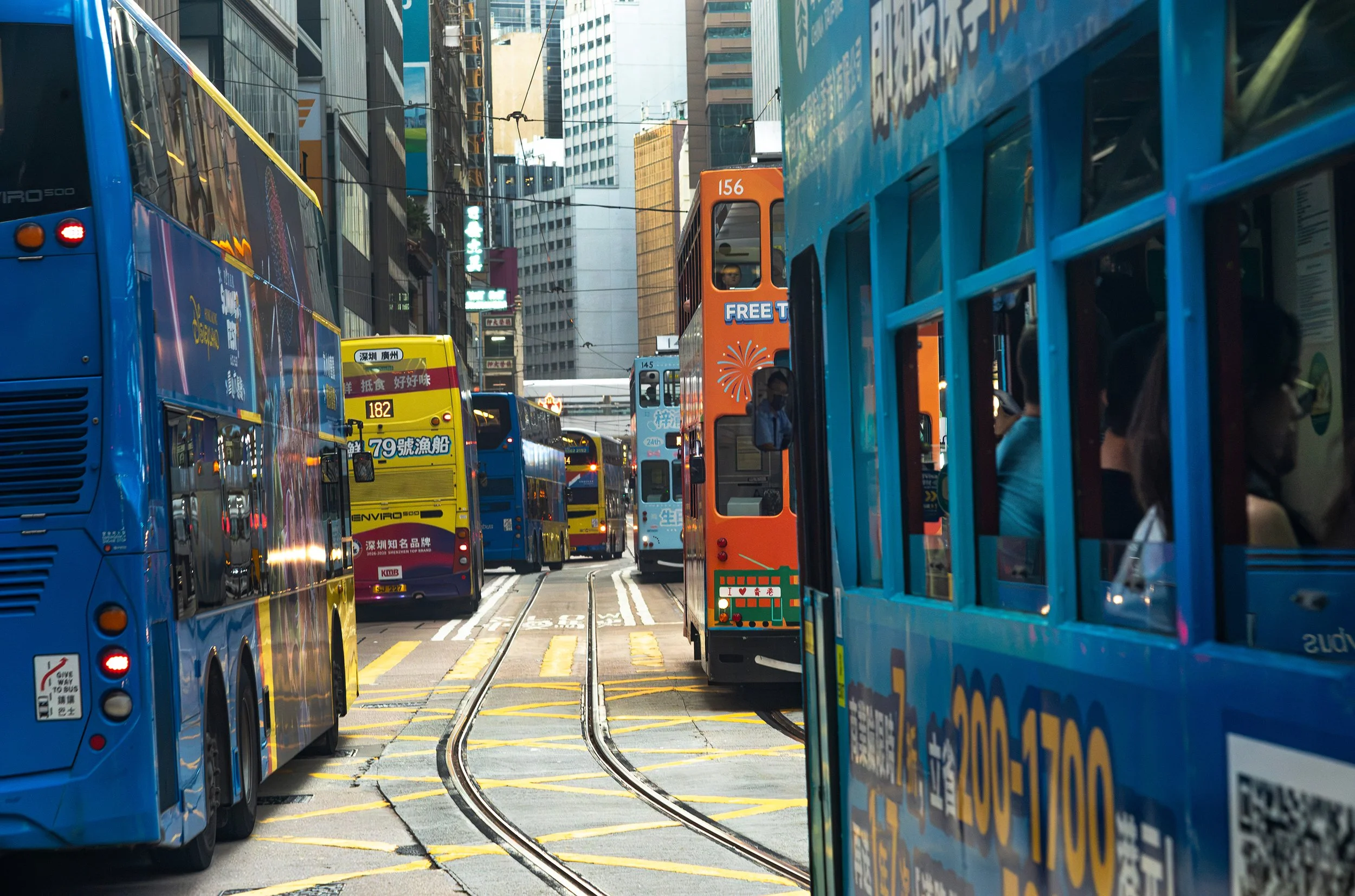
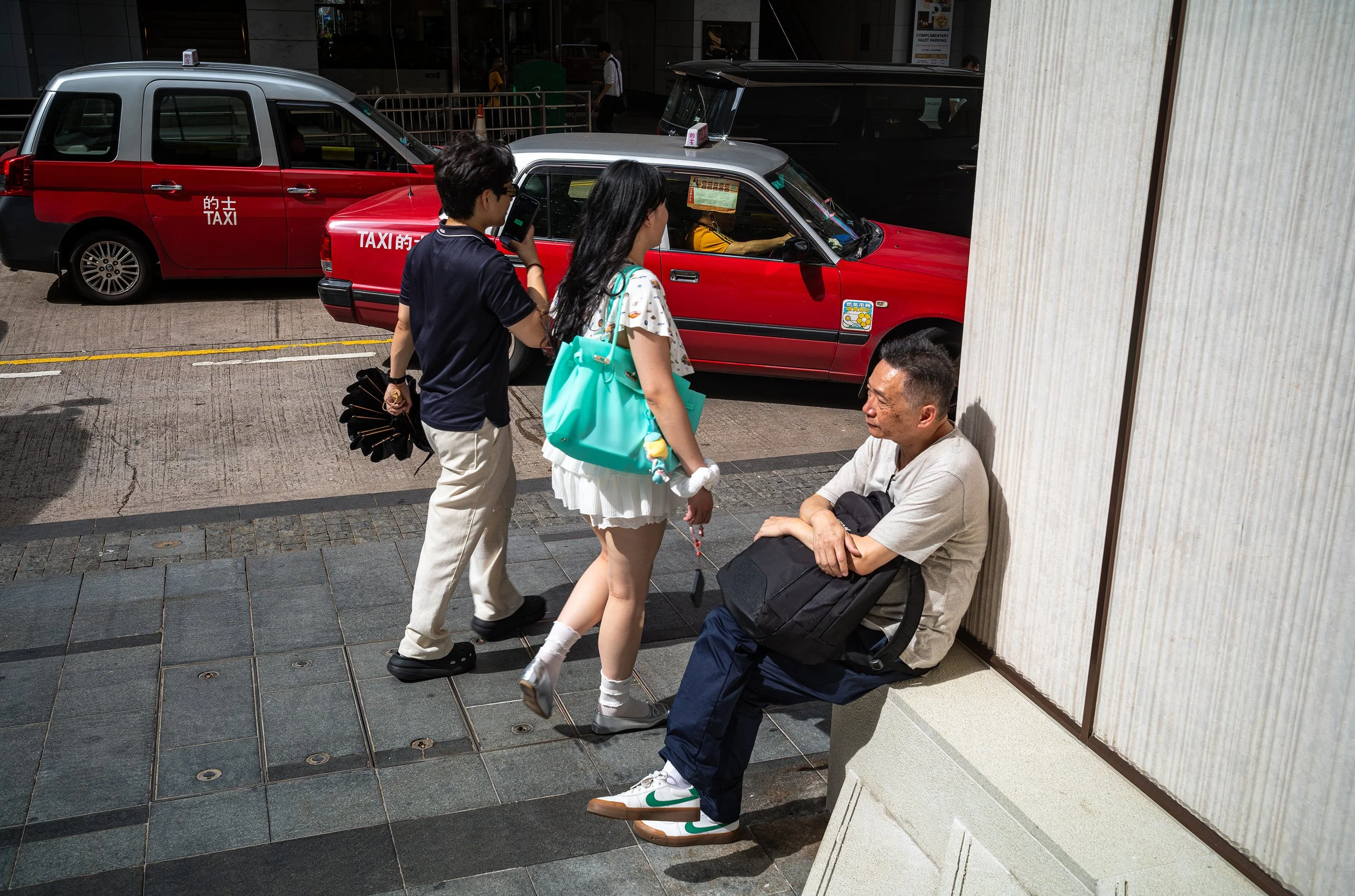
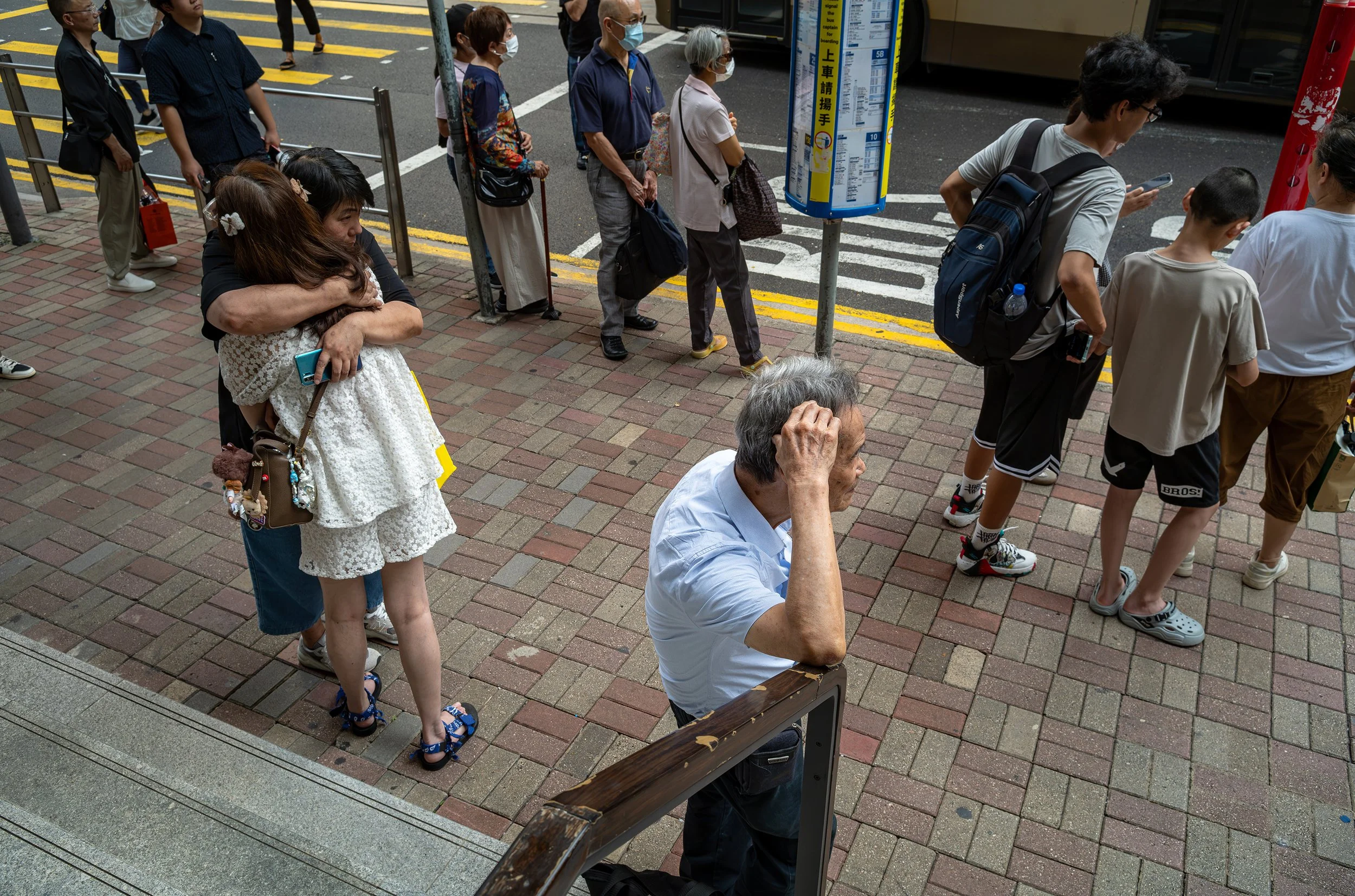
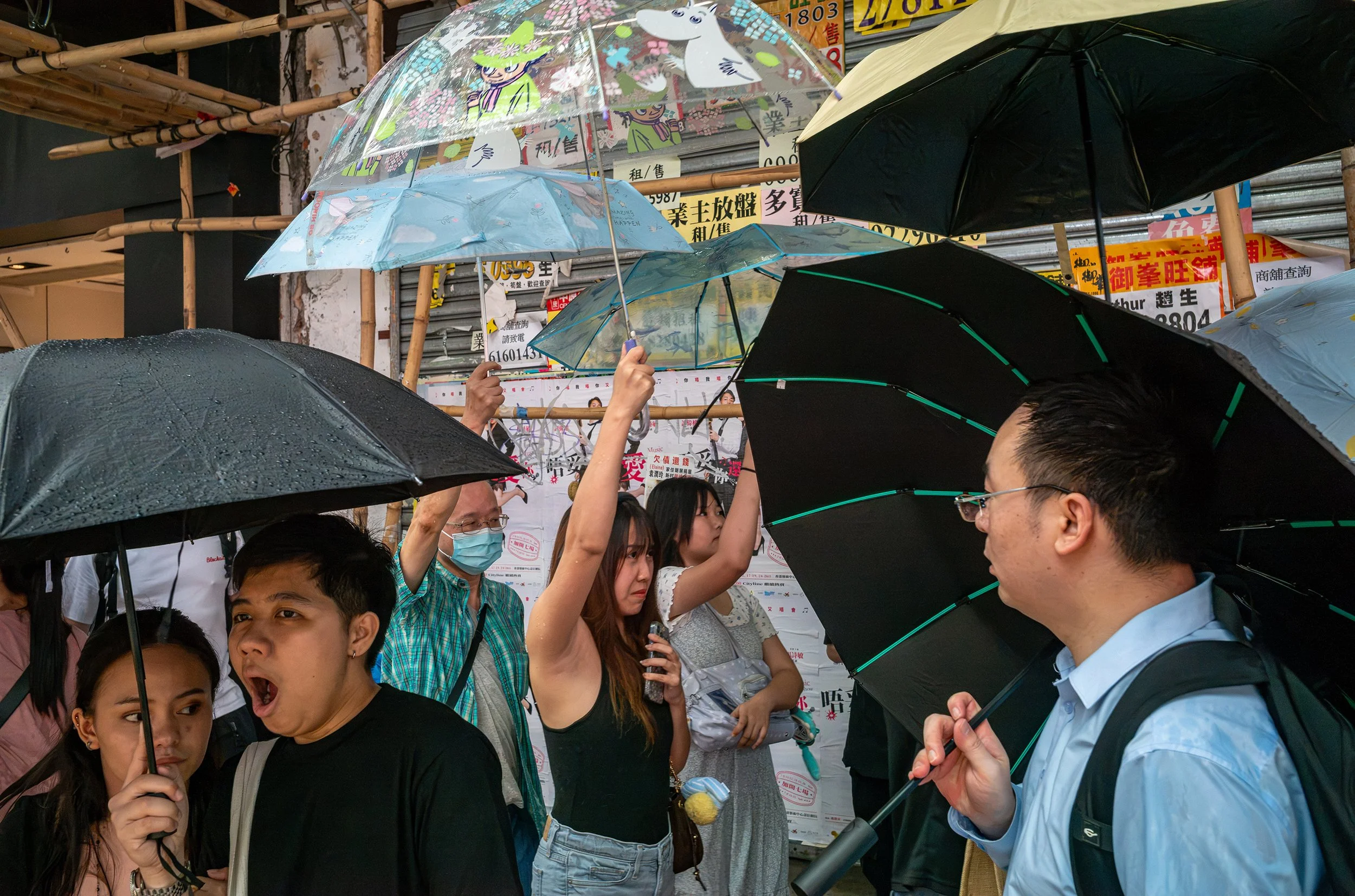
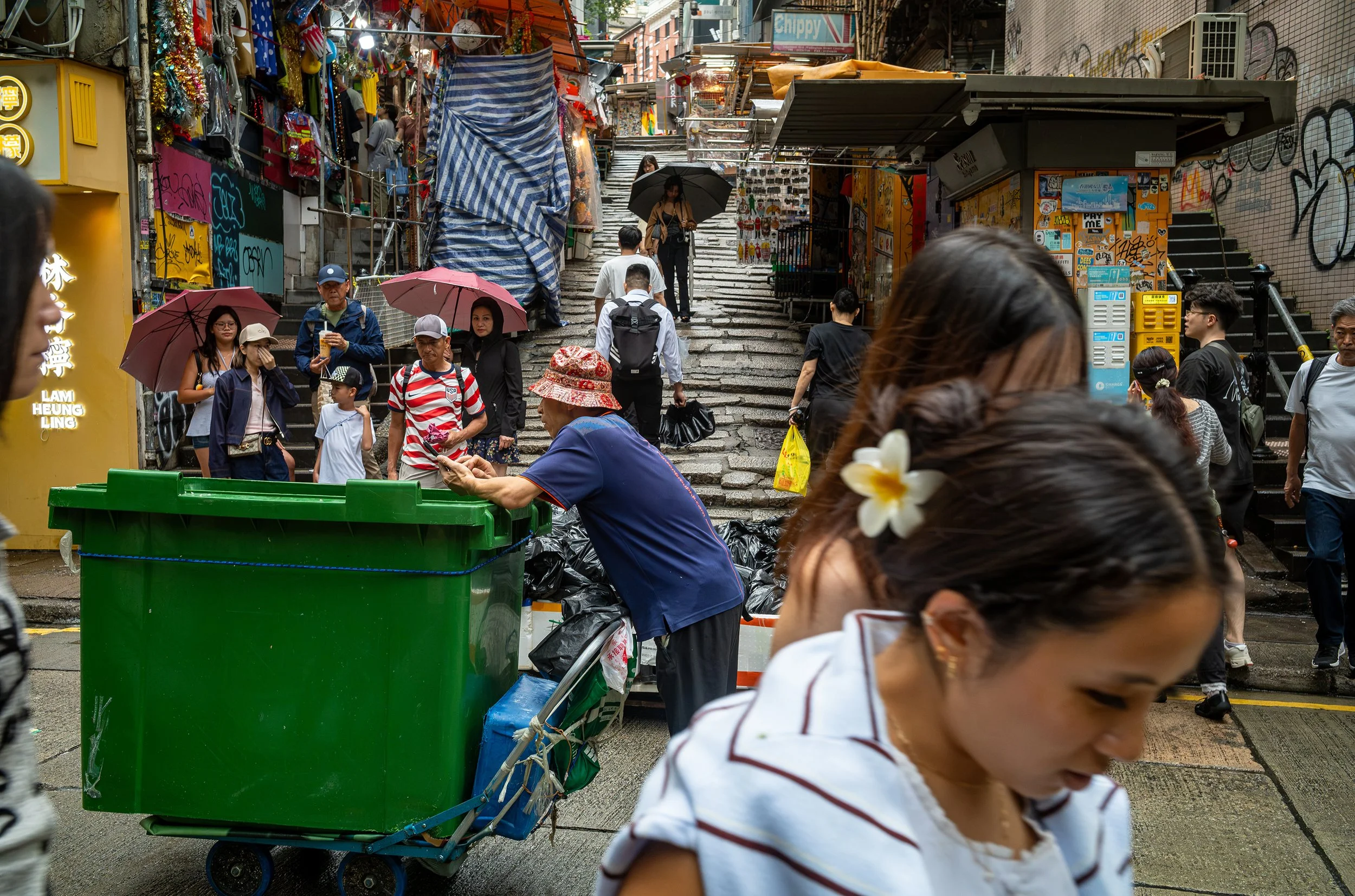
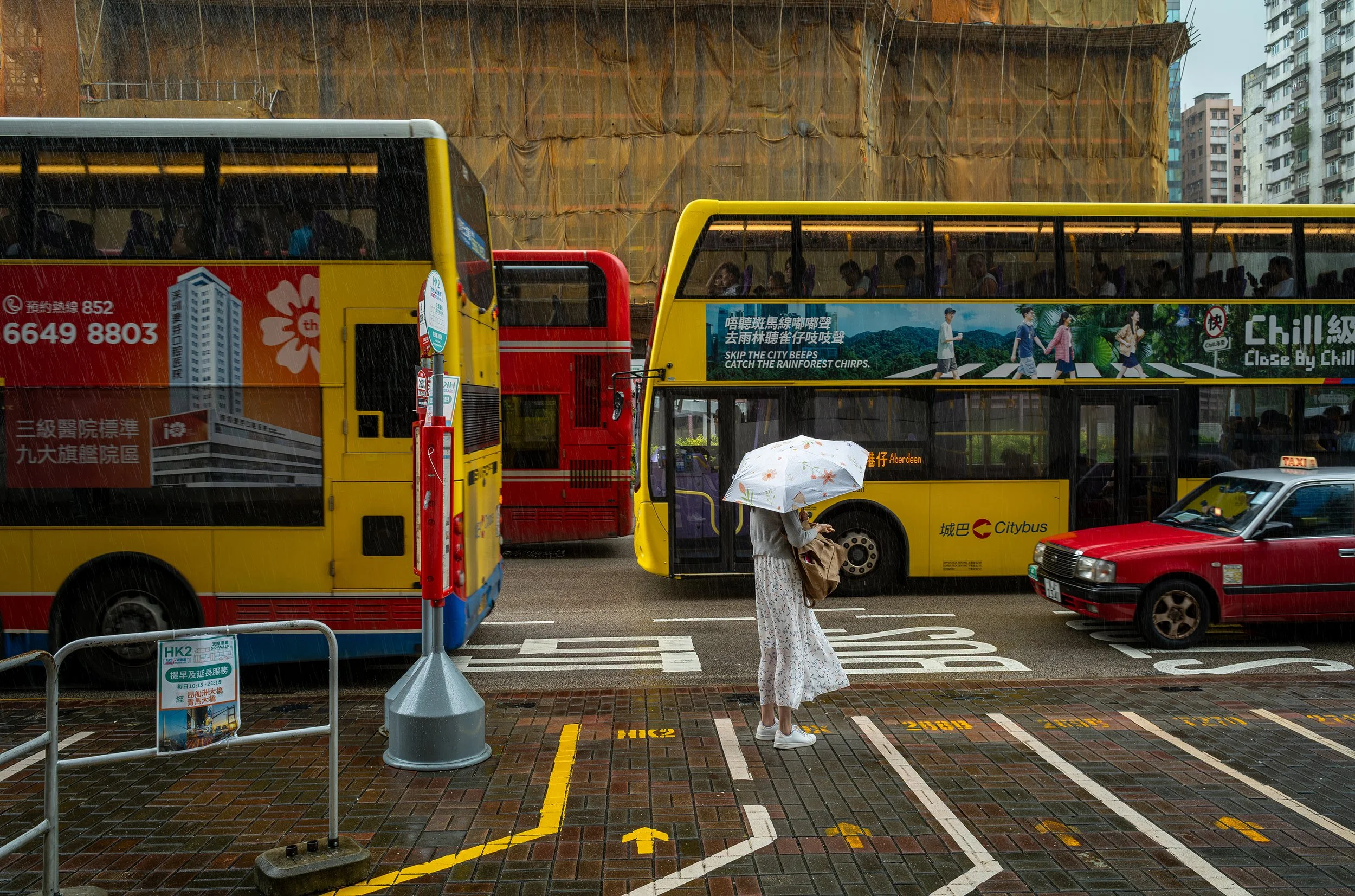
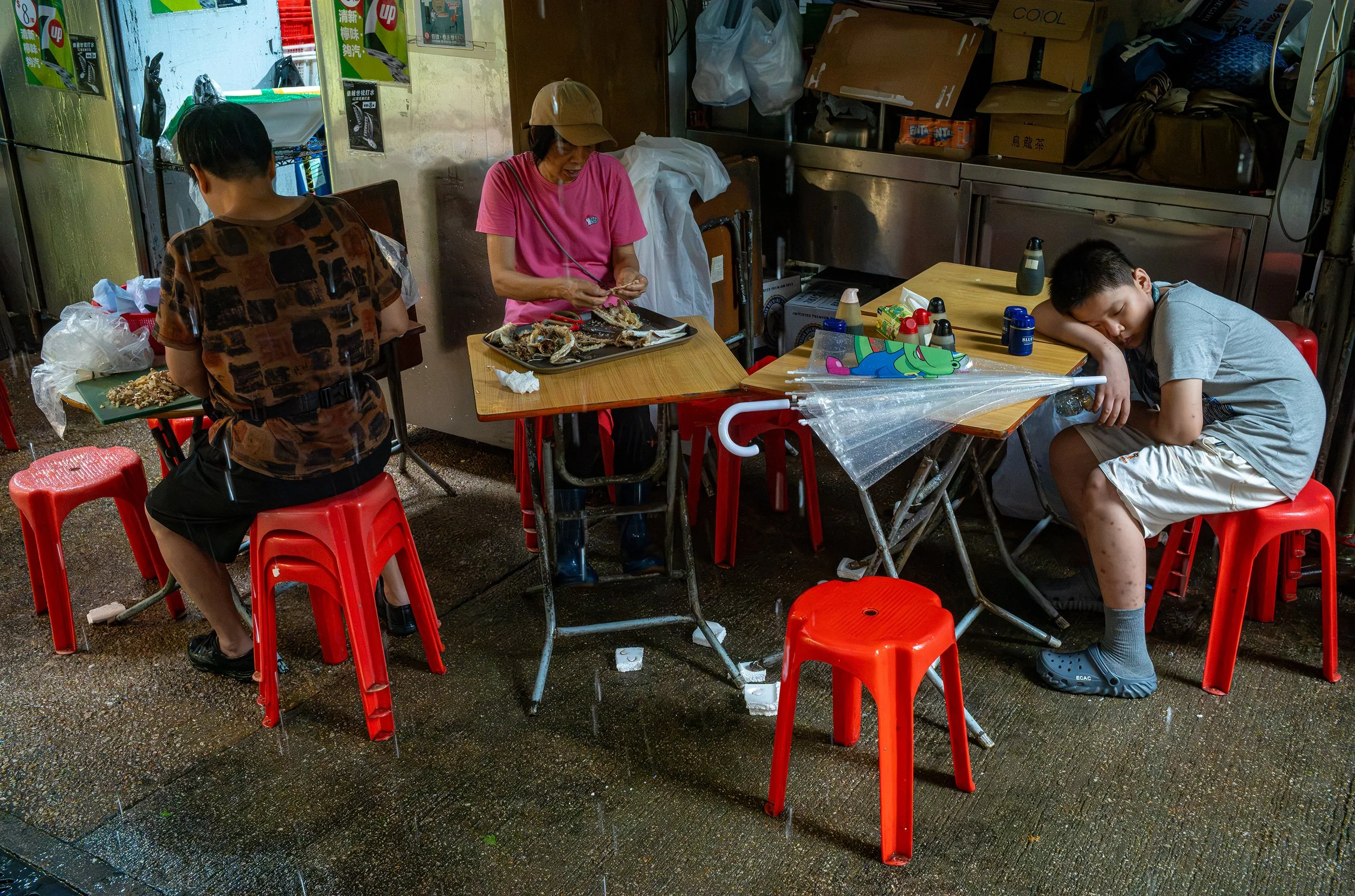
Hong Kong is a Special Administrative Region of the People’s Republic of China. With an area of 1,104 km² and a population of more than seven million, it is one of the world's most densely populated regions.
Alongside London, New York, Paris, and Tokyo, Hong Kong is recognized as one of the world’s major international financial centers. From 1995 to 2019, it ranked as the world’s freest economy for 25 consecutive years according to the Index of Economic Freedom. Its economy is characterized by low taxation, free trade, and a highly developed, capital-oriented service sector. The Hong Kong dollar is also one of the world’s most actively traded currencies, ranking eighth globally in terms of foreign-exchange trading volume.
Hong Kong has one of the highest per capita incomes in the world, while also experiencing one of the highest levels of income inequality among advanced economies. Land scarcity has driven strong demand for high-density construction, shaping a distinctive modern urban landscape defined by vertical architecture. Hong Kong has consequently become one of the world’s most vertically developed cities and the region with the highest concentration of skyscrapers in the world.
香港は中華人民共和国の特別行政区。1,104 km2 の面積に700万人を超す人口が暮らす世界有数の人口密集地域。ロンドン、ニューヨーク、パリ、東京と並び世界的に重要な国際金融センターに格付けされ、経済自由度指数が1995年から2019年まで25年連続で世界で最も高く、低税率および自由貿易を特徴とする資本サービス経済を有し、通貨の香港ドルは世界第8位の取引高。1人当たりの所得高が世界最高基準だが、先進経済諸国特有の所得格差もまた存在する。スペースの不足により高密度な建造物の需要が生じ、世界で最も超高層ビルが多い地域となっている。
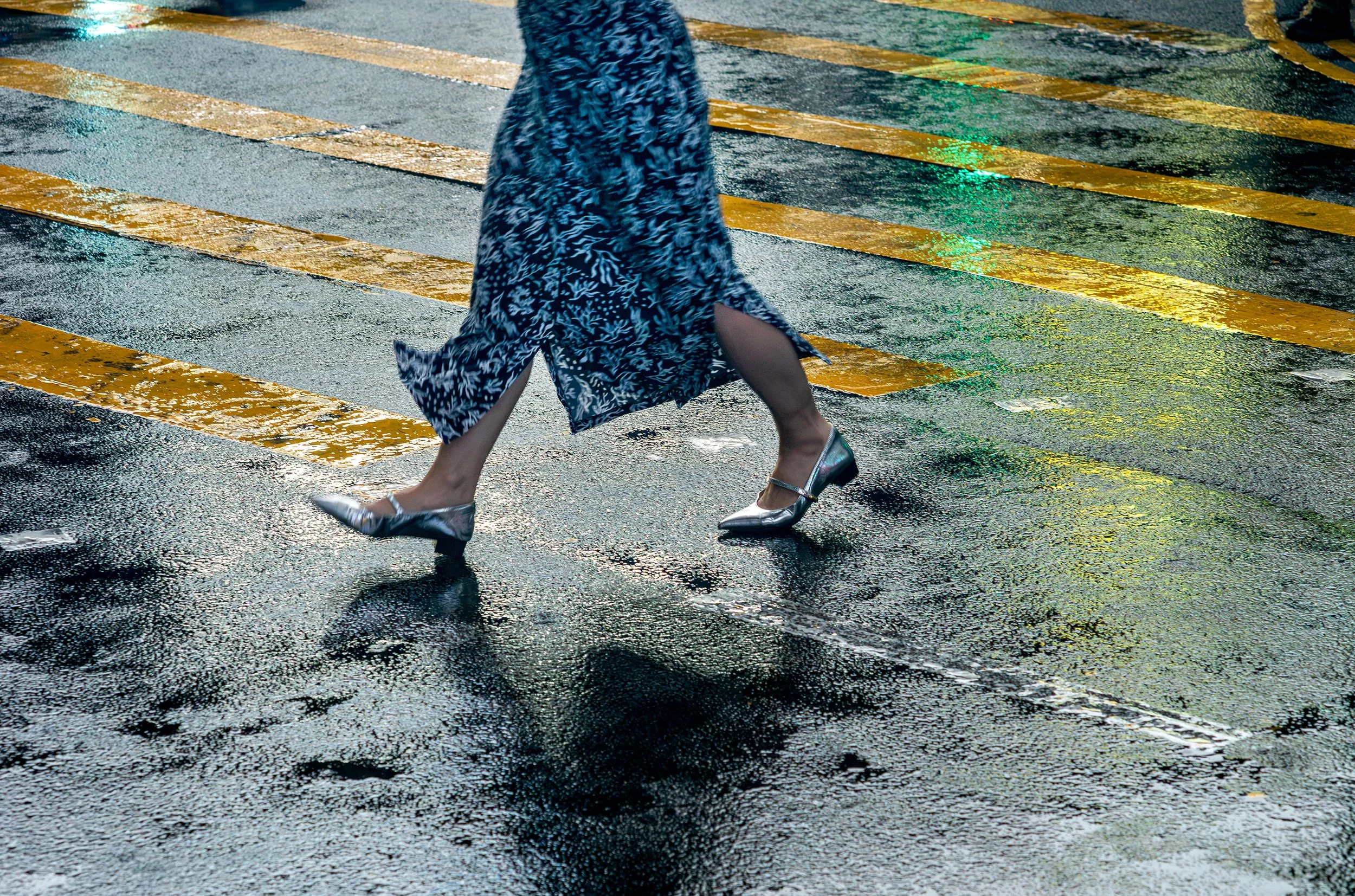
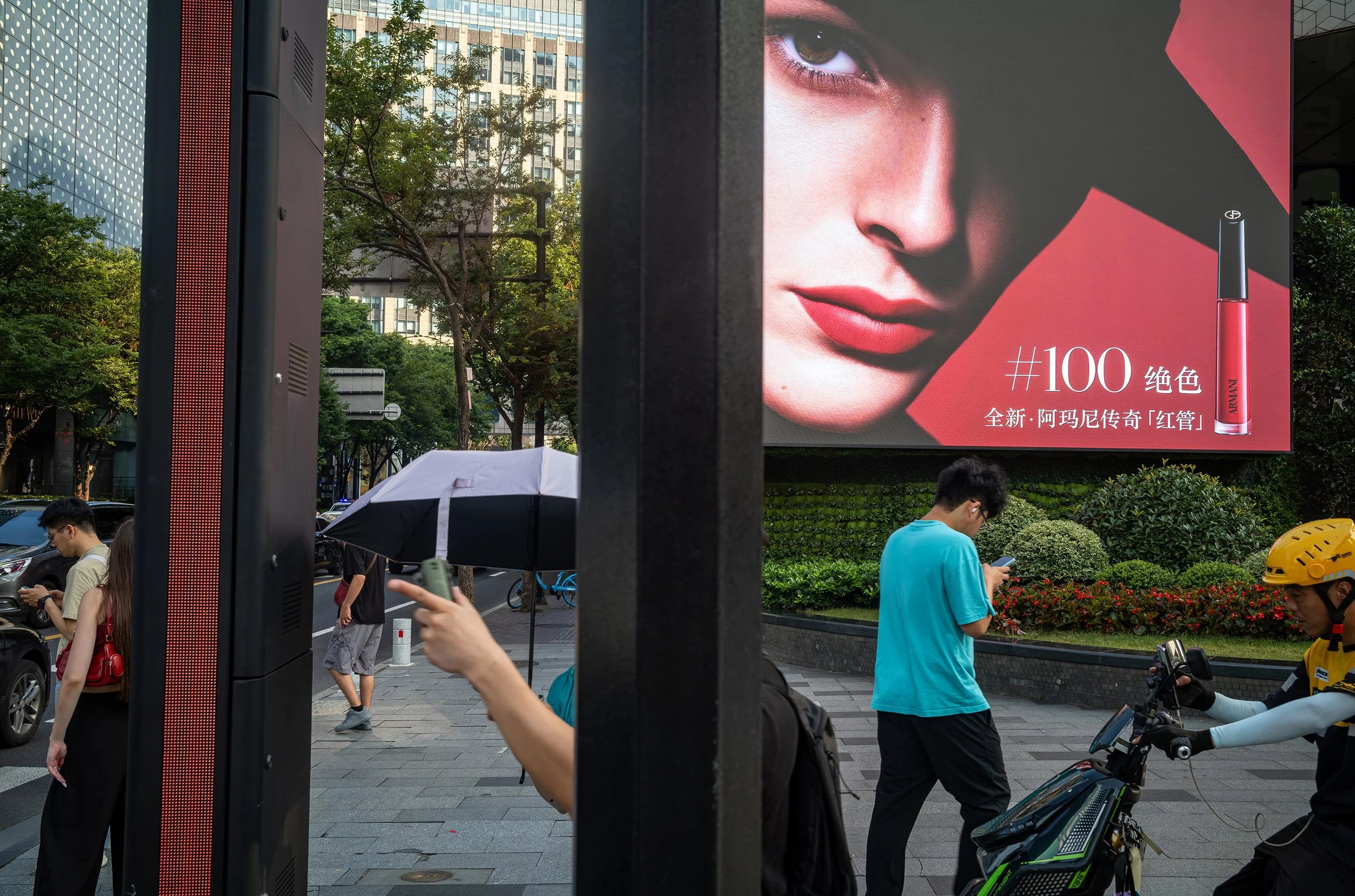
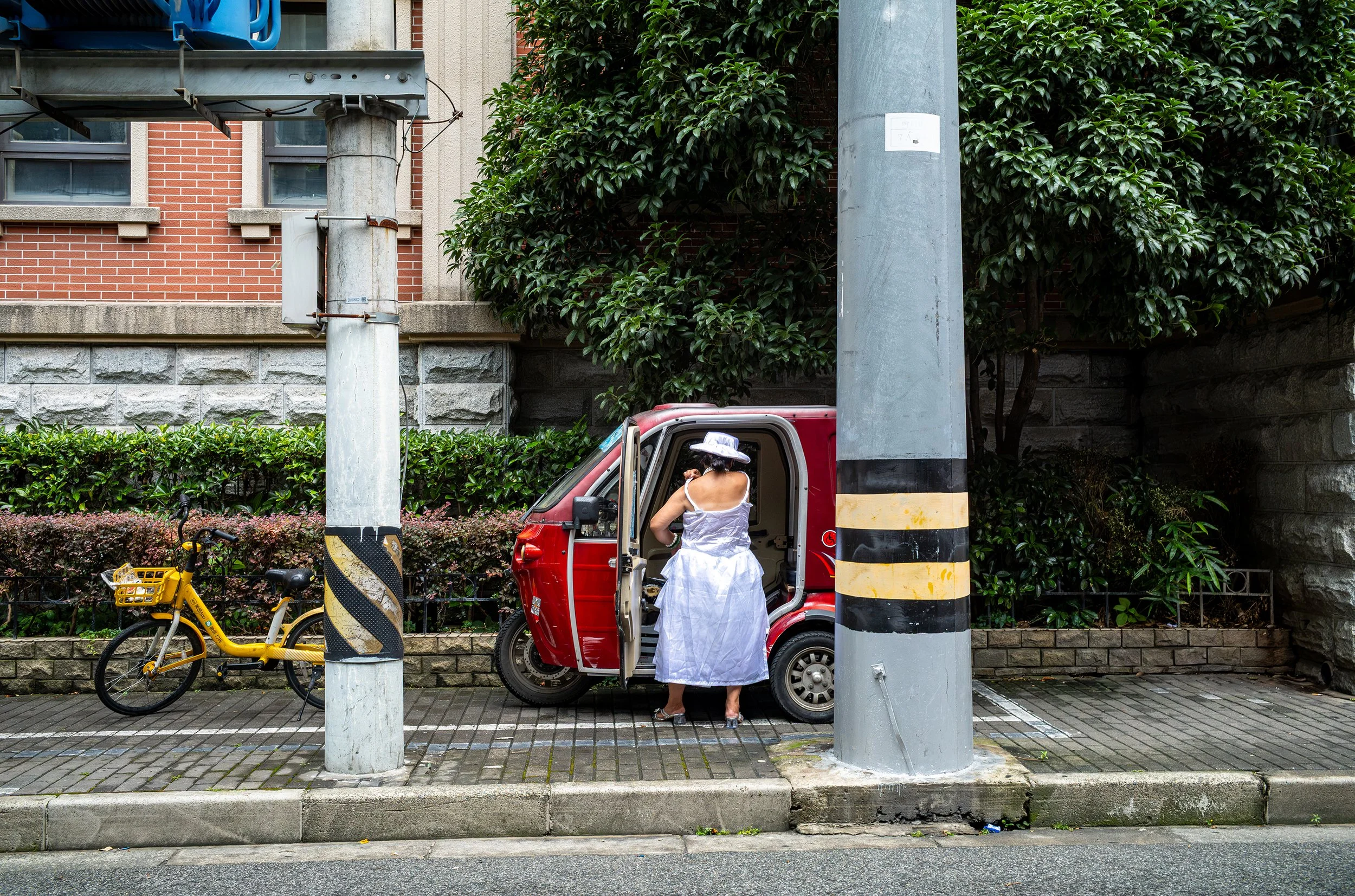
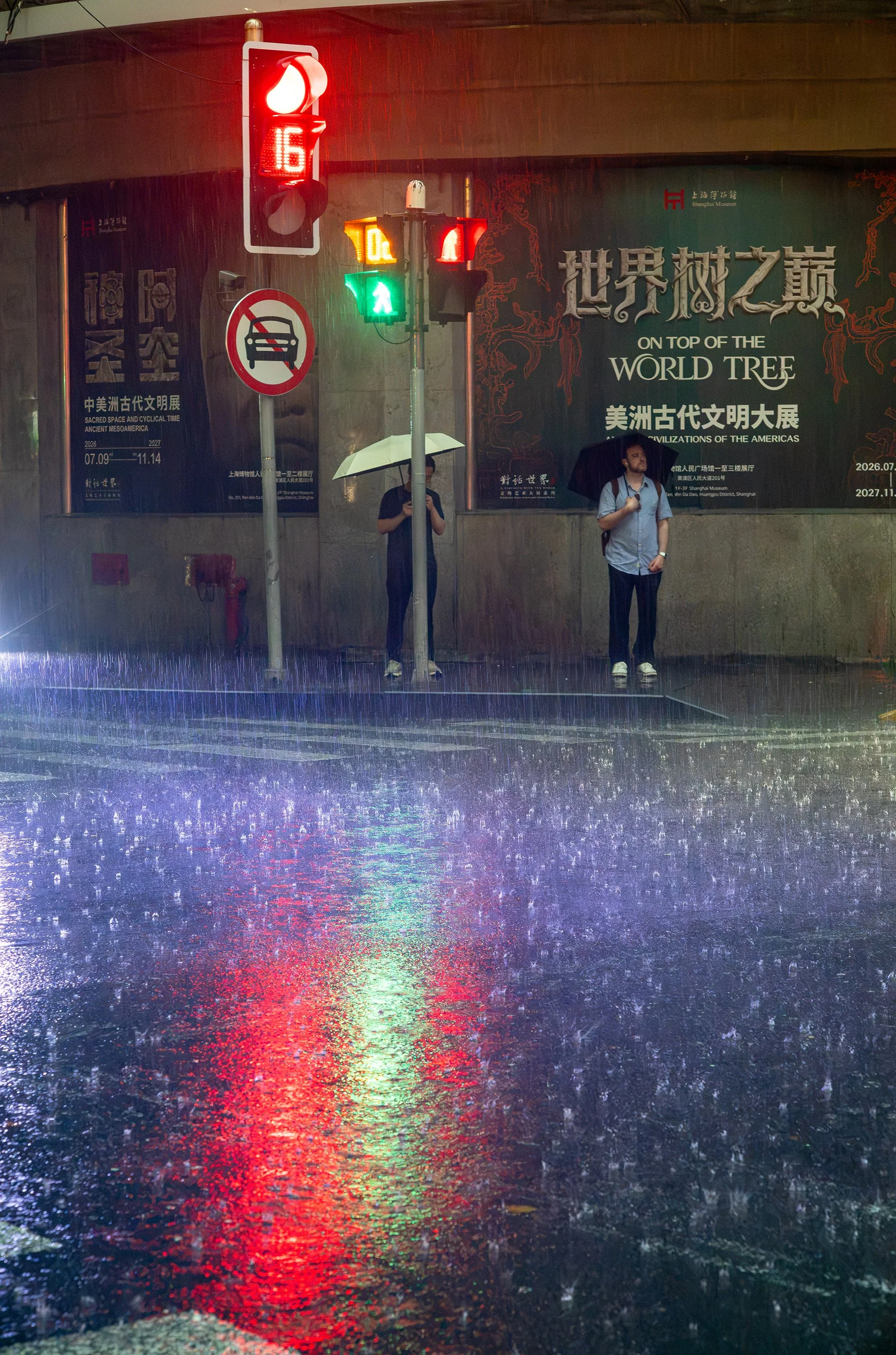
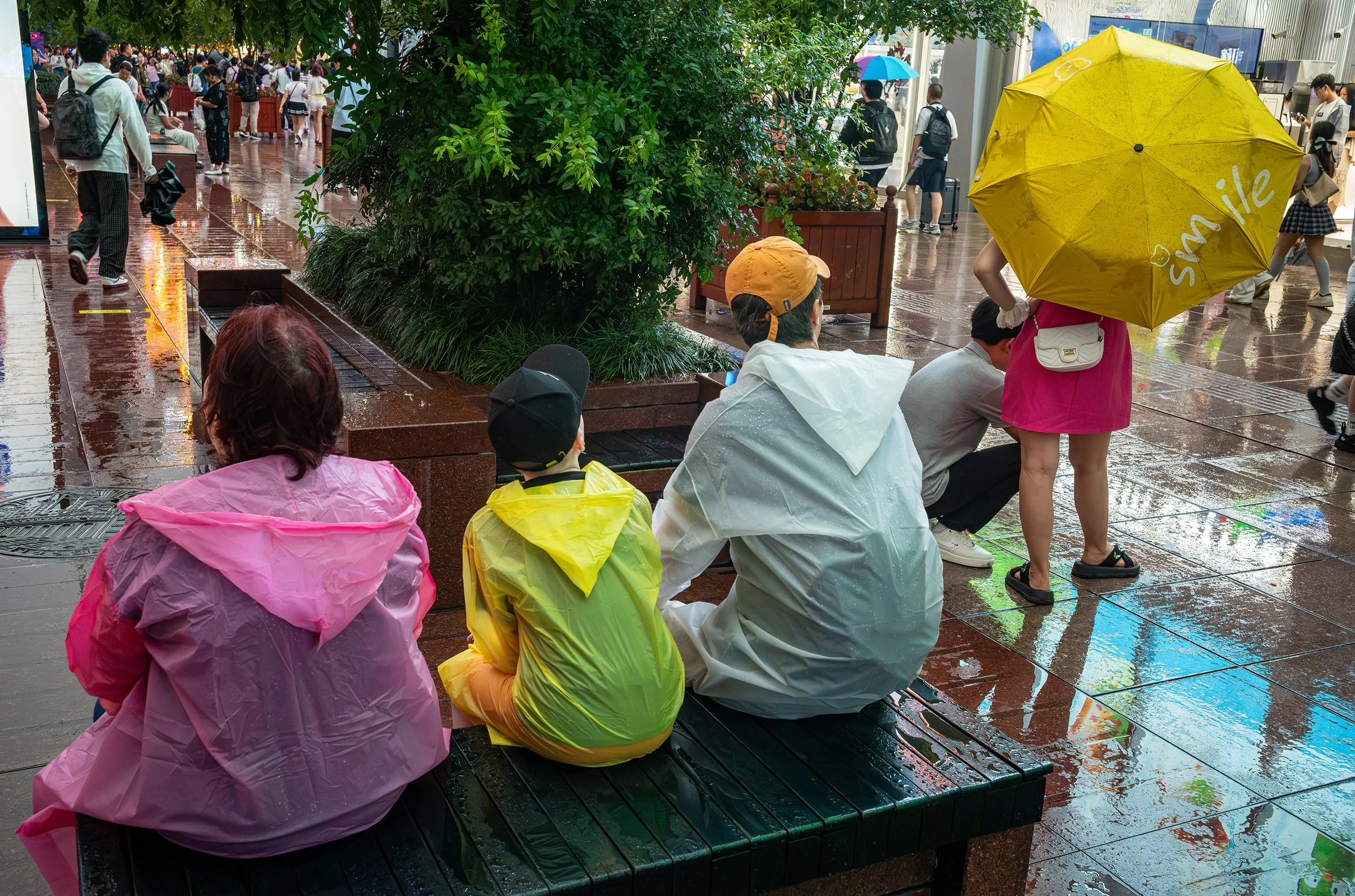
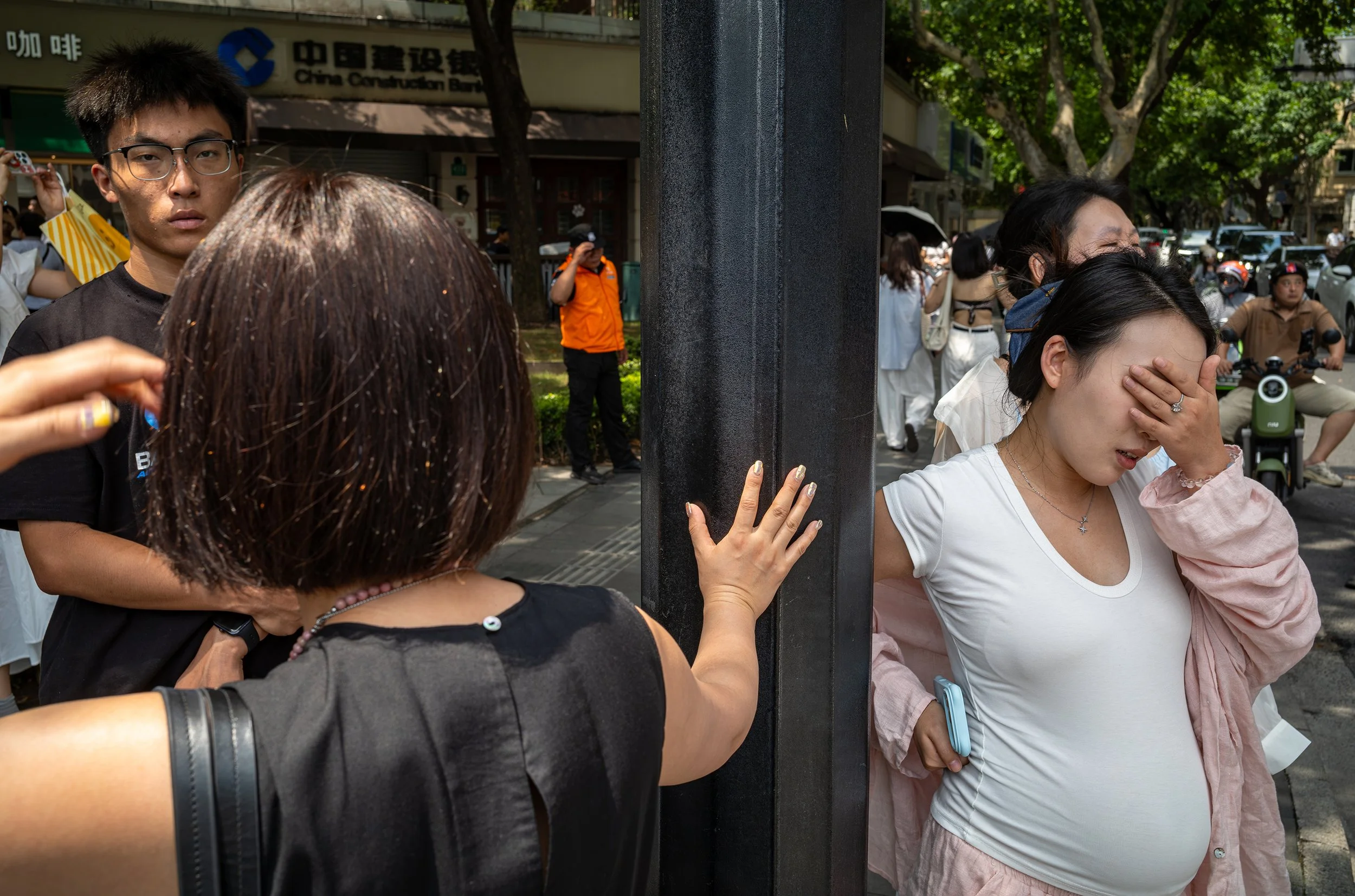
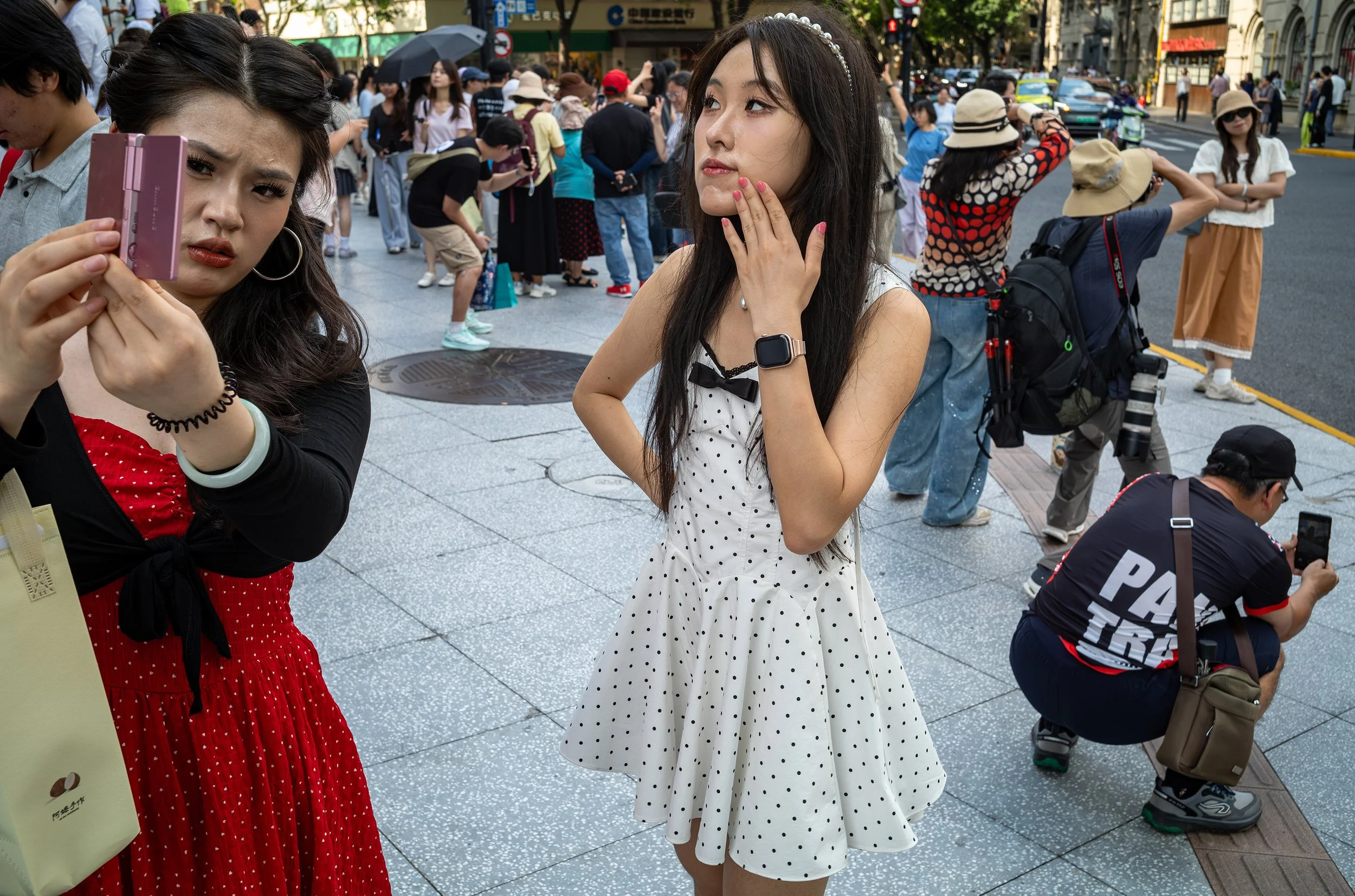
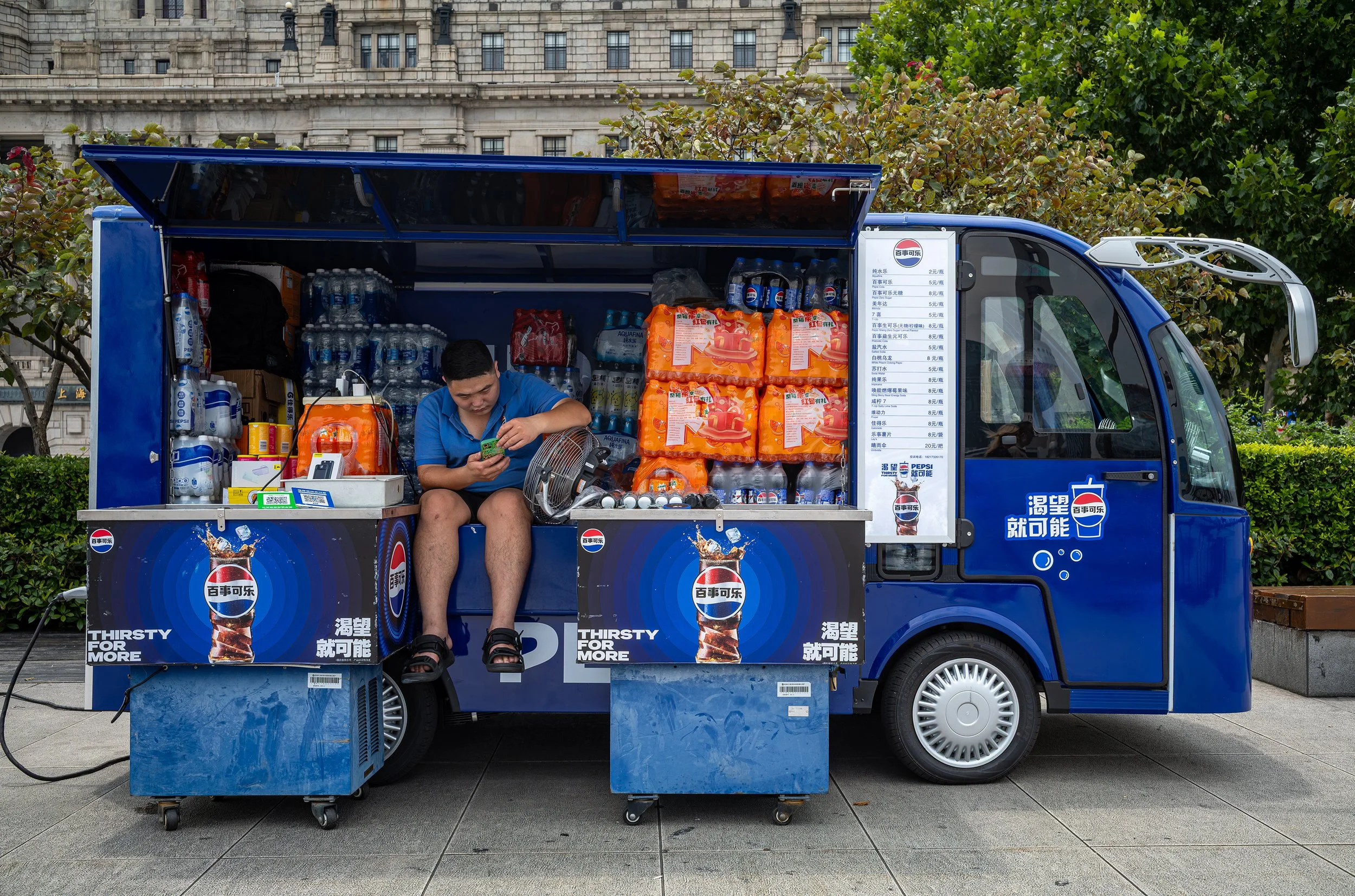
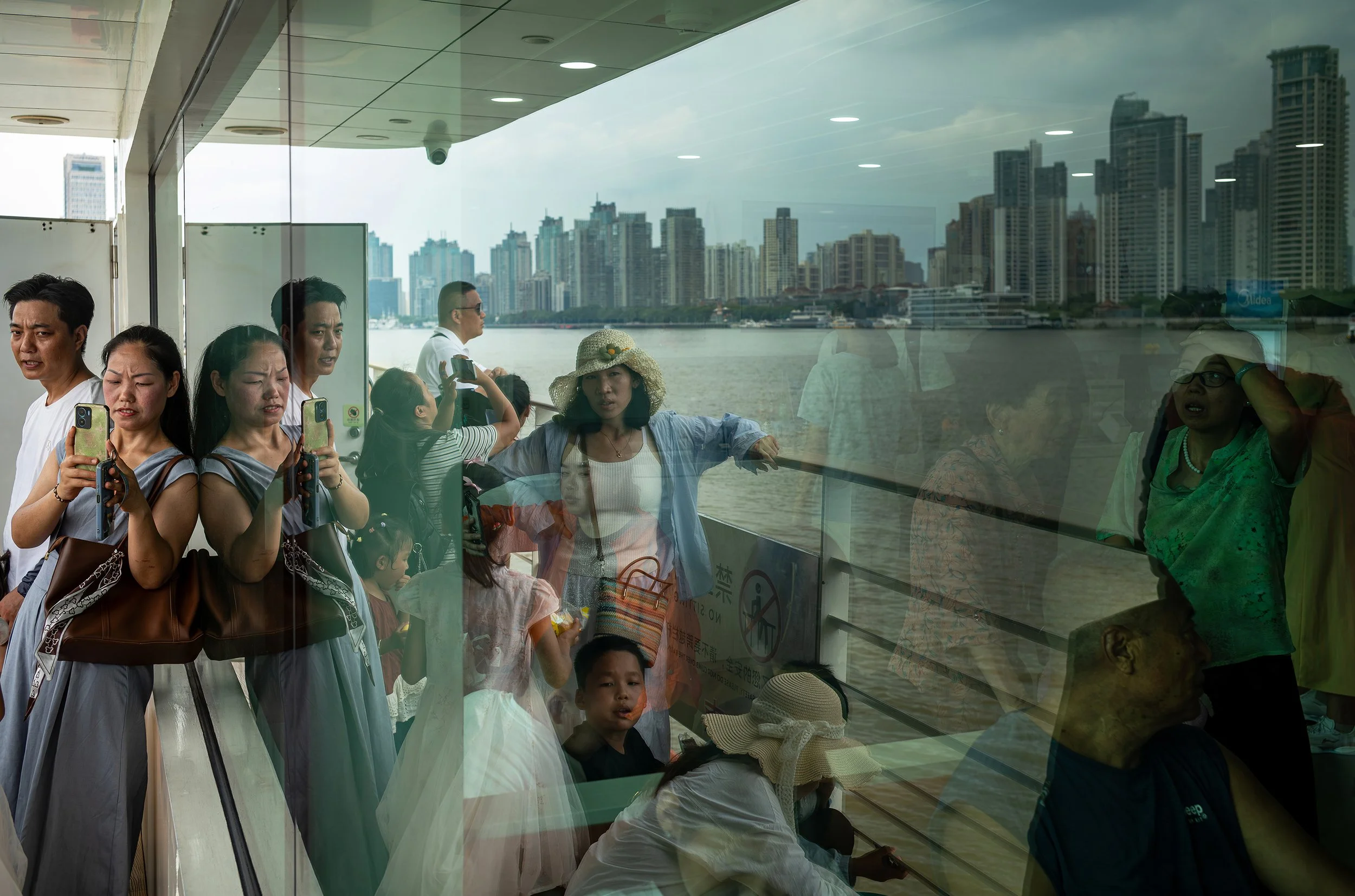
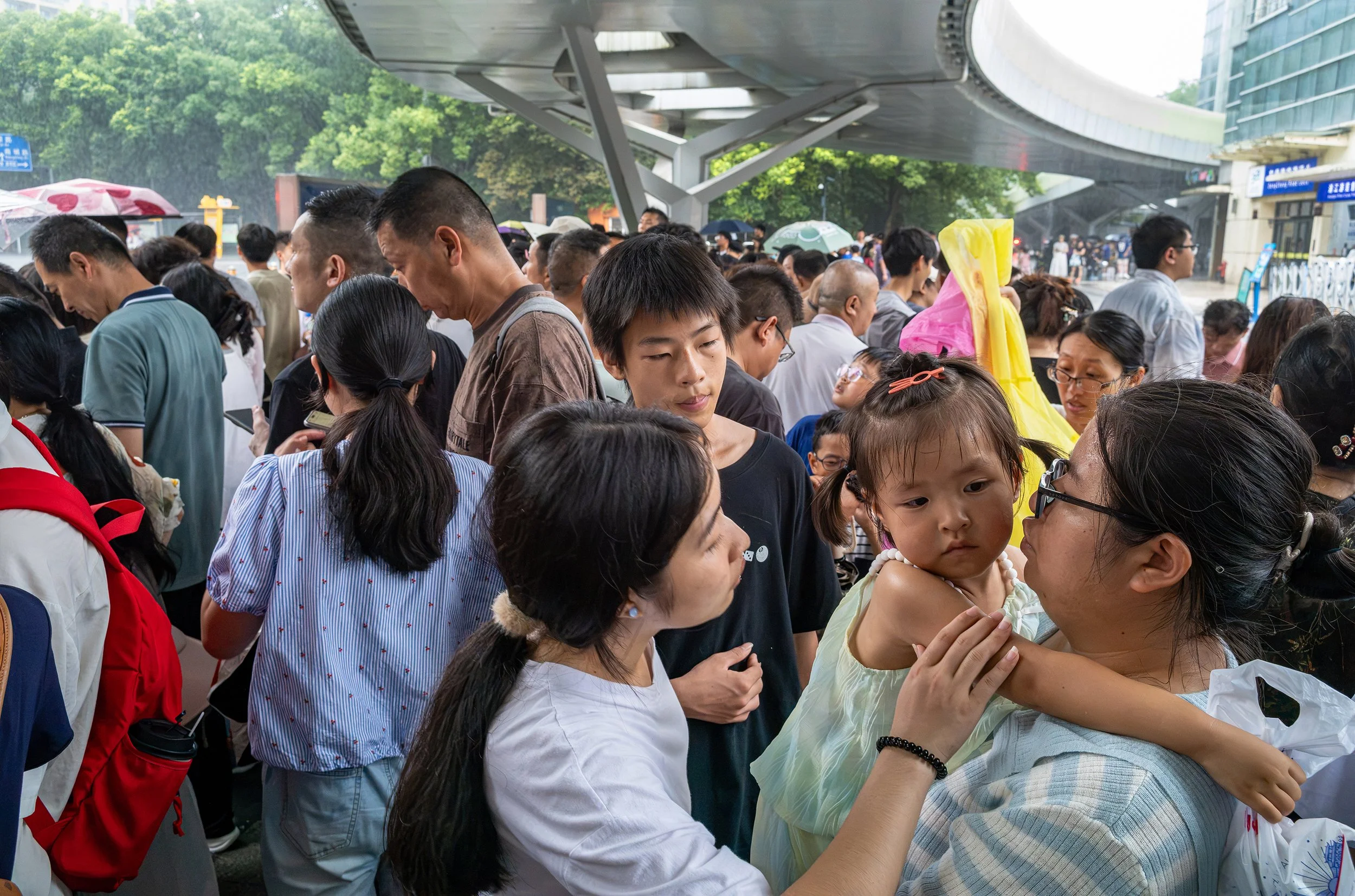
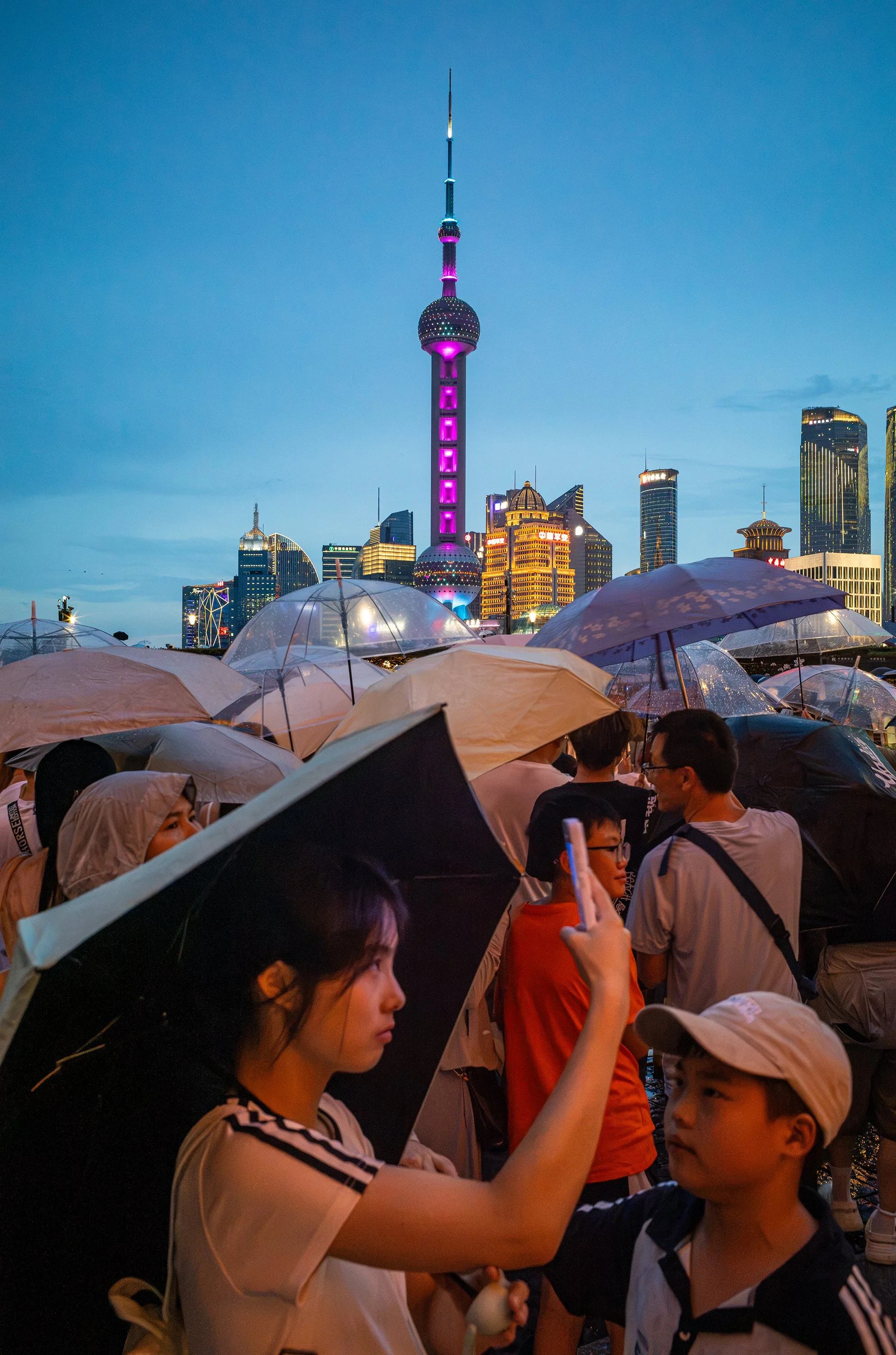
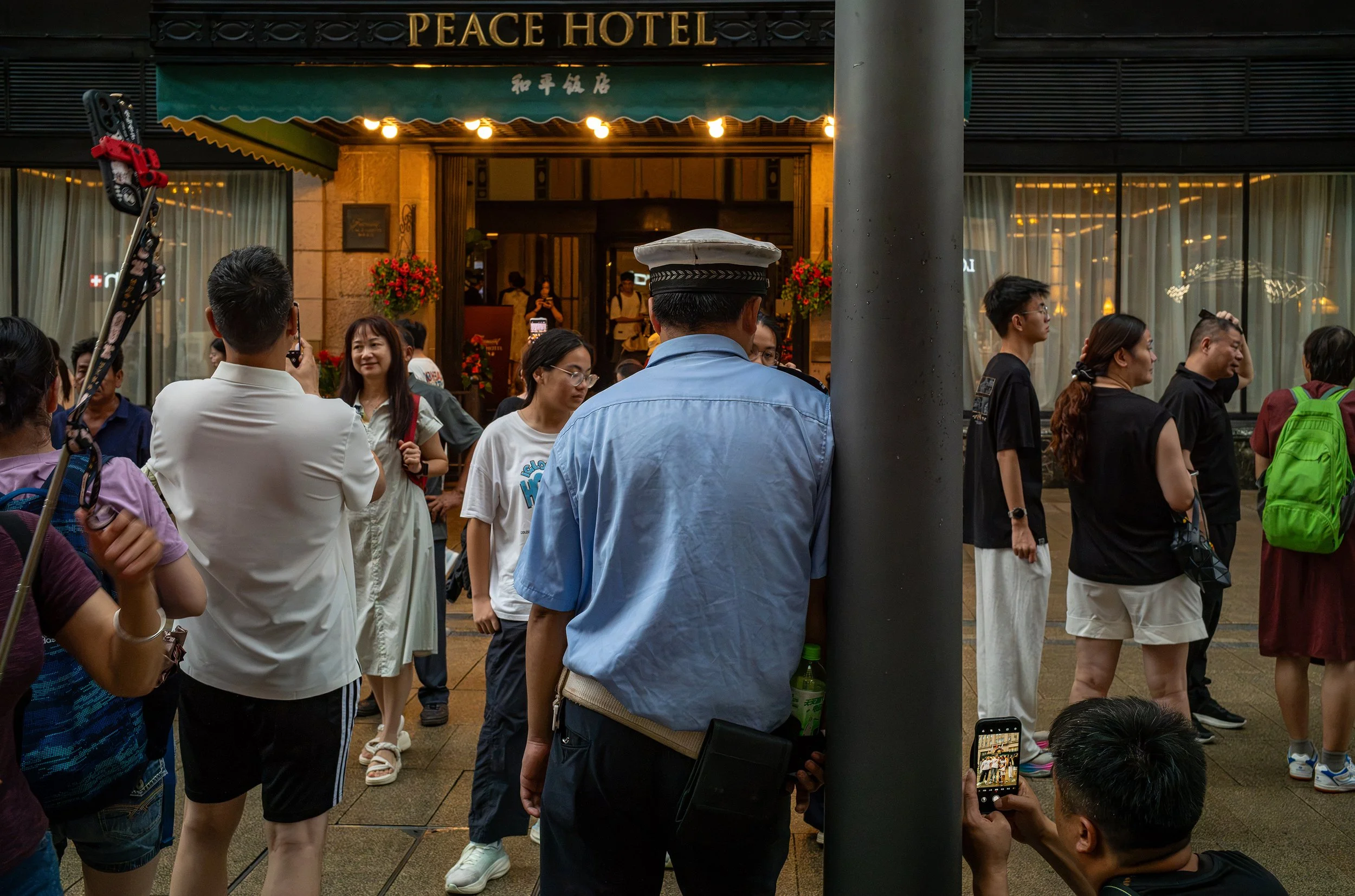
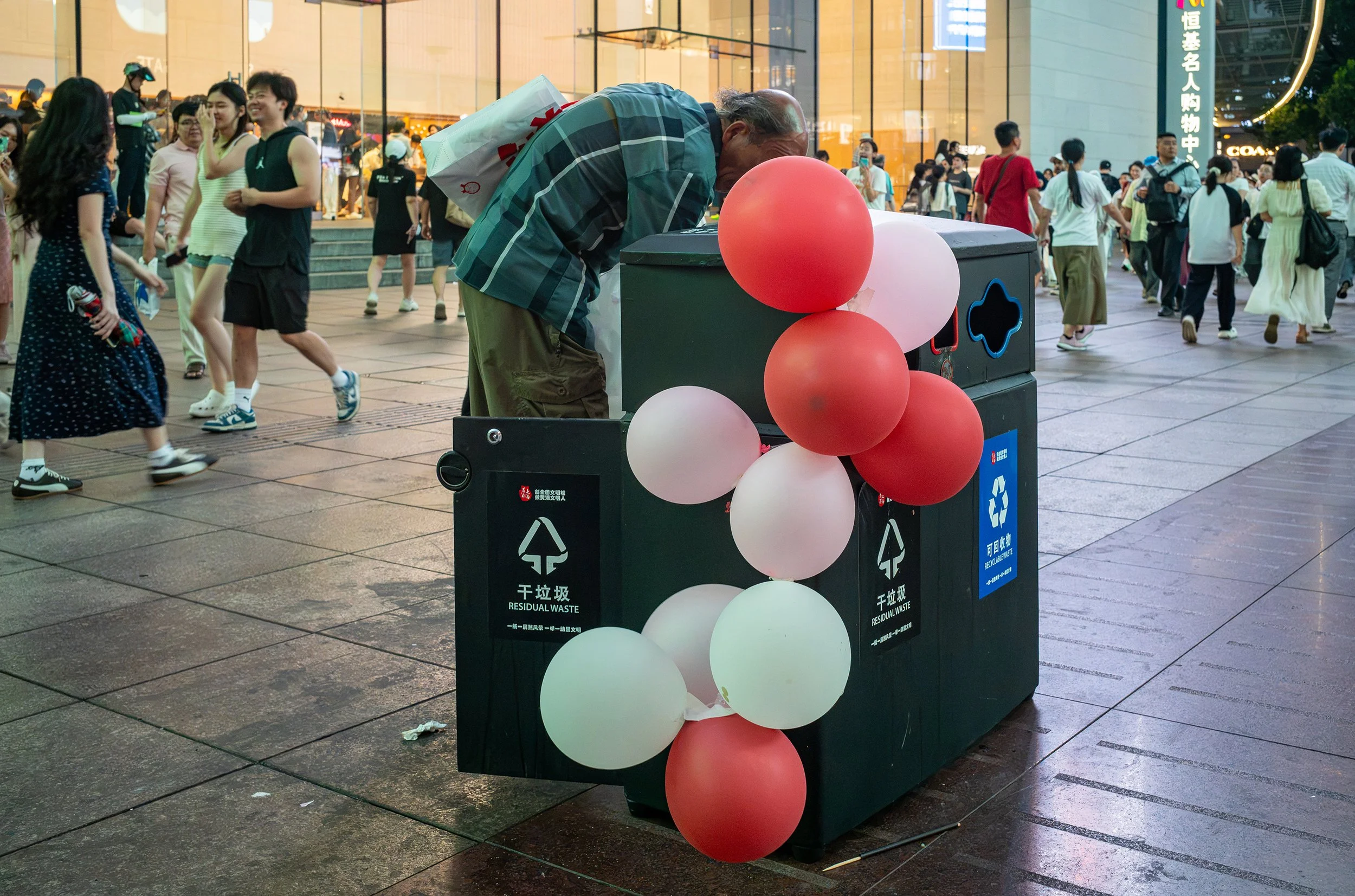
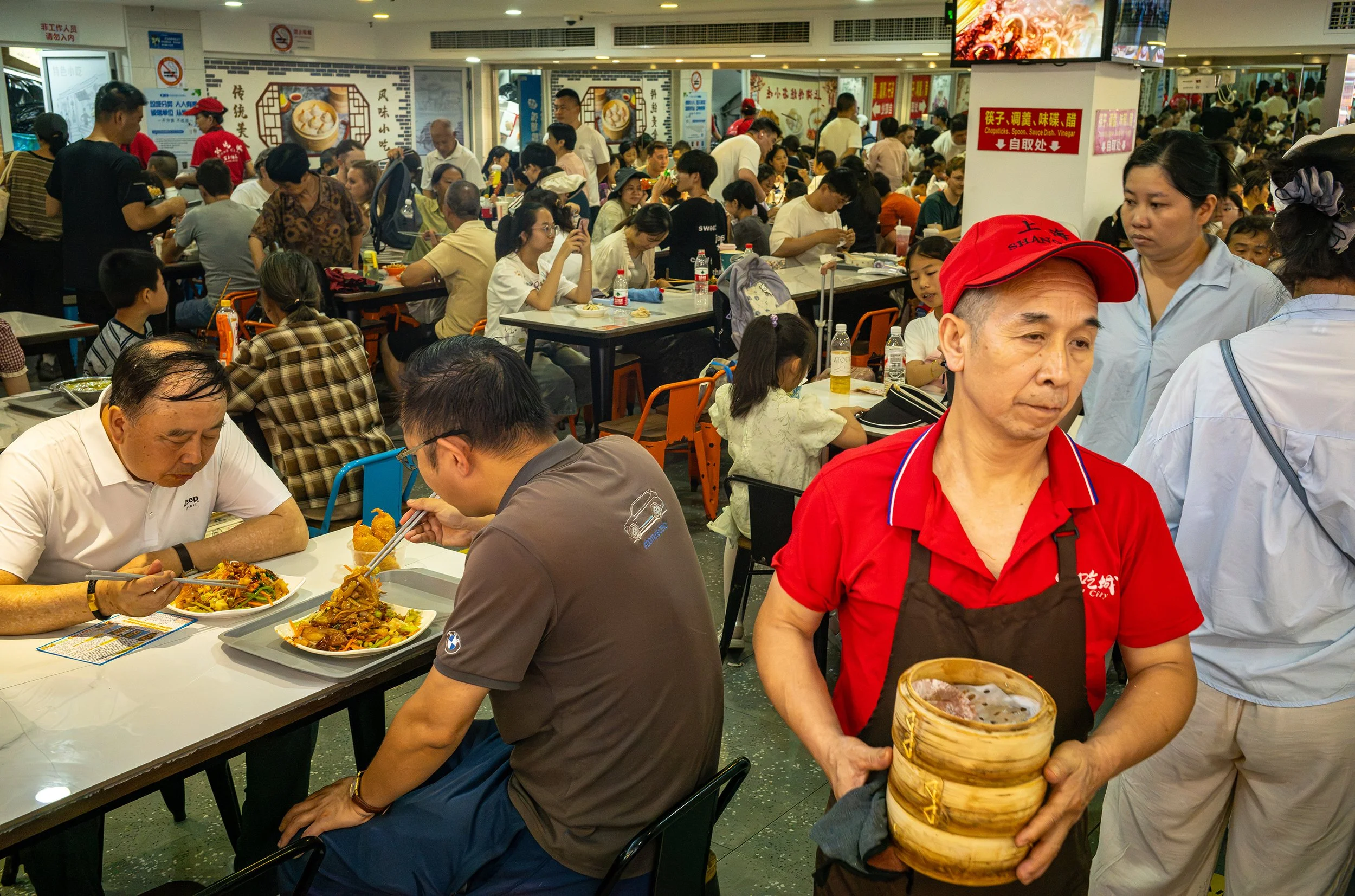
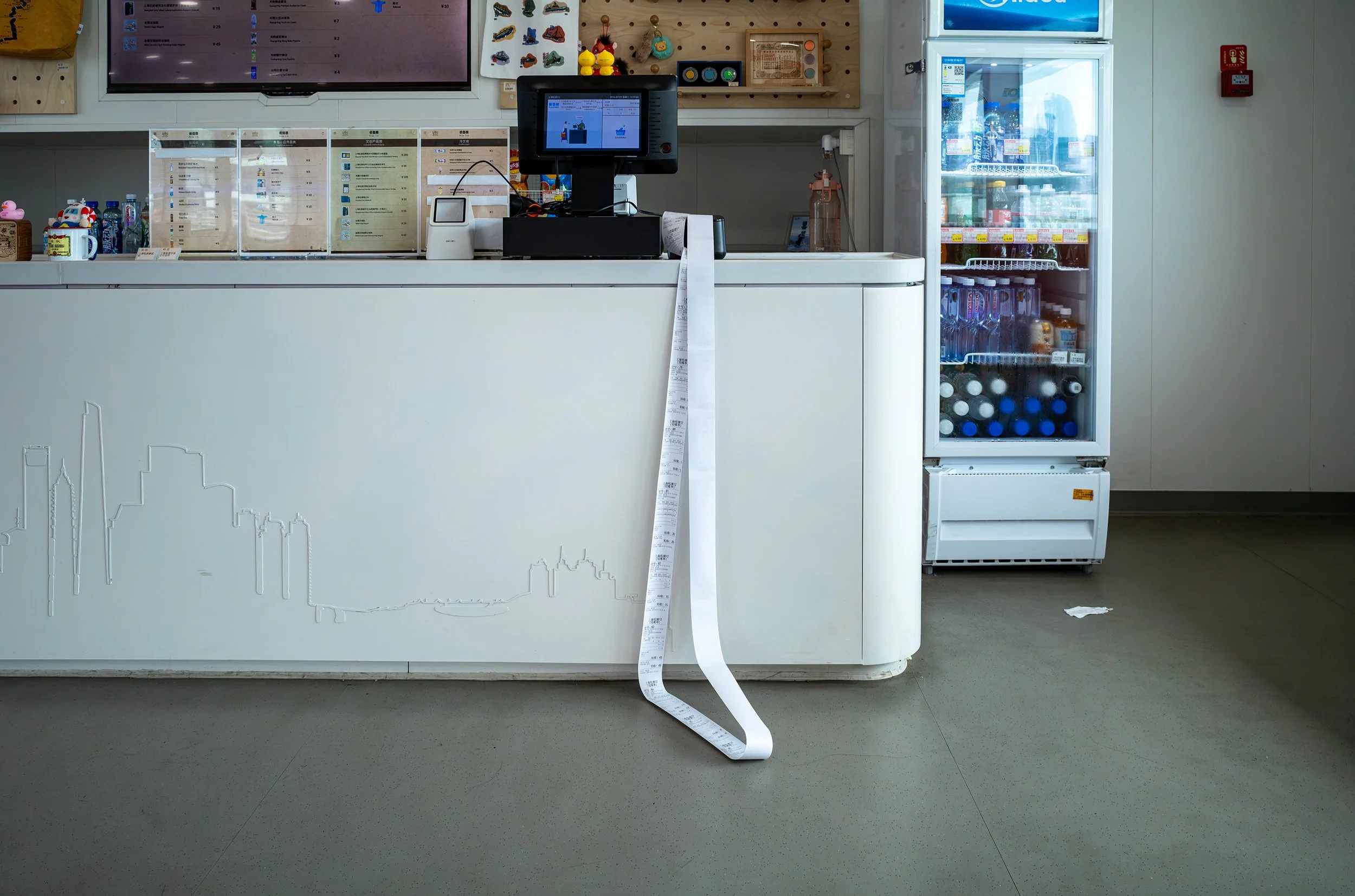
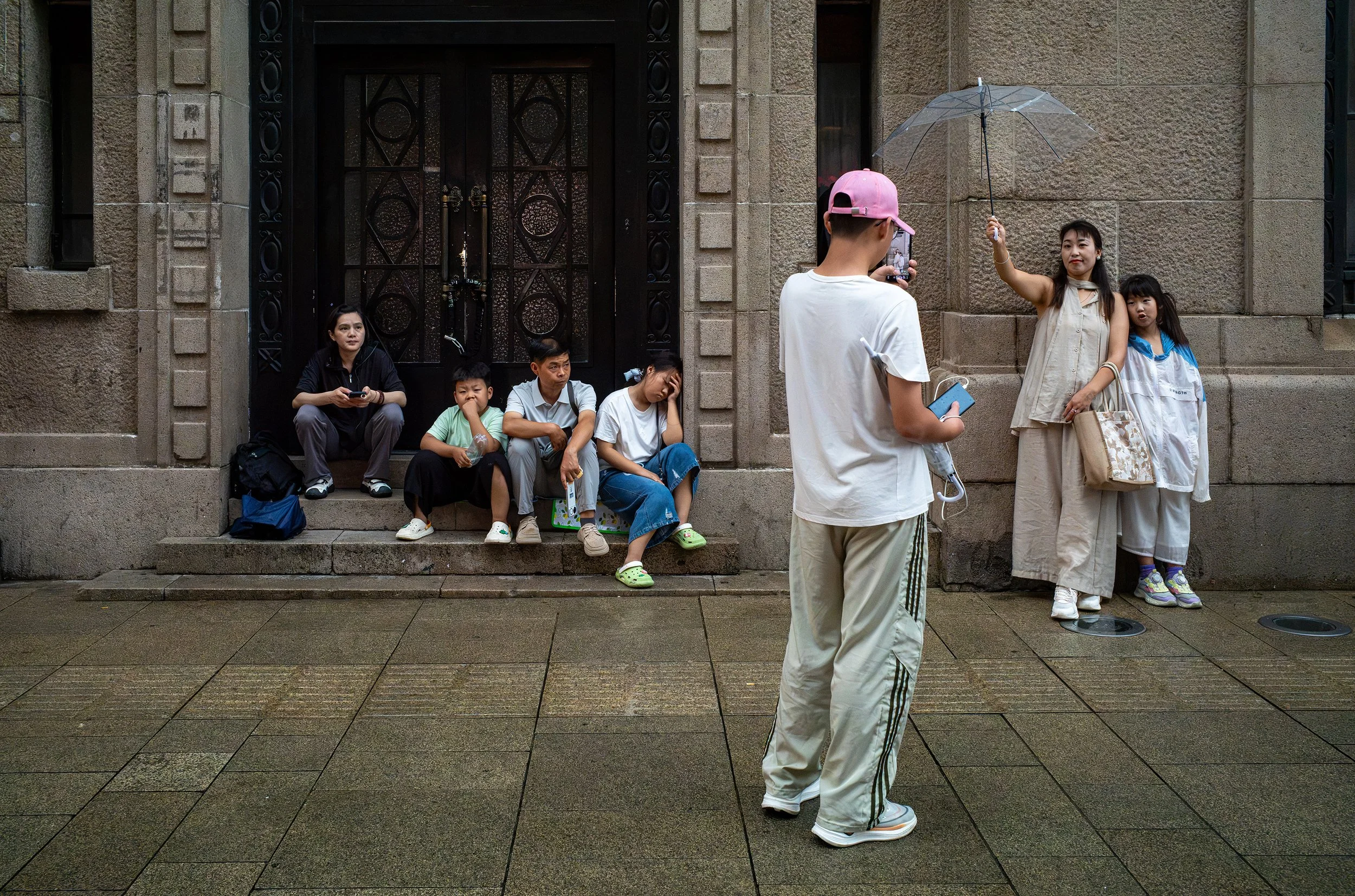
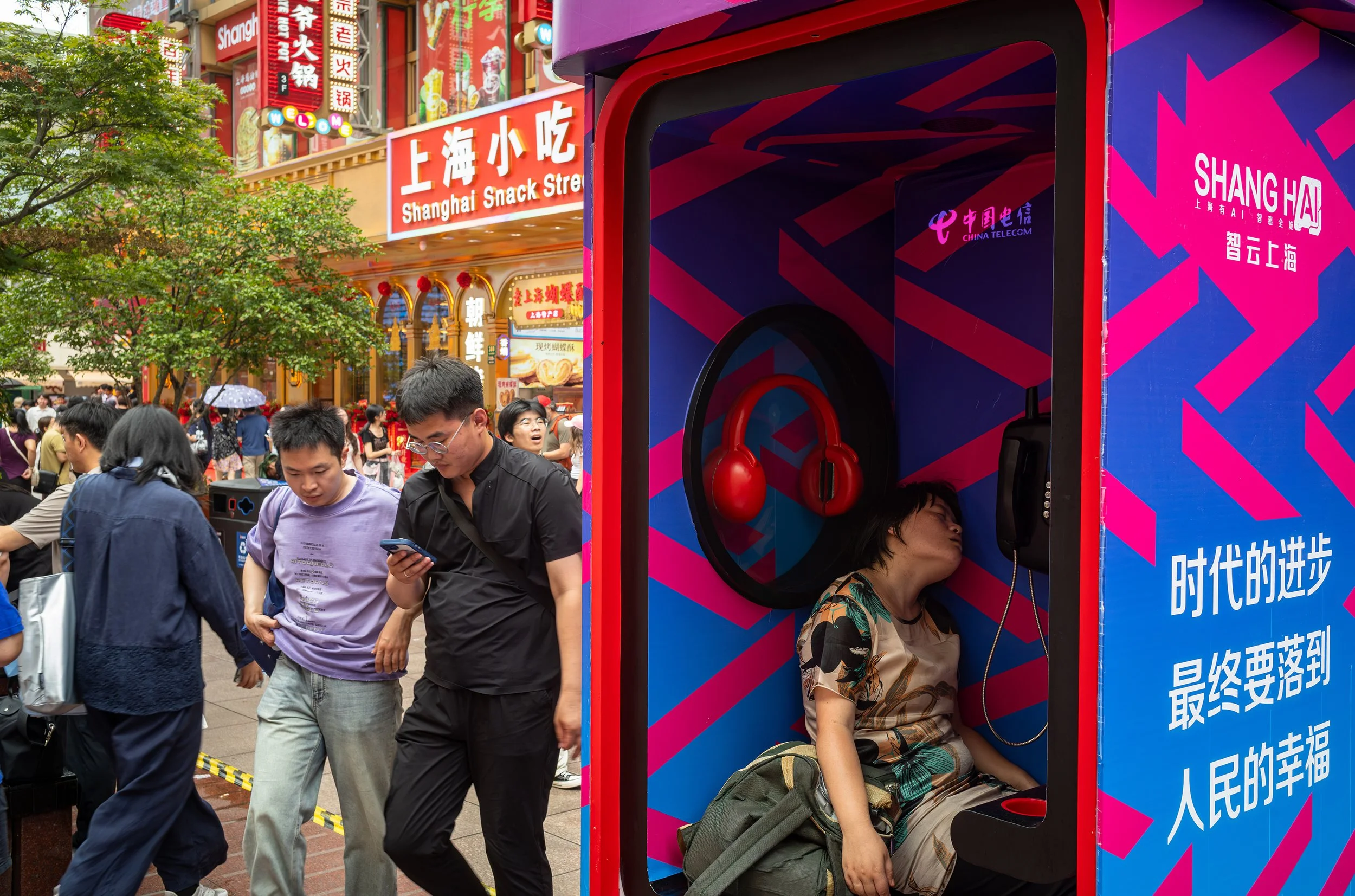
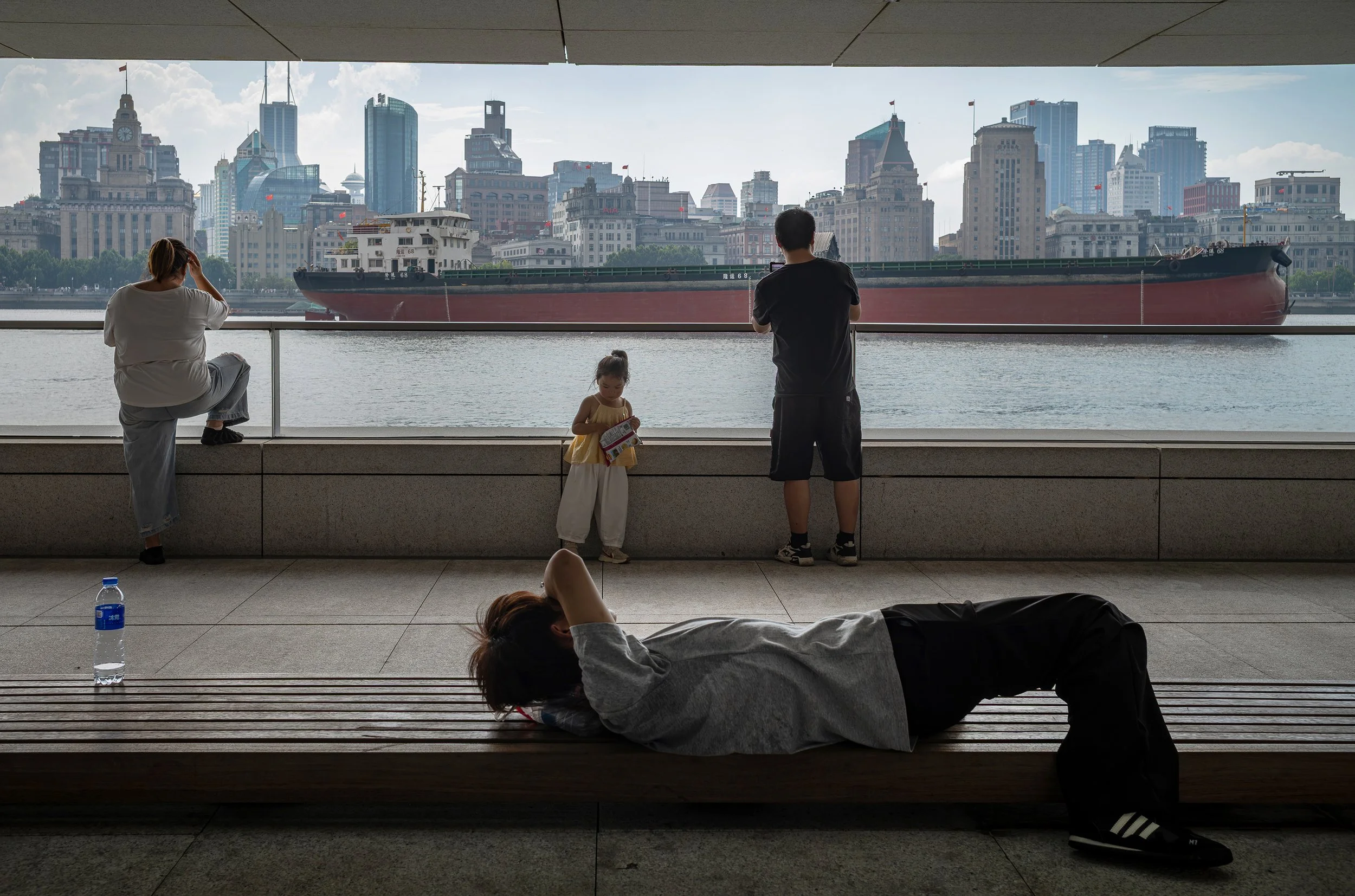
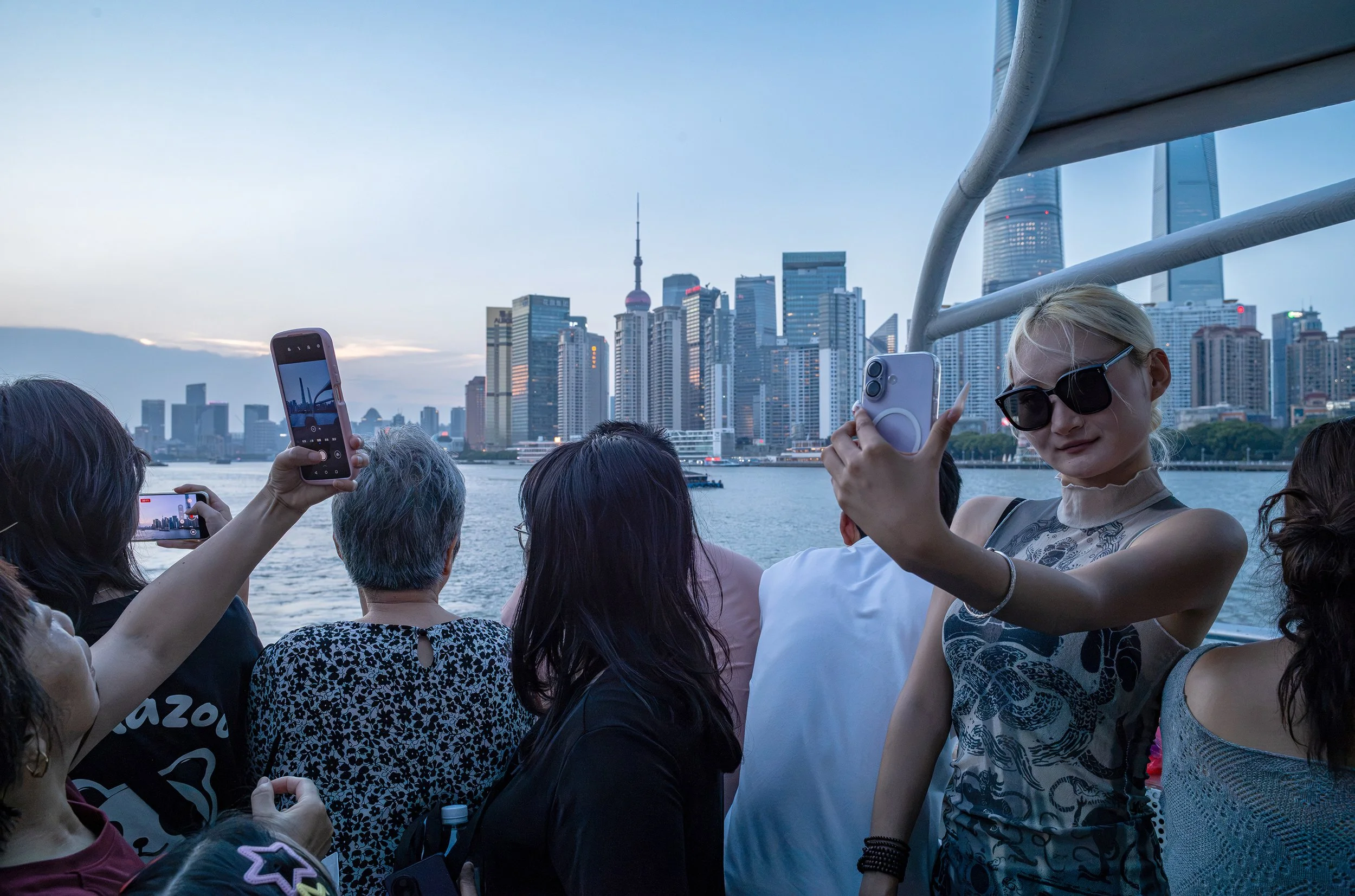
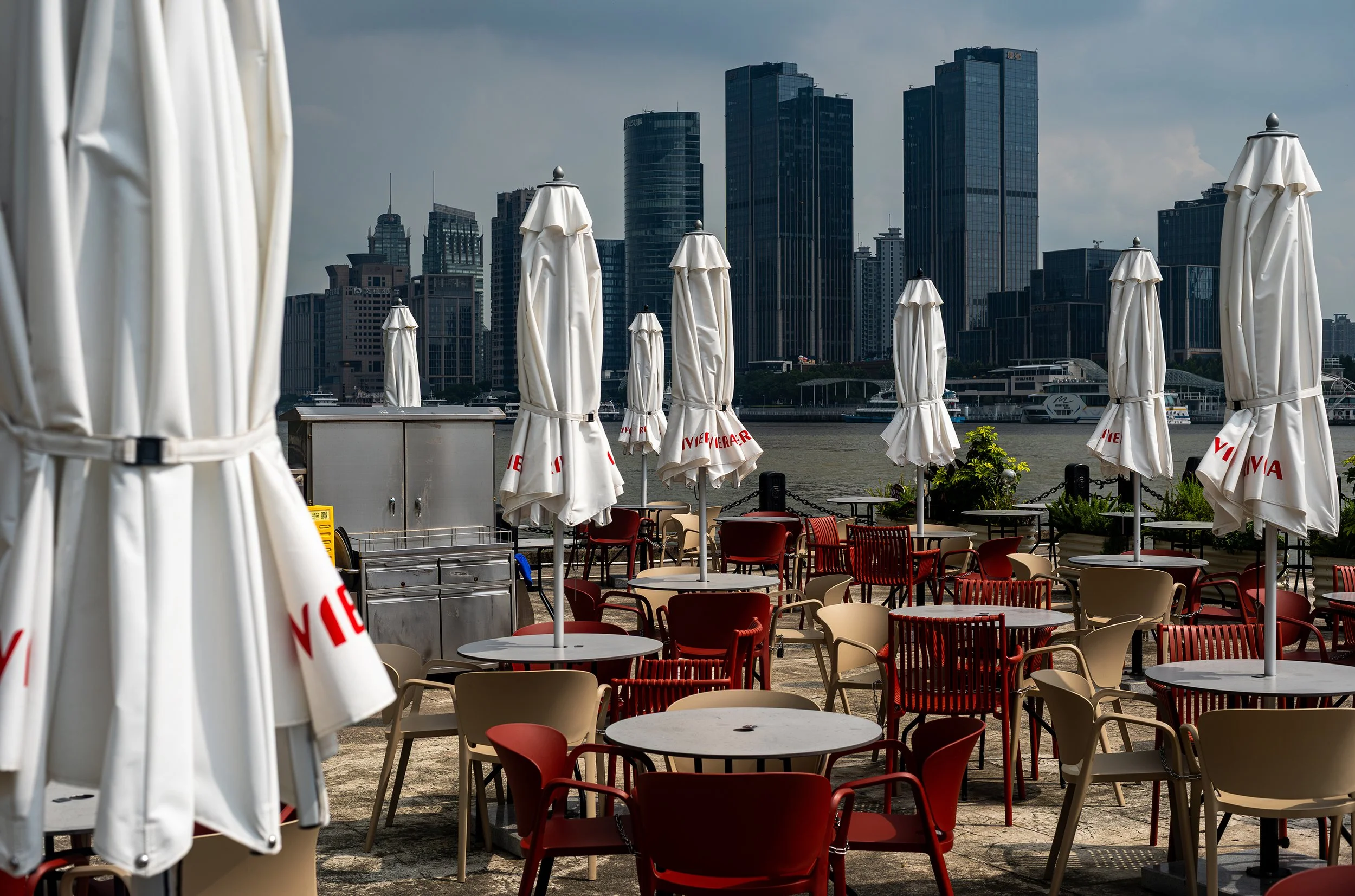
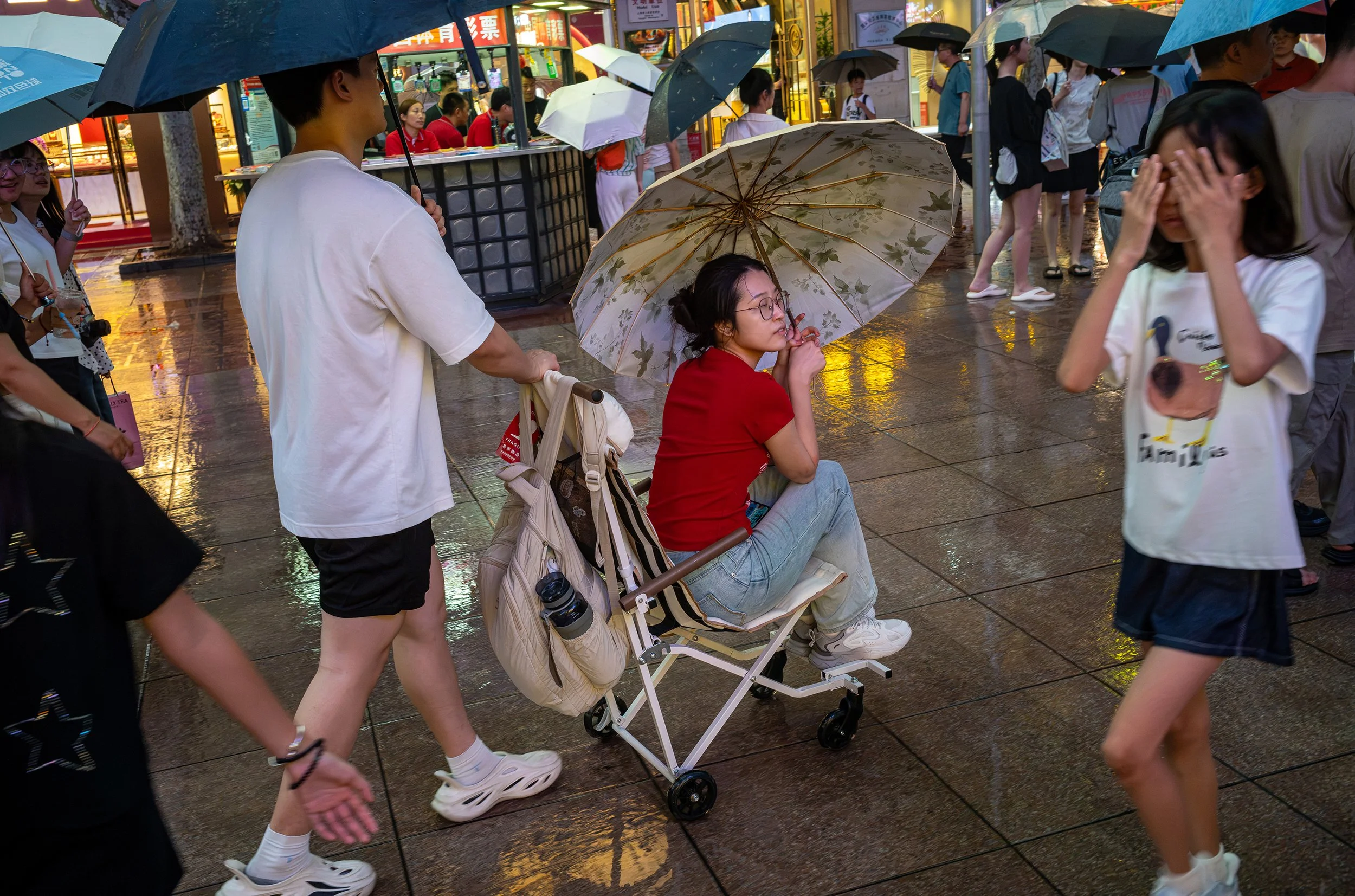
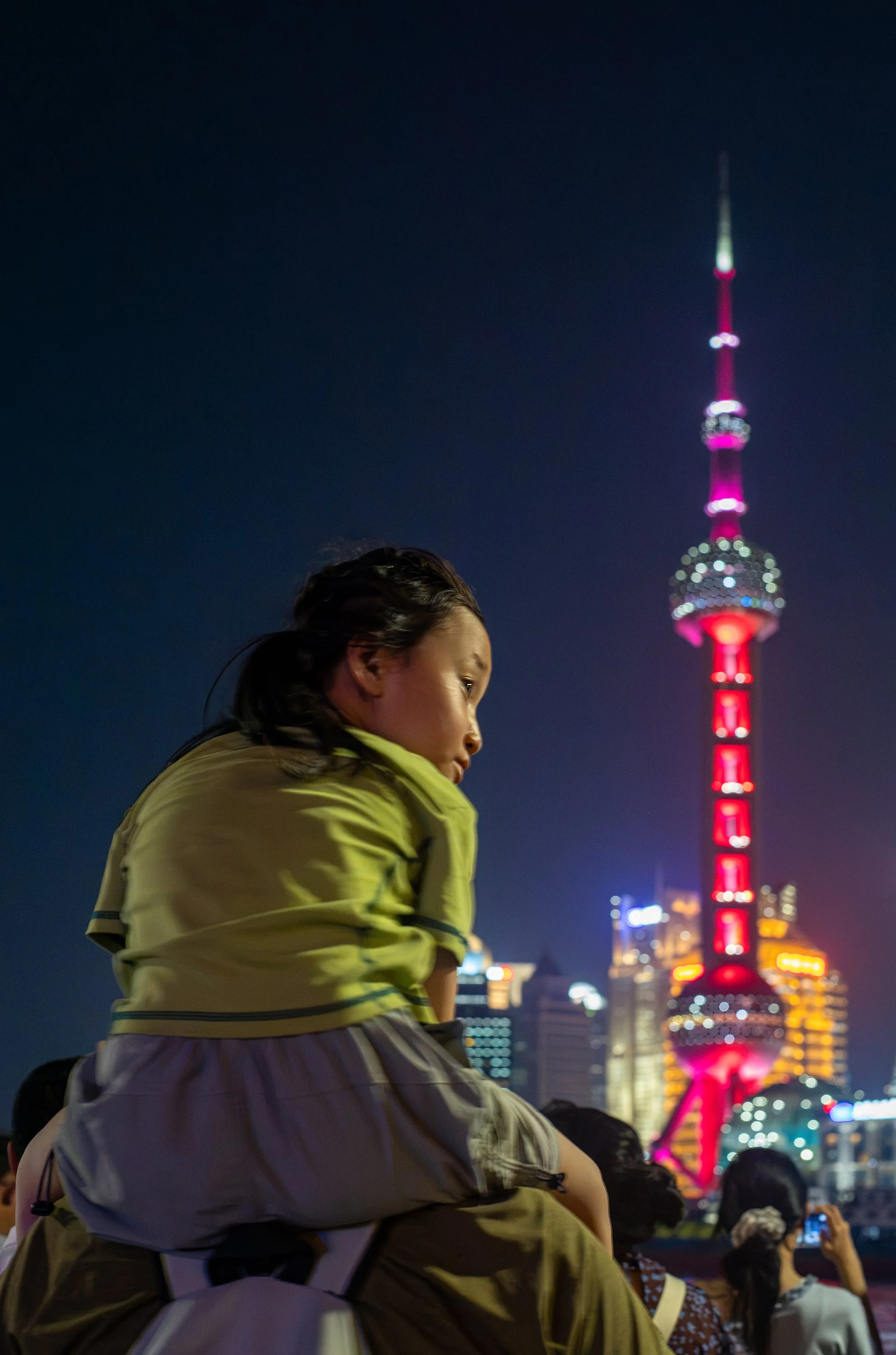
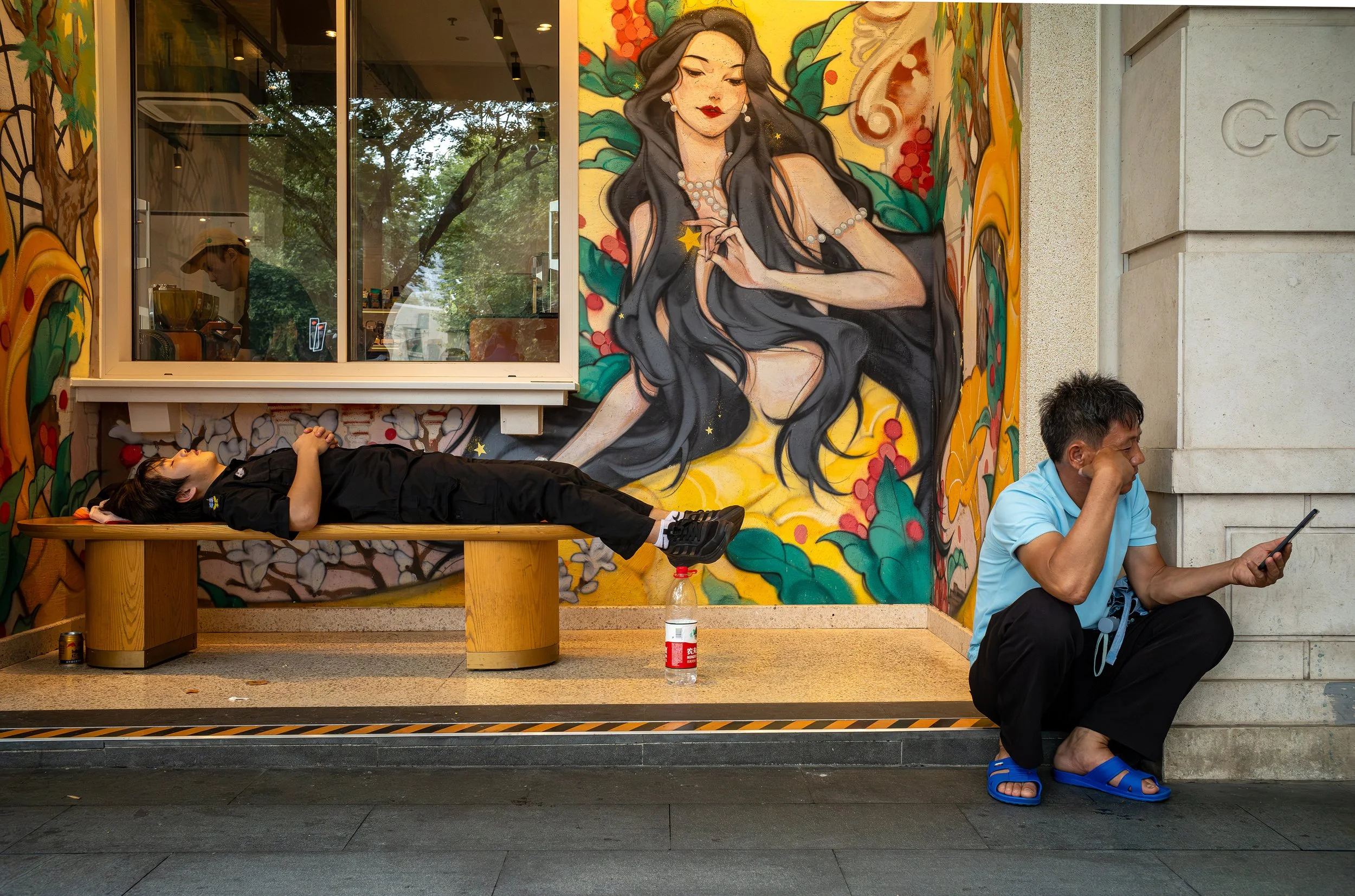
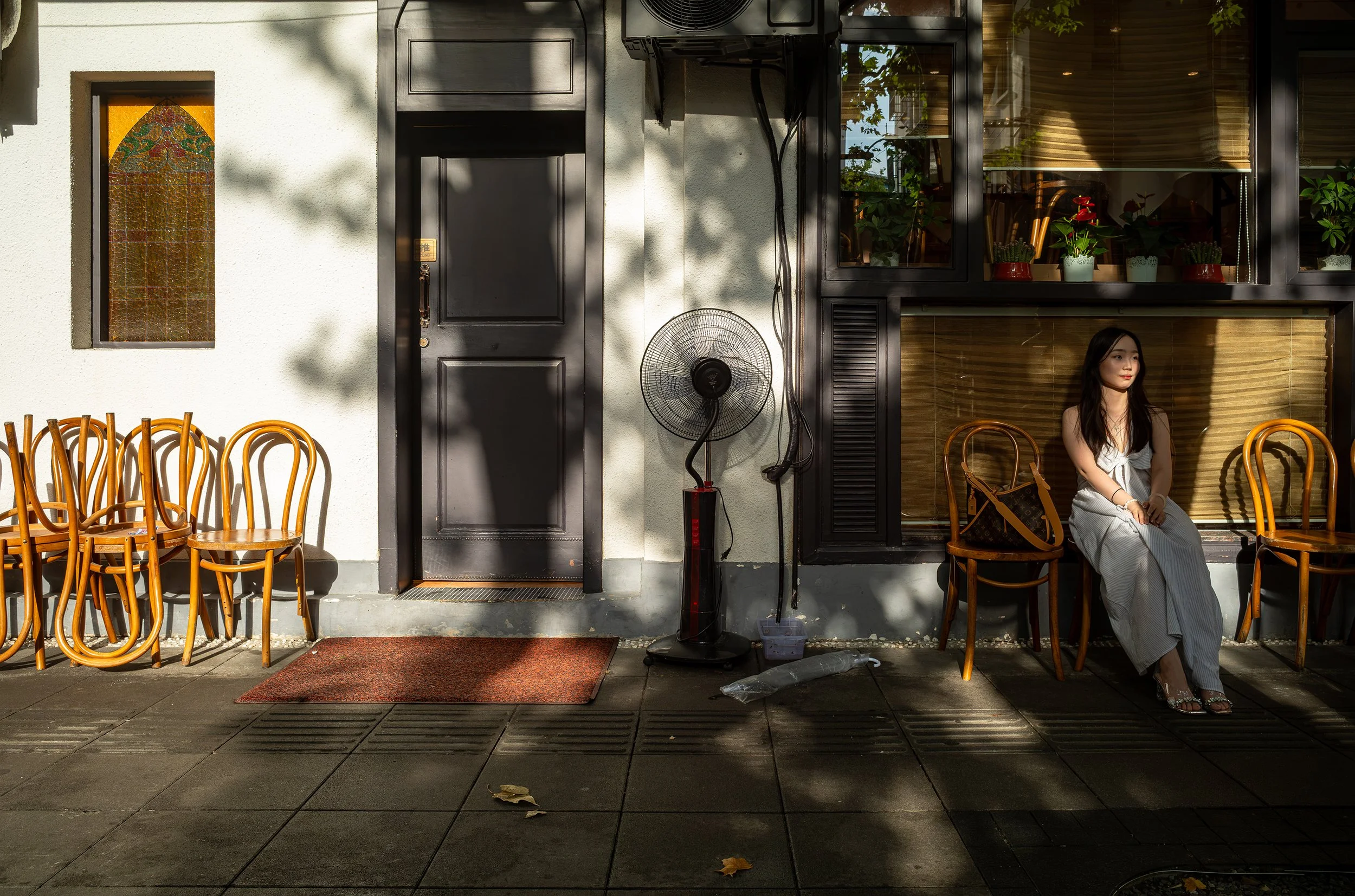
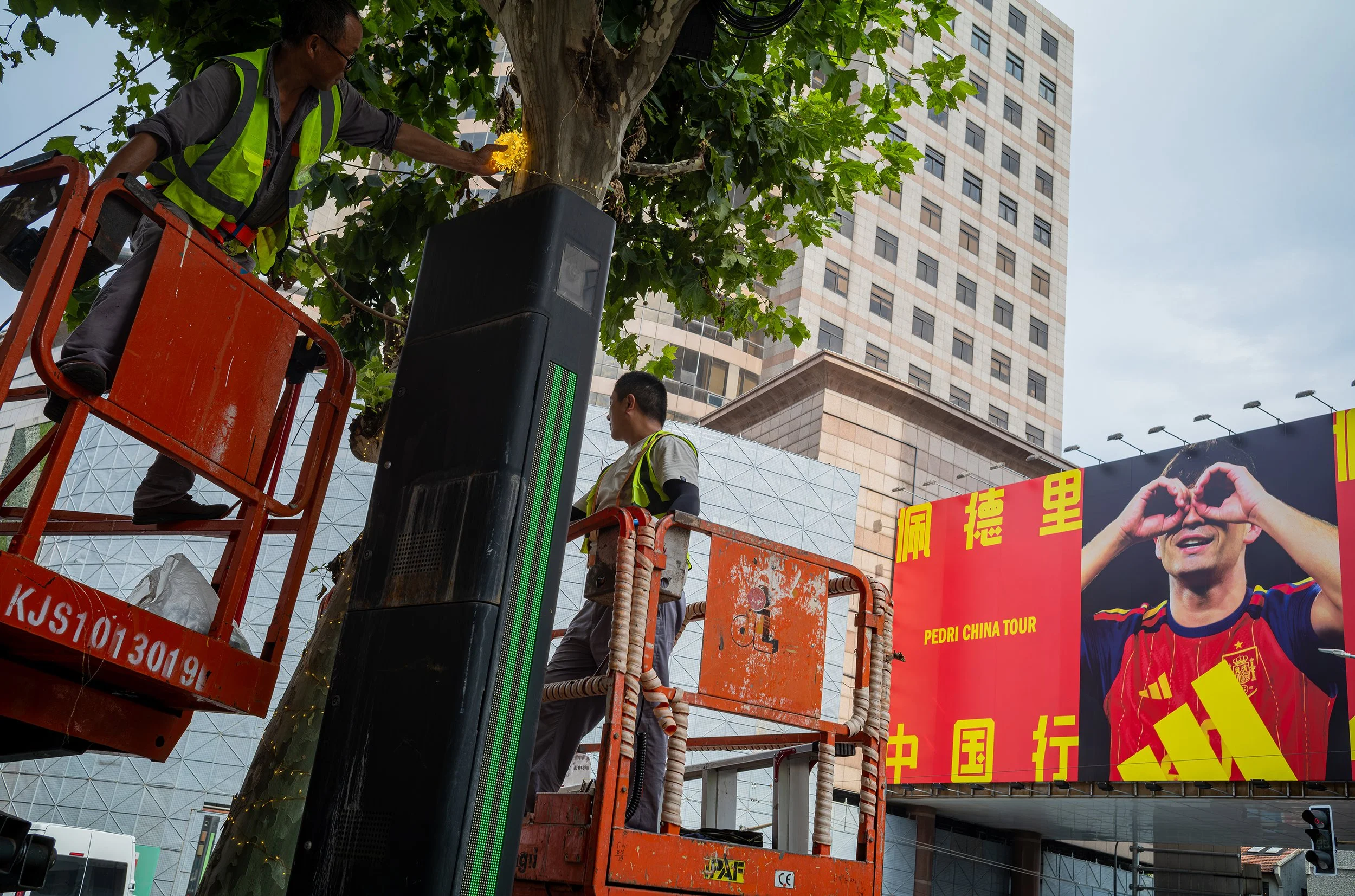
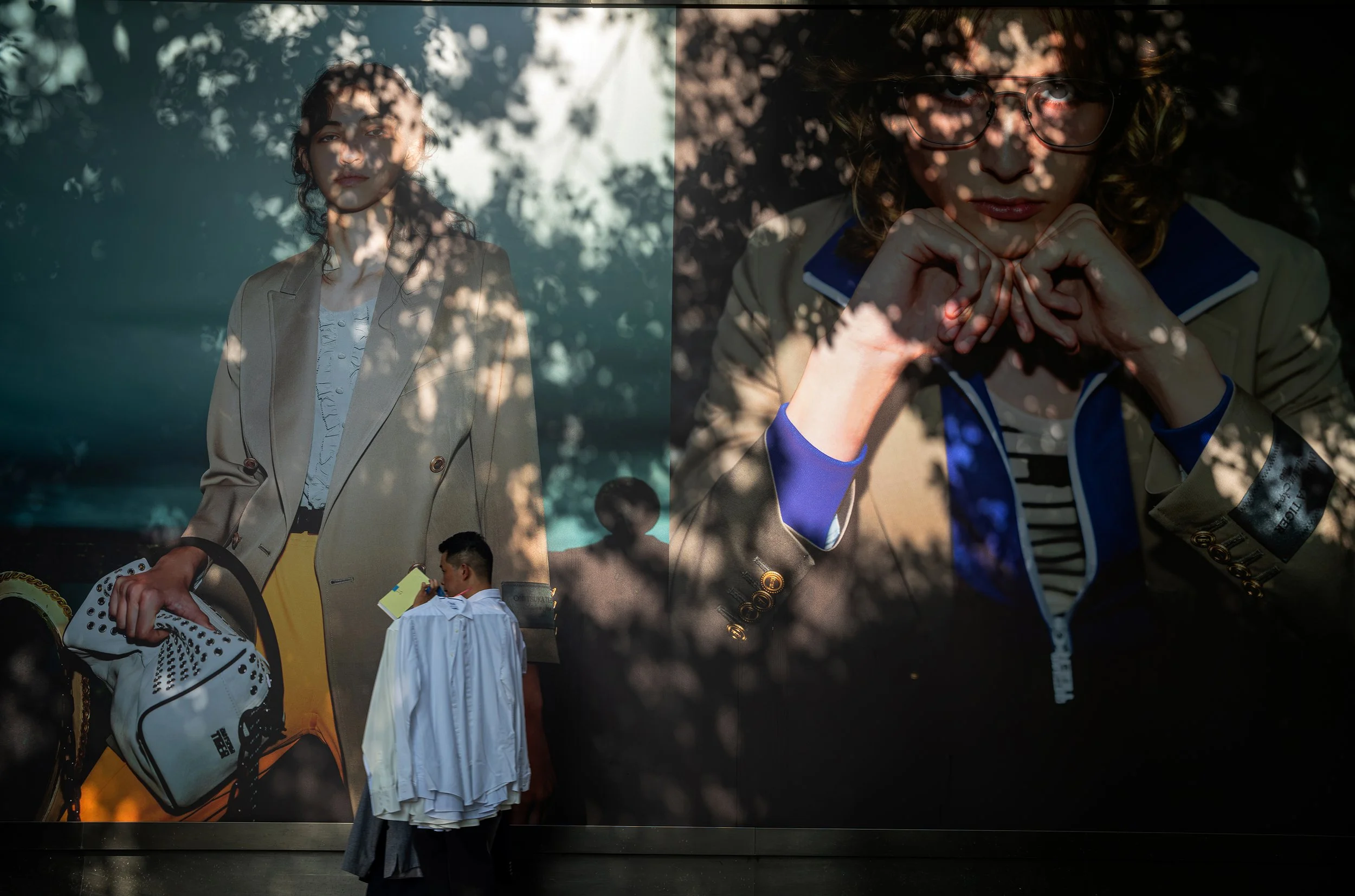
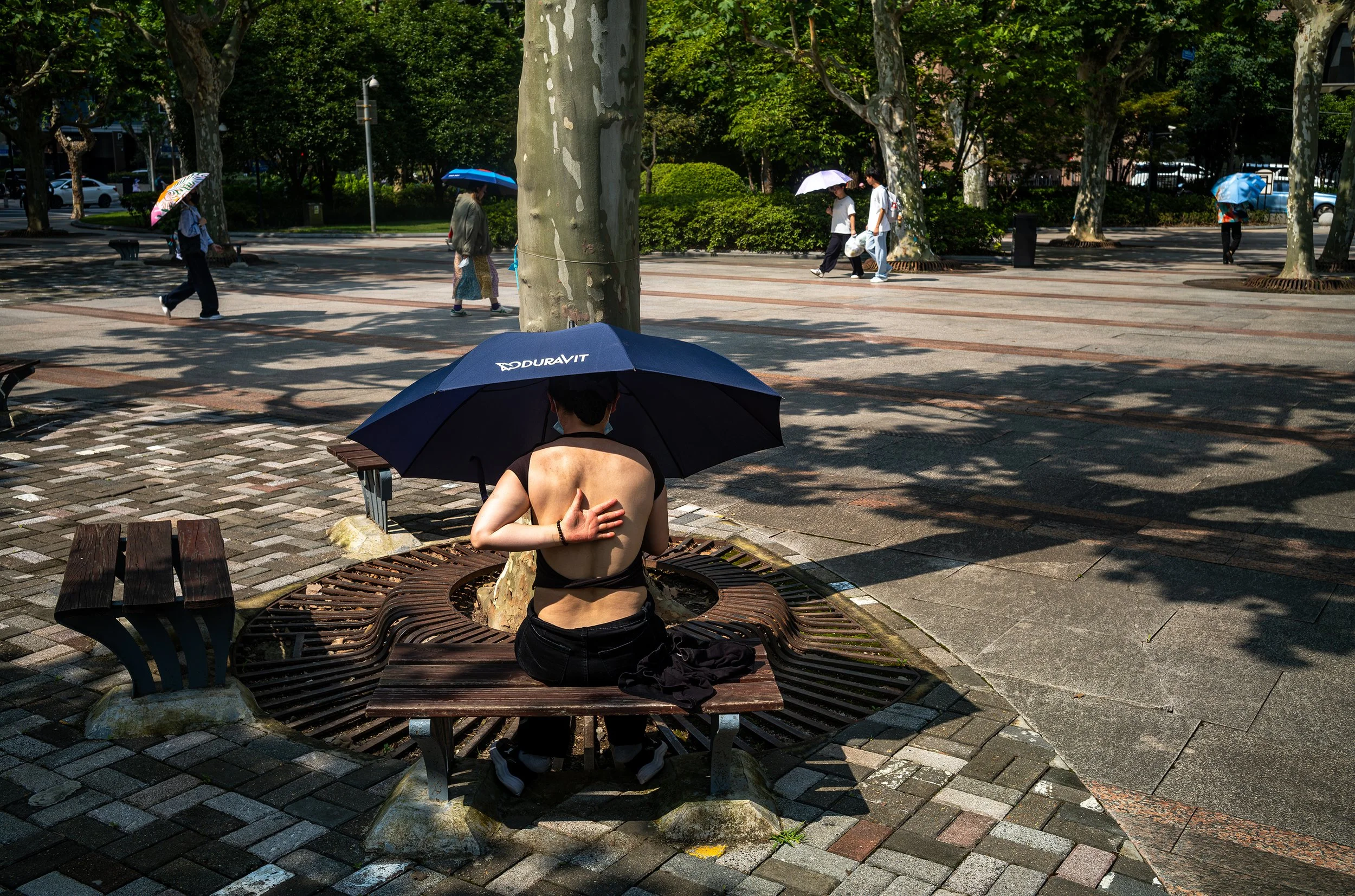
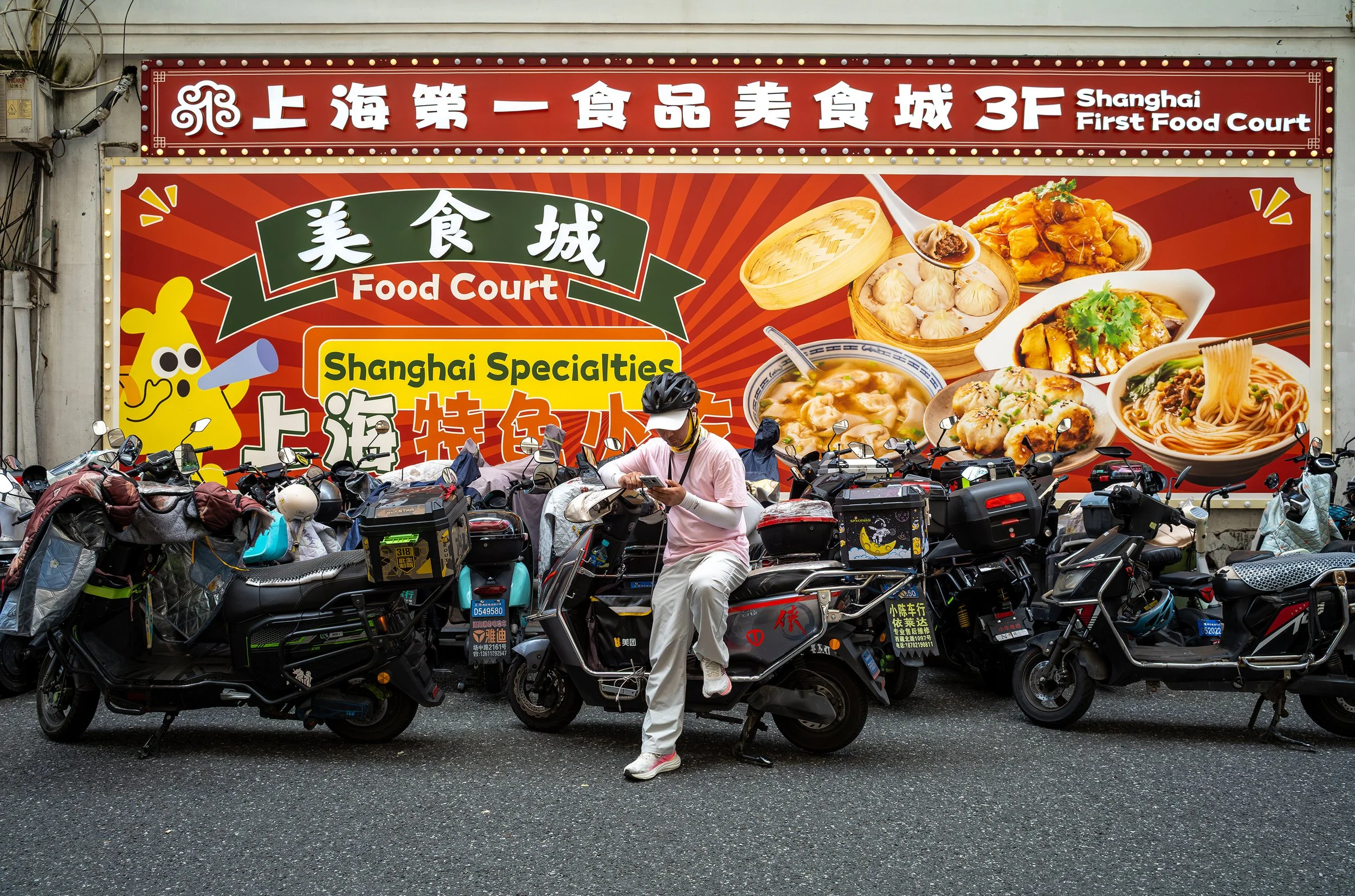
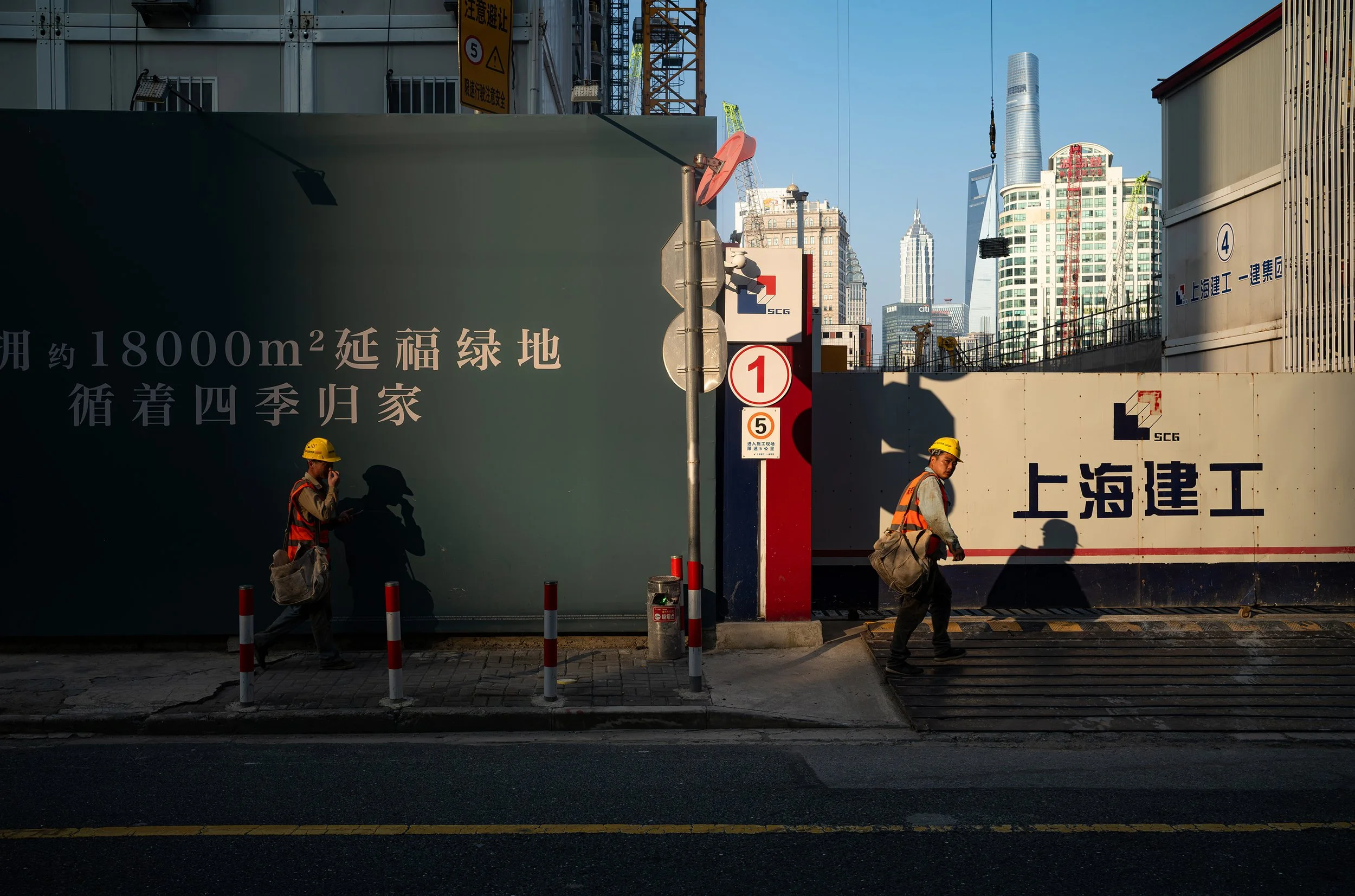
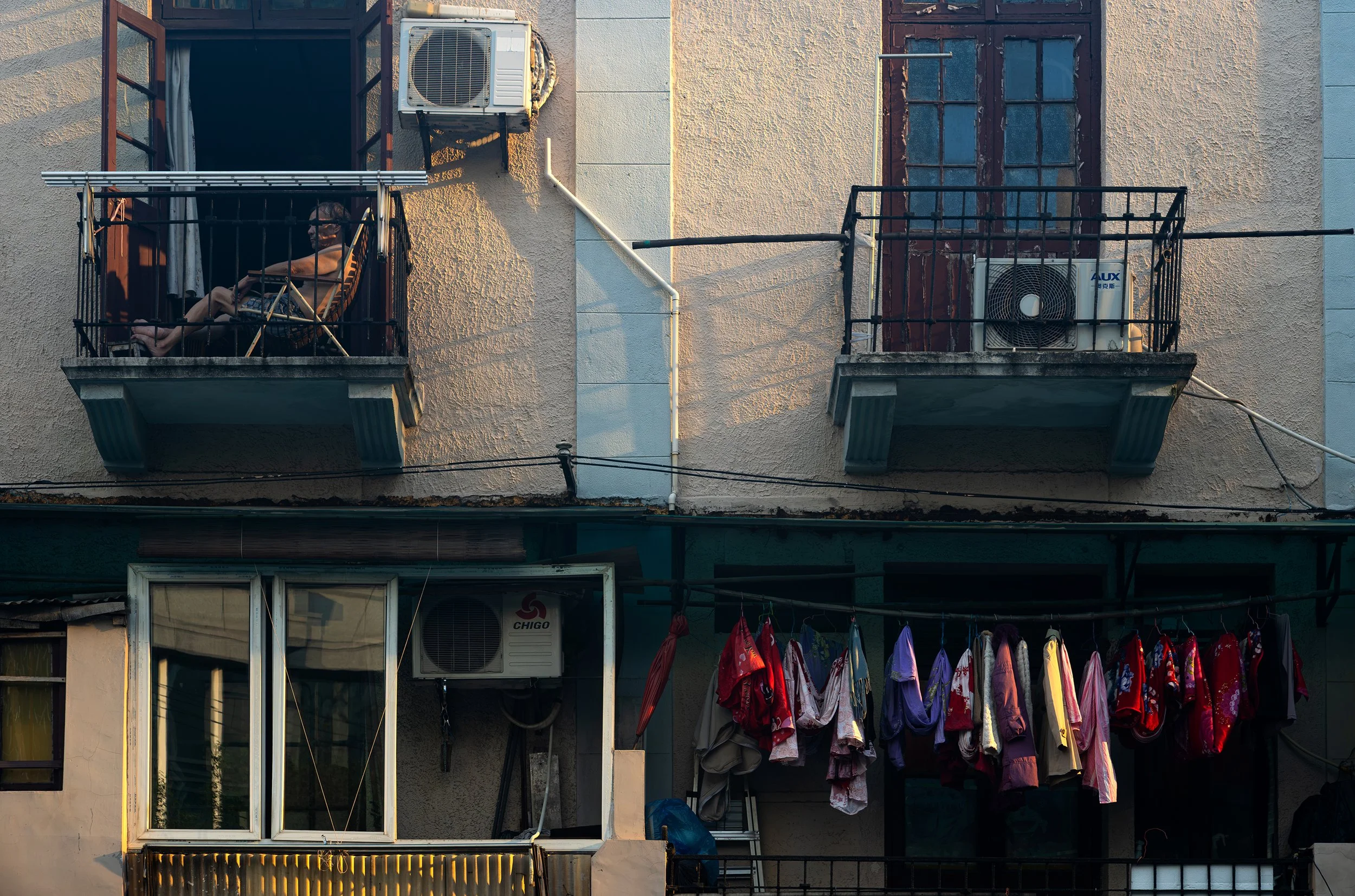
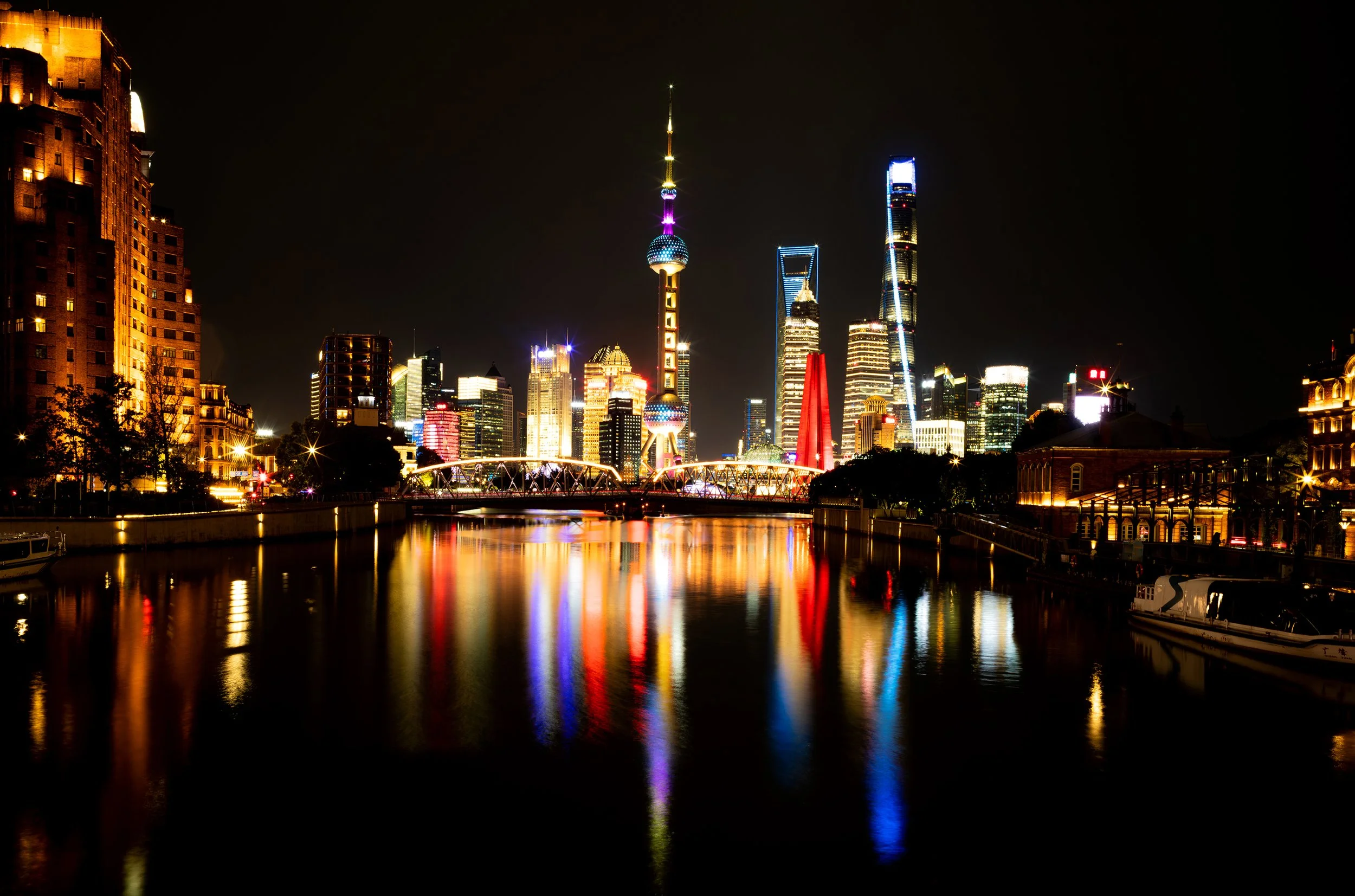
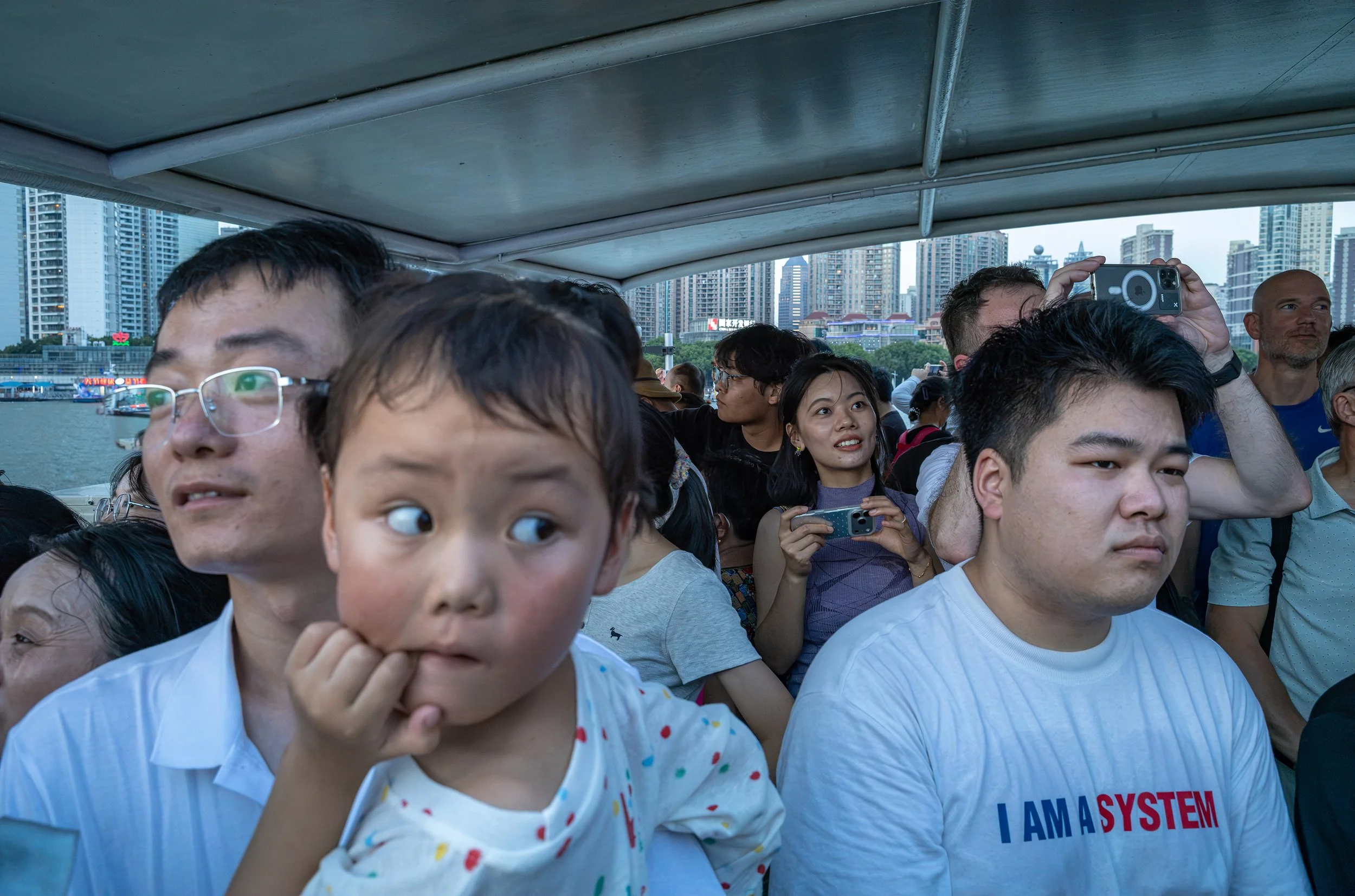
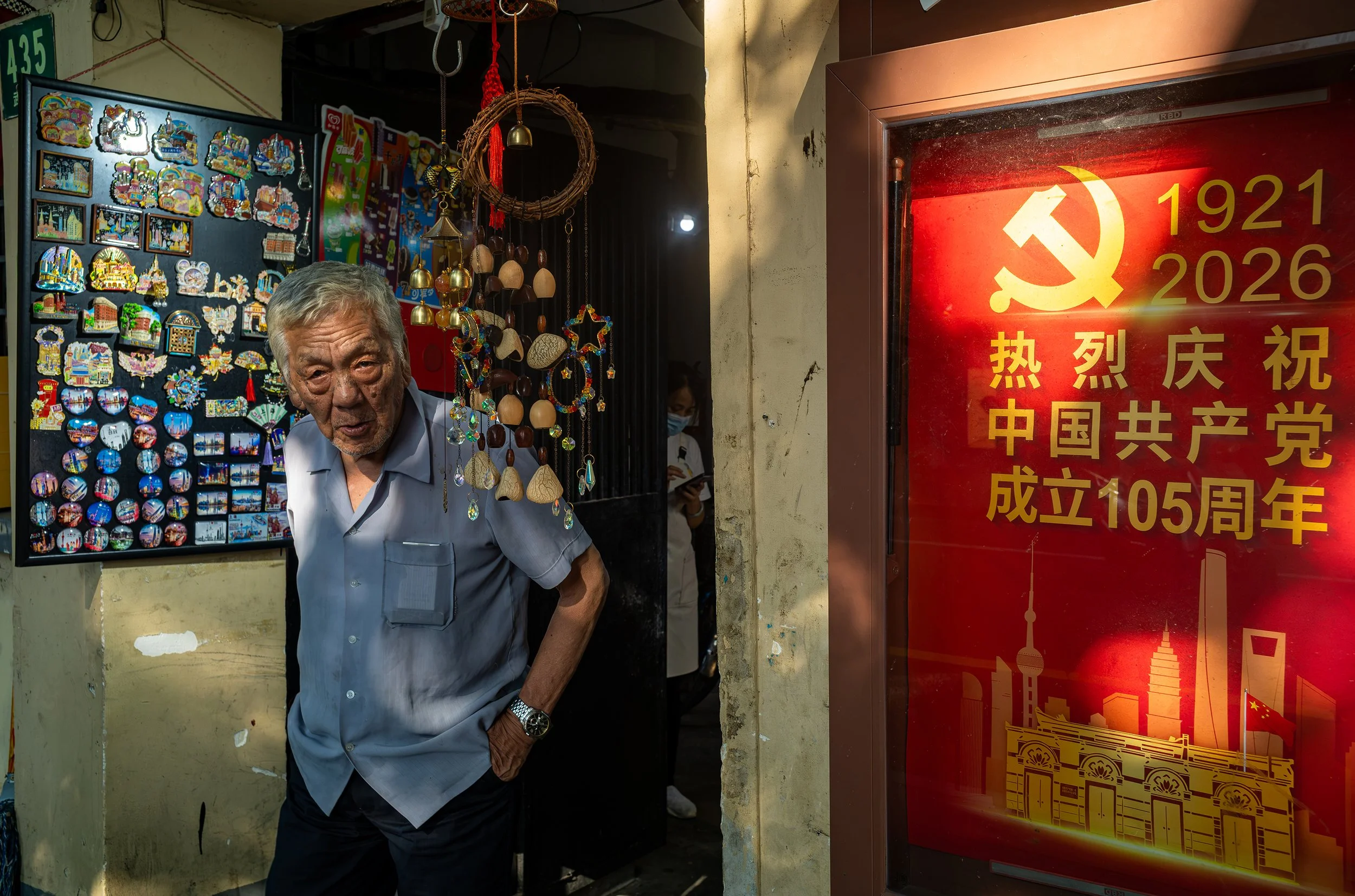
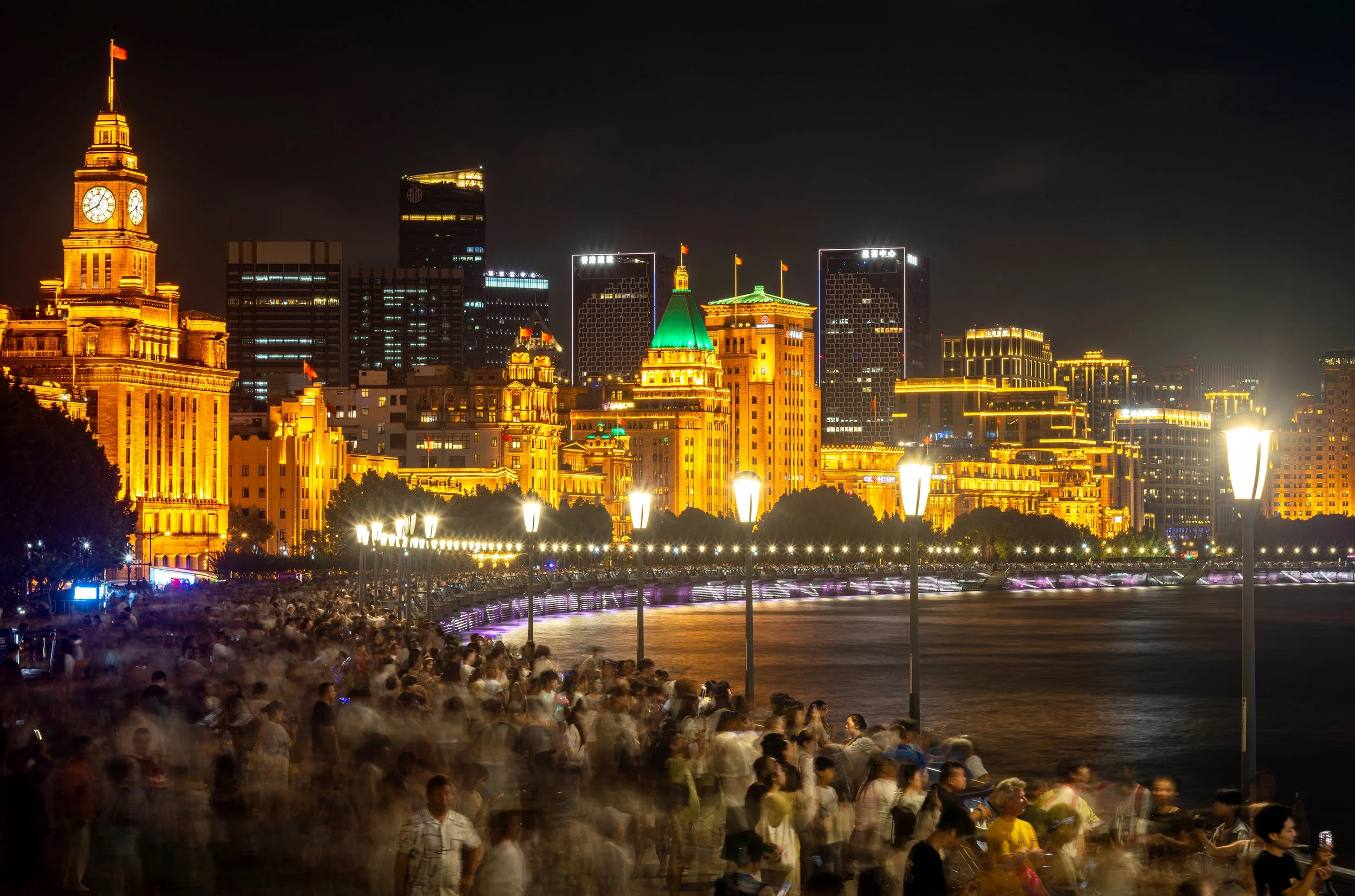
上海 | Shanghai
Shanghai is a municipality directly administered by the central government of the People’s Republic of China. Located in the Yangtze River Delta, which extends into the East China Sea, Shanghai has maintained rapid economic growth since the introduction of reform and opening-up policies by then-Chairman Deng Xiaoping from the late 1980s, becoming a symbol of the country’s economic success story.
Today, it serves as a major center for commerce, industry, finance, trade, and transportation. As of 2022, Shanghai had a permanent resident population of more than 24 million, while its gross domestic product (GDP) reached approximately RMB 4.465 trillion (around ¥85 trillion/$530 billion). The city has also been designated by the State Council of the People’s Republic of China as one of the country’s National Central Cities.
上海市は中華人民共和国の直轄市であり、東シナ海に突き出す長江デルタに位置する。鄧小平主席による1980年代後半からの改革開放政策以降、同国の経済発展の象徴として高い成長を続け、商業・工業・金融・貿易・交通などの中心地である。2022年時点の常住人口は2,400万人を超え、2022年市内総生産は約4兆4652億8000万元(約85兆円/530億米ドル)である。中華人民共和国国務院により国家中心都市の一つに指定されている。
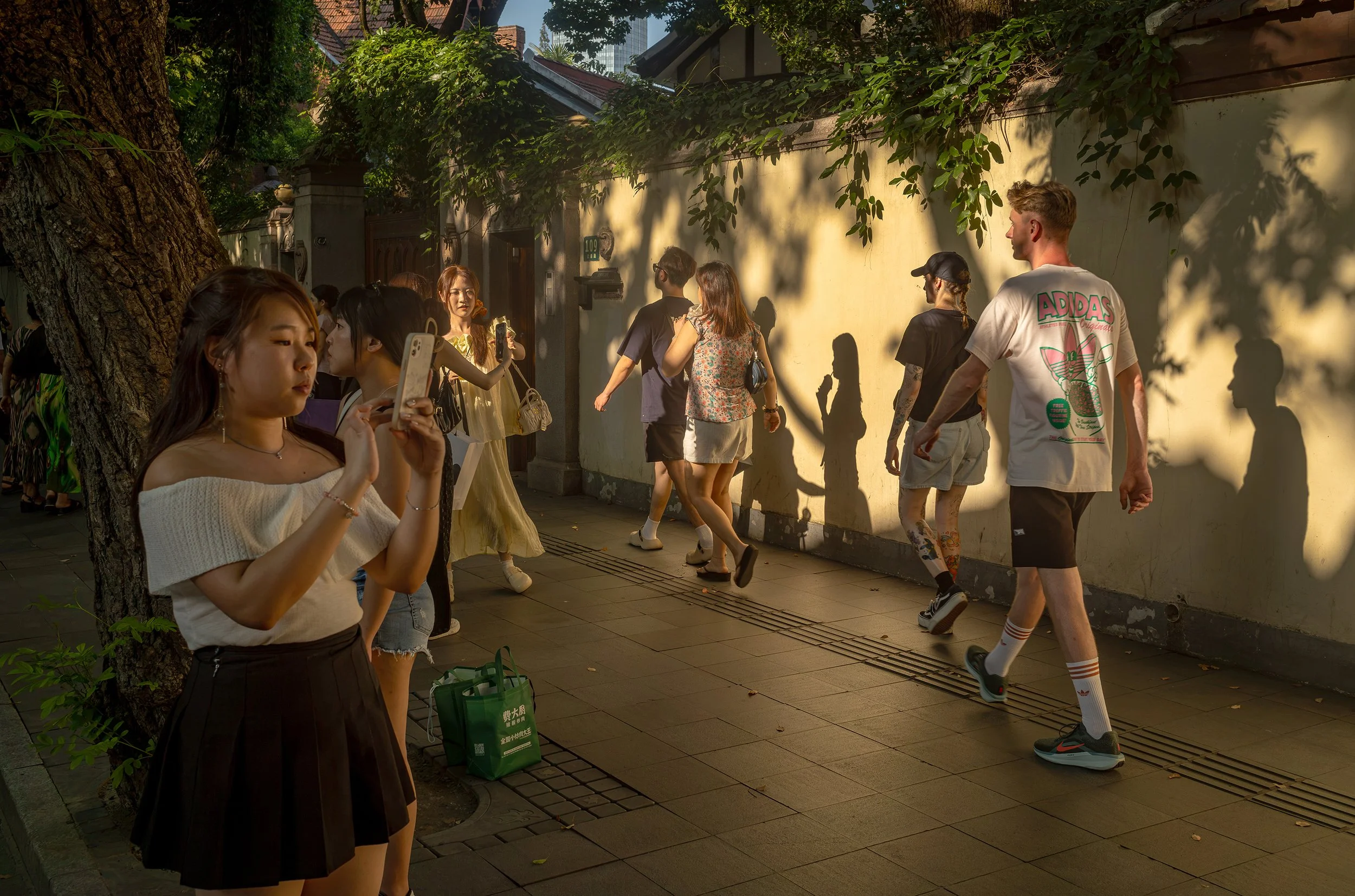
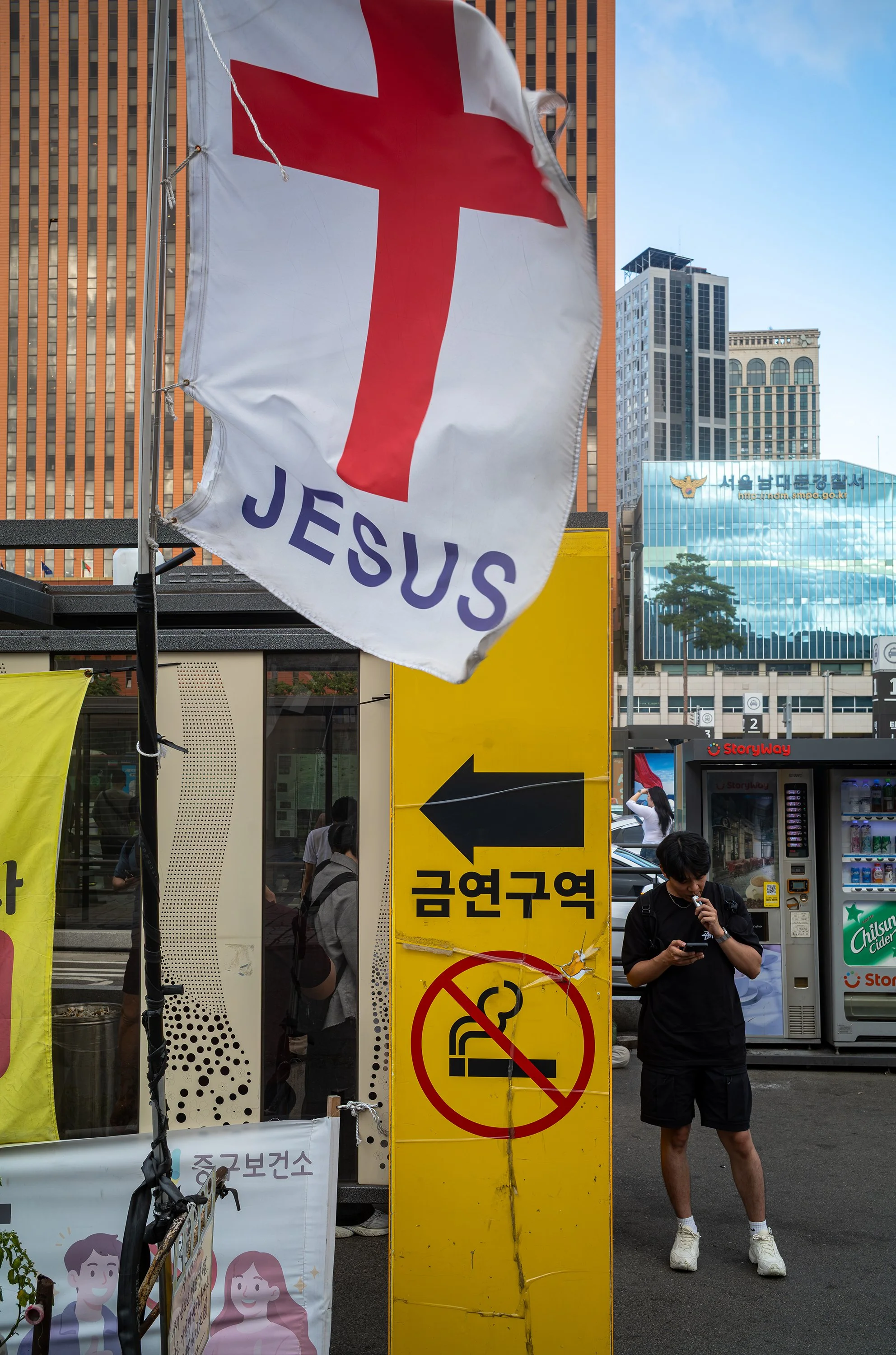
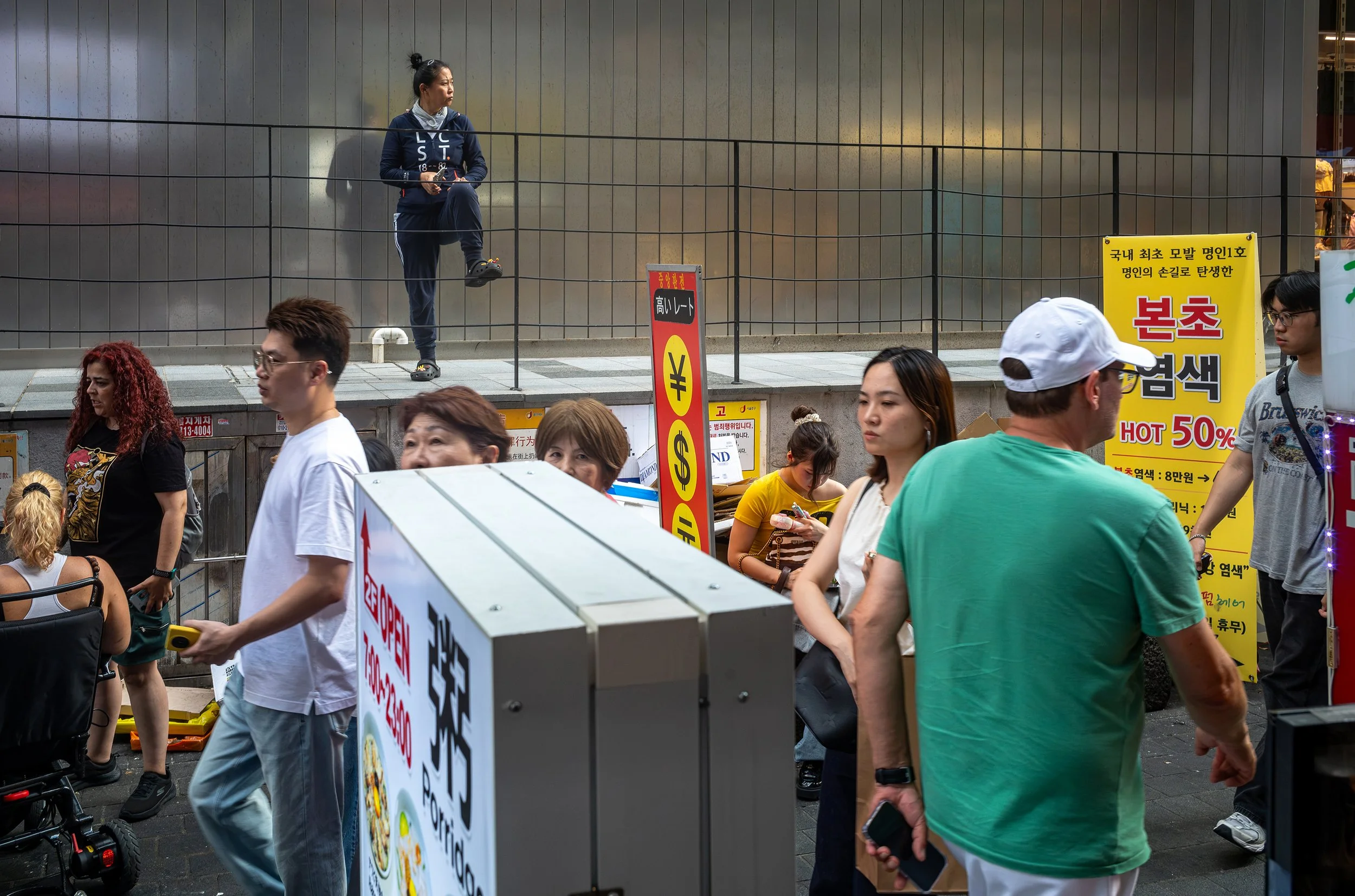
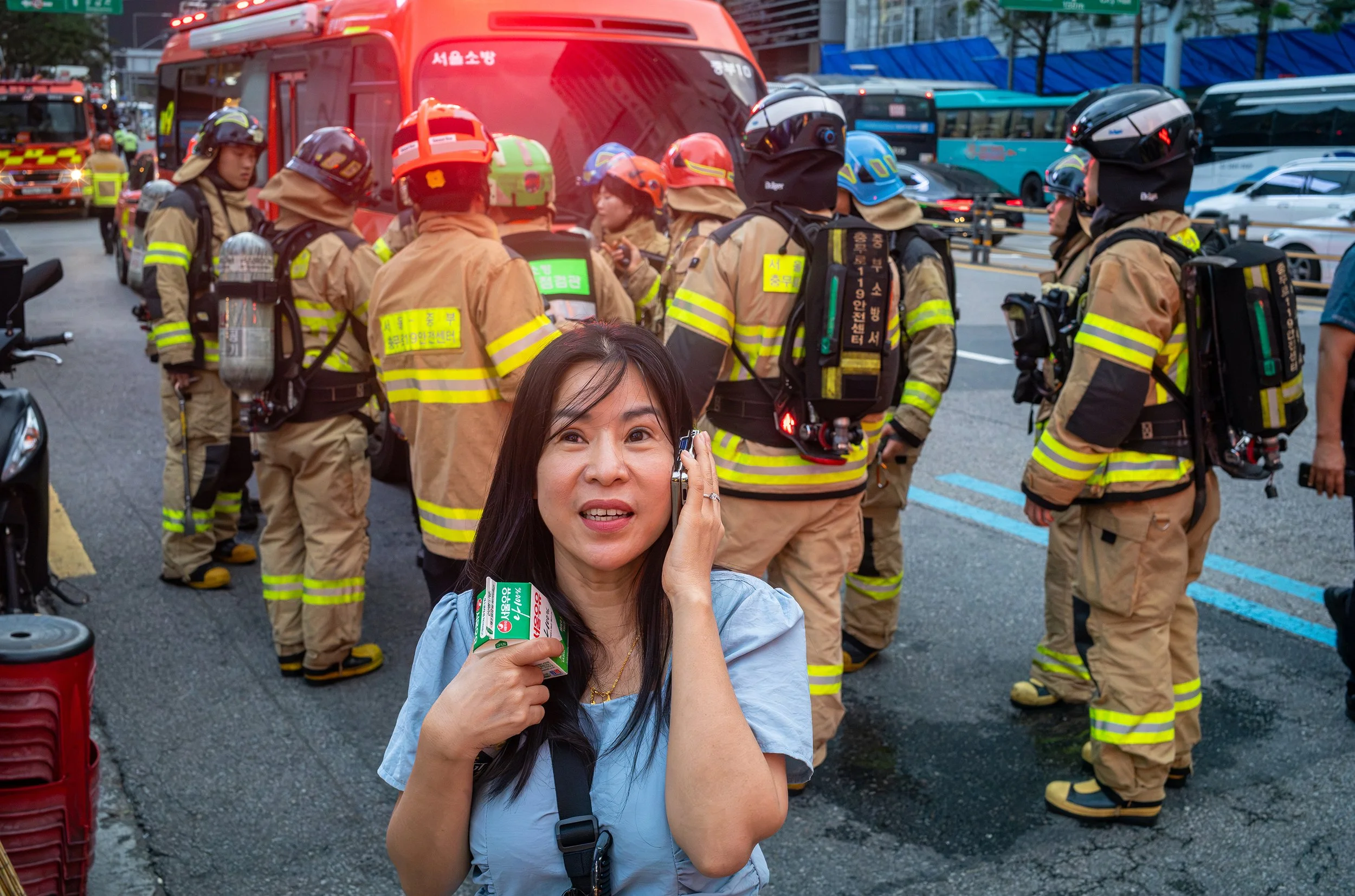
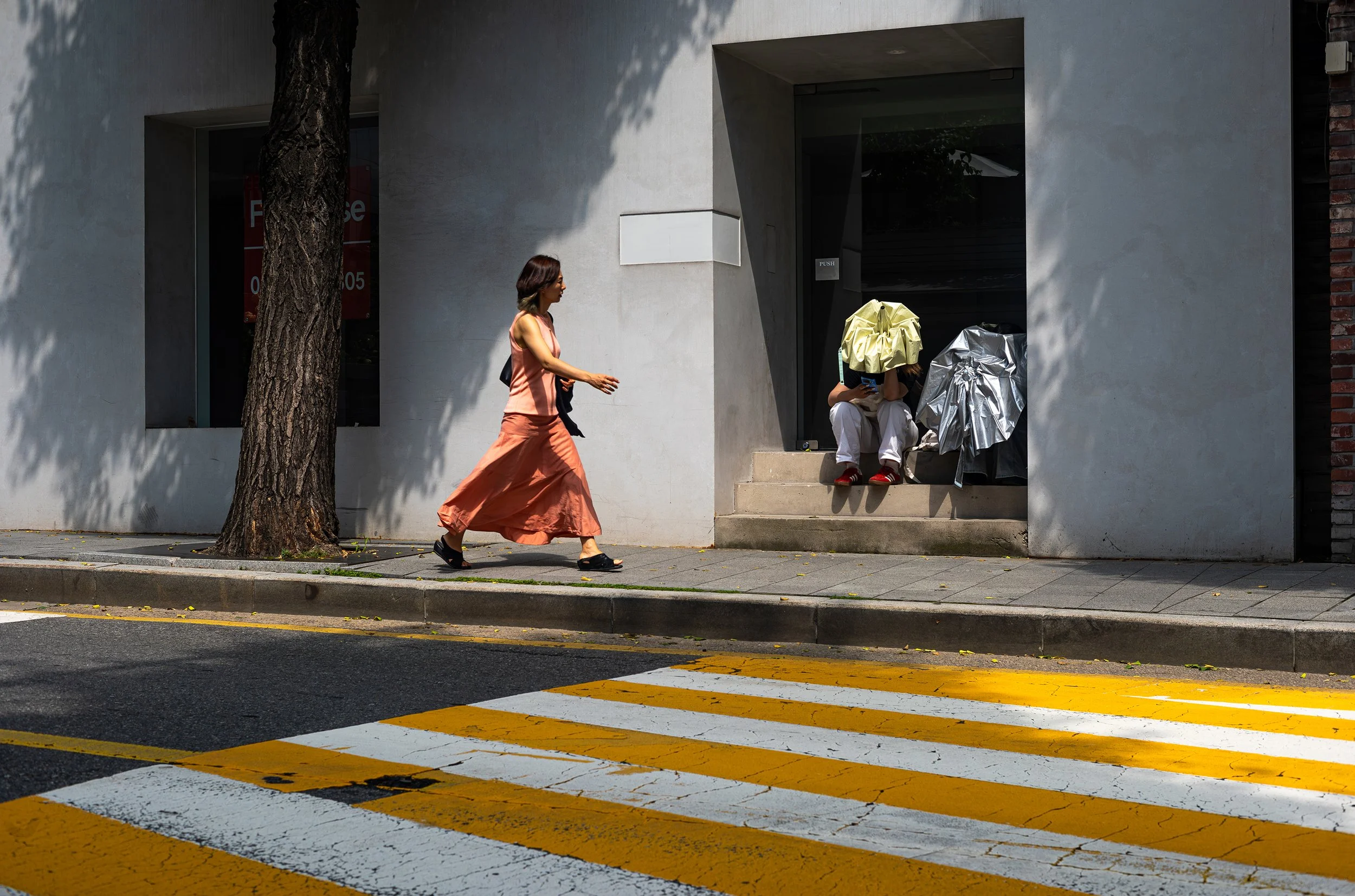
서울 | Seoul
Seoul is the capital of the Republic of Korea. Located within Gyeonggi Province, it is a special city consisting of 25 administrative districts. One of the largest cities in Asia, Seoul has the world’s fifth-largest metropolitan population and the fourth-largest metropolitan economy, following Tokyo, New York, and Los Angeles.
Seoul serves as the political, economic, transportation, cultural, educational, and academic center of South Korea. As the Korean economy developed, Seoul’s population grew rapidly, reaching approximately 10.92 million in 1991 and transforming the city into one of the world’s largest metropolitan areas.
More than half of South Korea’s total population lives within the Seoul metropolitan area, reflecting the country’s pronounced concentration of population and economic activity around the capital.
In 2025, the metropolitan population reached approximately 26.08 million, making Seoul one of the world’s major megacities. Seoul’s population density is approximately 2.5 times that of Tokyo as a whole, and is roughly comparable to that of Tokyo’s 23 special wards.
ソウル特別市は大韓民国の首都。京畿道に位置する特別市で、25の行政区からなる。アジア最大級の都市であり、世界5位の都市圏人口と東京、ニューヨーク、ロサンゼルスに次ぐ世界4位の都市圏経済力を有する。政治、経済、交通、文化、教育・学術面において大韓民国の中枢をなす。韓国の経済発展に伴いソウルの人口は急増を続け、1991年には1092万人にまで到達し、世界最大級の巨大都市へと発達した。ソウル都市圏には韓国全人口の過半数が居住し、一極集中の傾向が強くみられる。2025年における都市圏人口は2608万人であり、世界屈指のメガシティを形成している。ソウルの人口密度は東京都の約2.5倍であり、東京都区部とほぼ等しい。